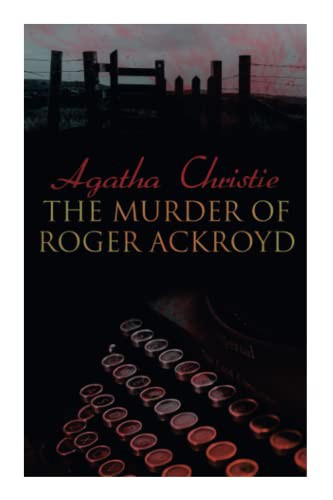
Belgian Inspector Hercule Poirot has retired to the countryside in the small English village of King's Abbot. Dr. Sheppard, observing his new neighbor, is sure that he must be a former hairdresser. But the brutal murder of a local squire reveals the truth: the peculiar little man is actually a detective par excellence. The Murder of the wealthy industrialist Roger Ackroyd begins the night before with the suicide of Mrs. Ferrars, a wealthy widow. Her death is believed to be an accident, until Roger Ackroyd is stabbed to death in his locked study. There are rumors she poisoned her first husband, rumors that she was being blackmailed, rumors that her secret lover was Roger Ackroyd, a man who knew too much, but no one is sure.
There's no shortage of suspects, all the members of the household stand to gain from his death, from Roger's neurotic sister-in-law who has …
Belgian Inspector Hercule Poirot has retired to the countryside in the small English village of King's Abbot. Dr. Sheppard, observing his new neighbor, is sure that he must be a former hairdresser. But the brutal murder of a local squire reveals the truth: the peculiar little man is actually a detective par excellence. The Murder of the wealthy industrialist Roger Ackroyd begins the night before with the suicide of Mrs. Ferrars, a wealthy widow. Her death is believed to be an accident, until Roger Ackroyd is stabbed to death in his locked study. There are rumors she poisoned her first husband, rumors that she was being blackmailed, rumors that her secret lover was Roger Ackroyd, a man who knew too much, but no one is sure.
There's no shortage of suspects, all the members of the household stand to gain from his death, from Roger's neurotic sister-in-law who has accumulated personal debts, to a parlormaid with an uncertain history who resigned her post the afternoon of the murder. But the police focus on Ralph Paton, Ackroyd's stepson and heir, and the person with the most to gain from Roger's death. When sleuth Hercule Poirot, who is living quietly in King's Abbot, agrees to investigate, the case takes a completely different turn. Poirot exonerates all of the original suspects, and lays out a completely reasoned case that the clever and devious murderer is someone who had not come under suspicion at all - someone whose motive has nothing to do with money.
([source][1])
me encantó; un gran hombre con caracter autoritario que se va descubriendo poco a poco, un montón de gente con motivos para matarlo, todas y todos sus amigxs y buenos conocidxs, el clasico narrador asistente del detective, y un monton de secretos. El final si que me tomo por sorpresa, de esos en los que piesas, no puede ser pero sí :00 y tiene todo el sentido del mundo
This is probably one of my favourite Agatha Christie novels, and it's largely because of the structure. I absolutely adore the style of this one, especially because it was rarely a common form for the genre even though it is definitely something that I would've thought was done far more than it ever has been.
All of that sounds vague, and that's because to explain it would be to spoil the story itself.
It is definitely slow-moving at the beginning, but once it picks up? It keeps going and builds a lot of good suspense. It forces you to ask a lot of questions and to figure out which questions aren't being asked or even considered. What's not being said, even though it's being hinted at? Honestly, I adore it.
(The one thing I'd love to do, since I skimmed them, is remove the introductory texts that …
This is probably one of my favourite Agatha Christie novels, and it's largely because of the structure. I absolutely adore the style of this one, especially because it was rarely a common form for the genre even though it is definitely something that I would've thought was done far more than it ever has been.
All of that sounds vague, and that's because to explain it would be to spoil the story itself.
It is definitely slow-moving at the beginning, but once it picks up? It keeps going and builds a lot of good suspense. It forces you to ask a lot of questions and to figure out which questions aren't being asked or even considered. What's not being said, even though it's being hinted at? Honestly, I adore it.
(The one thing I'd love to do, since I skimmed them, is remove the introductory texts that were inserted in republication of the novel. All of them. They're just... a waste of paper, especially as they try to make things more important than they really are rather than just allowing people to enjoy what's there. That kind of thing always annoys me.)
Review of 'The Murder Of Roger Ackroyd' on 'Goodreads'
2 stars
Not one of my favorites due to its shortness -- too much is crammed in too little time, unnecessary narrative frame, very similar in structure to other short stories of hers.