English language
Published by Manohar Publishers & Distributors.
Dominance & Resistance in Indian Society
English language
Published by Manohar Publishers & Distributors.
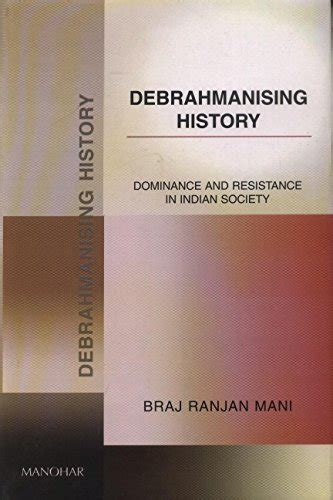
Debrahmanising History: Dominance and Resistance in Indian Society
By- Braj Ranjan Mani
Egalitarianism is neither alien to India nor the gift of the West. Marginalized people everywhere have always aspired to build an egalitarian world. Espousing the perspective of the non-elites, this book brings out the beauty and resilience of a counter-tradition by visiting some of the major sites of resistance and creativity from below. Ranged against caste and brahmanism, this rational-liberating tradition is to be found in the heterodoxies of various inclinations, particularly Buddhism, the movements of subaltern saint-poets, Sufism and Sikhism.
This legacy was carried forward in modern India by, more than anybody else, Phule, Iyothee Thass, Narayana Guru, Periyar, and Ambedkar. Recognizing the power of culture in the politics of transformation, they had emancipatory visions that embraced the whole of an Indian experience, and stand firmly as an alternative to Tilak-Savarkarite, Gandhian, and Nehruvian …
Debrahmanising History: Dominance and Resistance in Indian Society
By- Braj Ranjan Mani
Egalitarianism is neither alien to India nor the gift of the West. Marginalized people everywhere have always aspired to build an egalitarian world. Espousing the perspective of the non-elites, this book brings out the beauty and resilience of a counter-tradition by visiting some of the major sites of resistance and creativity from below. Ranged against caste and brahmanism, this rational-liberating tradition is to be found in the heterodoxies of various inclinations, particularly Buddhism, the movements of subaltern saint-poets, Sufism and Sikhism.
This legacy was carried forward in modern India by, more than anybody else, Phule, Iyothee Thass, Narayana Guru, Periyar, and Ambedkar. Recognizing the power of culture in the politics of transformation, they had emancipatory visions that embraced the whole of an Indian experience, and stand firmly as an alternative to Tilak-Savarkarite, Gandhian, and Nehruvian visions. Their determined, but diverse and resourceless struggles, fought in the teeth of opposition from the caste elites, could not arrest the neo-brahmanism which under colonial patronage and the archeology of knowledge derived from Orientalism went on to reincarnate – and nationalize – itself into octopus-like Hinduism. Their sublime failure adds to their enduring appeal to the marginalised as old forms of hierarchy and hegemony menacingly morph into new structures of inequality in post-1947 India.
In some studies, the egalitarian orientation of this tradition is belatedly being recognised but it is seldom integrated with macro-level theoretical studies on Indian culture and society. An attempt in that direction, this searing critique of caste and dominant historiography is meant for all those who are – or want to be – part of the ongoing struggle for human liberation.
Braj Ranjan Mani writes on Indian society and culture from the perspective of the marginalised majority.
(from: manoharbooks.blogspot.com/2012/07/debrahmanising-history-dominance-and.html )Publisher's summary
Presents a radical survey of the major Dalit Bahujan intellectuals and movements over 2500 years of Indian history, from Buddha to Ambedkar. This title also serves as a text for an alternative history of India.
Contents: