
Slow burn
3 stars
(em português: sol2070.in/2025/12/twenty-days-turin-giorgio-de-maria/ )
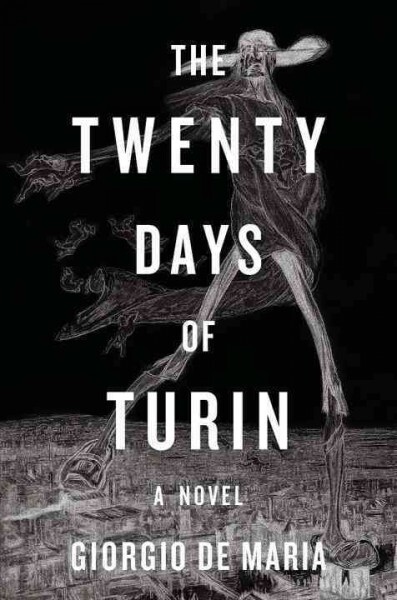
I read "The Twenty Days of Turin" ("Le venti giornate di Torino", 1975, 224 pages), by Giorgio De Maria, with high expectations. It wasn’t quite what I expected—but I still recommend it.
It’s an Italian cult classic of horror, “with echoes of Lovecraft and Borges,” as the blurb puts it. Jeff VanderMeer wrote the preface to the new edition and strongly recommends it. The synopsis mentions a sinister library where people share secret diaries, triggering a kind of collective psychosis.
With all that, what could possibly go wrong? Exactly that: too much expectation.
In truth, it’s not really a novel but an extended short story or novella, roughly 100 pages long (about half of the English edition consists of supplementary material). In the end, its brevity works in its favor—I might have abandoned it if it were much longer.
It’s not …
(em português: sol2070.in/2025/12/twenty-days-turin-giorgio-de-maria/ )
I read "The Twenty Days of Turin" ("Le venti giornate di Torino", 1975, 224 pages), by Giorgio De Maria, with high expectations. It wasn’t quite what I expected—but I still recommend it.
It’s an Italian cult classic of horror, “with echoes of Lovecraft and Borges,” as the blurb puts it. Jeff VanderMeer wrote the preface to the new edition and strongly recommends it. The synopsis mentions a sinister library where people share secret diaries, triggering a kind of collective psychosis.
With all that, what could possibly go wrong? Exactly that: too much expectation.
In truth, it’s not really a novel but an extended short story or novella, roughly 100 pages long (about half of the English edition consists of supplementary material). In the end, its brevity works in its favor—I might have abandoned it if it were much longer.
It’s not bad at all, far from it. It’s just very different from what I had imagined.
Ten years after the events that became known as the “Twenty Days of Turin,” a man begins to ask questions and investigate a poorly explained episode of communal madness that resulted in brutal murders. Without fully realizing it, he becomes entangled in something larger than anticipated.
It really does echo Borges—not only in the theme of a haunting library, but in the indirect, nested storytelling: stories within the story, reconstructed through testimonies and documents (until the narrator himself begins to experience things).
Despite its short length, the narrative unfolds very slowly, full of tangents and digressions that are not directly related. That was what caught me off guard and made me impatient. But near the end, when hell breaks loose, I caught the rhythm and better appreciated the internal logic of the narrative.
It’s often said that Giorgio seems to have prophesied big-tech social networks. The library that catalyzes the entities in the story (set at the end of the millennium, imagined back in the 1970s) was created by bored teenagers with little to do—resulting in a collective disaster they couldn't foreseen.