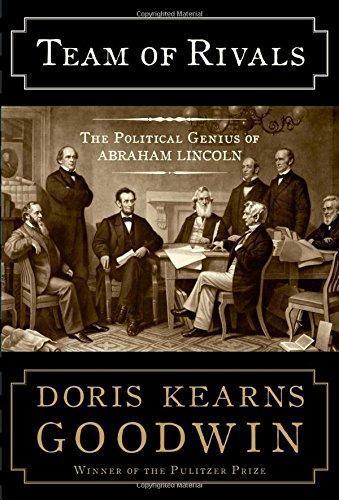

Team of Rivals : the Political Genius of Abraham Lincoln

the political genius of Abraham Lincoln

916 pages

English language

Published Feb. 22, 2005 by Simon & Schuster.

ISBN:
978-0-684-82490-1
Copied ISBN!

View on OpenLibrary

View on Inventaire

Acclaimed historian Doris Kearns Goodwin illuminates Lincoln's political genius in this highly original work, as the one-term congressman and prairie lawyer rises from obscurity to prevail over three gifted rivals of national reputation to become president.

On May 18, 1860, William H. Seward, Salmon P. Chase, Edward Bates, and Abraham Lincoln waited in their hometowns for the results from the Republican National Convention in Chicago. When Lincoln emerged as the victor, his rivals were dismayed and angry.

Throughout the turbulent 1850s, each had energetically sought the presidency as the conflict over slavery was leading inexorably to secession and civil war. That Lincoln succeeded, Goodwin demonstrates, was the result of a character that had been forged by experiences that raised him above his more privileged and accomplished rivals. He won because he possessed an extraordinary ability to put himself in the place of other men, to experience what they …

18 editions

Review of 'Team of Rivals' on 'Goodreads'

Fascinating historical portrait of Lincoln I hadn't heard before. Starting this book, I expected to learn more about how keeping his former rivals in his presidential cabinet helped him make a stronger presidency, but really, it was simply stated that conversation among the cabinet was contentious, occasionally someone had to be replaced, and at the end of his life Lincoln and Seward had developed a strong mutual love for each other. No larger lessons or principals, but a good historical exception that rather than being a Pollyanna philosophy of life, was actually a shrewd political calculation that modern politicians such as Hillary Clinton in her defeat of Sanders could have duplicated.

Review of 'Team of Rivals' on 'Goodreads'

I have a new appreciation of Lincoln as a shrewd political tactician and a phenomenally self-made man. His singular focus on preserving the union required great skill and tremendous patience--particularly in assembling his cabinet from his outmaneuvered and dismayed rivals for the presidency. Doris Kearns Goodman portrays a man who takes responsibility for his mistakes (and sometimes for those of his cabinet and generals). For the Great Emancipator, freeing the slaves from bondage was a political calculation balancing demands of republicans and radicals and a strategic decision to build the Northern armies from the ranks of freed slaves. Only later does one get the sense that his commitment to honor the emancipation proclamation and the pursuit of the 13th amendment had a strong moral foundation.

The book is a formidable portrait of a complicated man, brought into sharpest contrast with her attention to Seward, Chase, Stanton, McClellan, and others who …

Subjects

  • Lincoln, Abraham, 1809-1865.
  • Lincoln, Abraham, 1809-1865 -- Friends and associates.
  • Political leadership -- United States -- Case studies.
  • Genius -- Case studies.
  • Presidents -- United States -- Biography.
  • United States -- Politics and government -- 1861-1865.