

The last book in a series always manages to woo me a bit. I may just be a sucker for profound endings, but I don't know. Ptolemy's Gate sure had this same effect on me. I found myself reading wantonly, like I used to do when I was little. The words flew by my eyes so quick, and I barely gave myself time to take notes for the review. Funnily enough, the notes I did take disappeared mysteriously a couple days ago. I'm winging it now that my precious scribbles are lost.
Anyway, back to the book. Ptolemy's Gate is the third and final installment of the Bartimaeus trilogy. It concludes the series nicely, and leaves readers with some interesting surprises. I found the entire series, but this novel especially, very ambitious. It attempts to mingle otherworldly and esoteric concepts such as space-time-continuums with a slew of true historical facts. …
User Profile

An explorer of the realms of consciousness. Good thoughts, good words, good deeds. 🕊️
🔹 Blog/Links: tycrisp.com 🔹
This link opens in a pop-up window
lux ⛥'s books
To Read (View all 94)
Currently Reading
User Activity
RSS feed Back
lux ⛥ rated Mister Monday: 4 stars
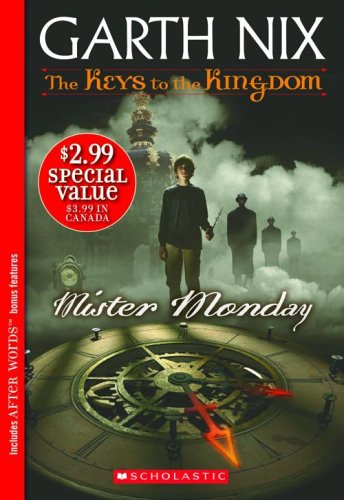
Mister Monday by Garth Nix (The Keys to the Kingdom, #1)
Arthur Penhaligon's first days at his new school don't go too well, particularly when a fiendish Mister Monday appears, gives …
lux ⛥ rated Catching Fire (The Hunger Games, #2): 4 stars
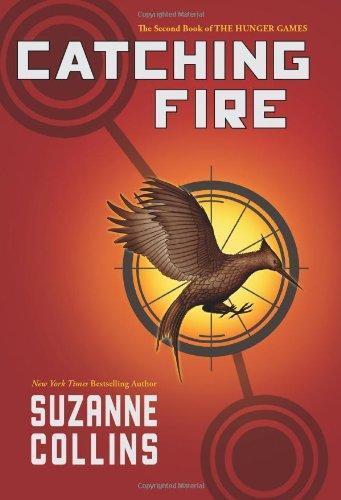
Catching Fire (The Hunger Games, #2) by Suzanne Collins
Sparks are igniting. Flames are spreading. And the Capitol wants revenge.
Against all odds, Katniss has won the Hunger …
![Suzanne Collins: The Hunger Games Movie-Tie in-Edition [Paperback] [Nov 10, 2014] SUZANNE COLLINS (Paperback, 2014, Scholastic India)](/images/covers/ed3d6509-d2db-4115-b961-85c00832186b.jpeg)
The Hunger Games Movie-Tie in-Edition [Paperback] [Nov 10, 2014] SUZANNE COLLINS by Suzanne Collins
The Hunger Games is a 2008 dystopian novel by the American writer Suzanne Collins. It is written in the perspective …
lux ⛥ rated Lamplighter: 5 stars

Lamplighter by D.M. Cornish
The thrilling follow-up to the monster hit: Foundling. Monsters, rogues and wonder abound in this utterly original, fearsomely exciting and …

Factotum by D. M. Cornish (The foundling's tale -- pt. 3)
Accused of being a monster instead of human, Rossamünd Bookchild looks to monster-hunter Branden Rose for help, but powerful forces …
lux ⛥ rated Monster Blood Tattoo: 5 stars
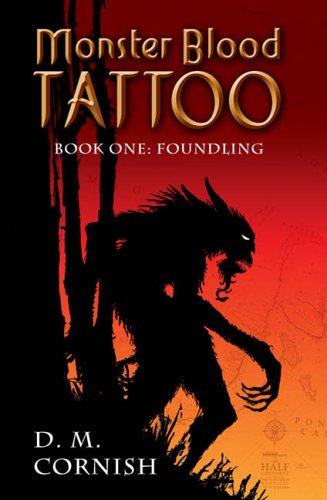
Monster Blood Tattoo by D.M. Cornish (Monster Blood Tattoo, #1)
Meet Rossamund—a foundling, a boy with a girl's name who is about to begin a dangerous life in the service …
lux ⛥ reviewed Ptolemy's Gate by Jonathan Stroud (The Bartimaeus trilogy ;)
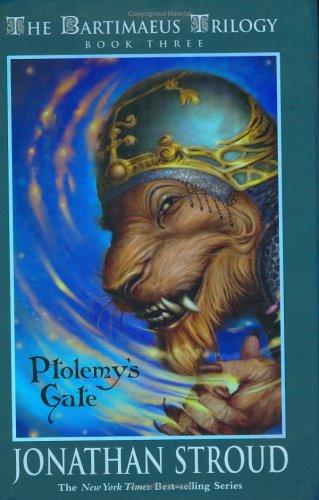
Dangerous adventures continue for the djinni Bartimaeus and his master, seventeen-year-old Nathaniel, a powerful magician …
Review of "Ptolemy's Gate" on 'Goodreads'
4 stars
The last book in a series always manages to woo me a bit. I may just be a sucker for profound endings, but I don't know. Ptolemy's Gate sure had this same effect on me. I found myself reading wantonly, like I used to do when I was little. The words flew by my eyes so quick, and I barely gave myself time to take notes for the review. Funnily enough, the notes I did take disappeared mysteriously a couple days ago. I'm winging it now that my precious scribbles are lost.
Anyway, back to the book. Ptolemy's Gate is the third and final installment of the Bartimaeus trilogy. It concludes the series nicely, and leaves readers with some interesting surprises. I found the entire series, but this novel especially, very ambitious. It attempts to mingle otherworldly and esoteric concepts such as space-time-continuums with a slew of true historical facts. All of this is laced with the usual sarcasm and satire of Bartimaeus, the quick-witted protagonist, The comical aspects of the dialogue are hilarious, as fans of the series already know.
Back to the esoteric topics—Jonathan Stroud obviously has an inspired interest in theoretical physics, and possibly the occult. He provides a very interesting description of the Other Place, the non-physical realm of demons and djinn. Here is a description from The Bartimaeus Trilogy Wiki:
The Other Place is a realm of chaos, in which there is no matter but infinite 'essence', which is described as a mass of swirling colours with no borders or boundaries, somewhere between gas and liquid. Time runs at a different rate in the Other Place compared to the human world, although it is not made completely clear in the Bartimaeus Trilogy exactly what relationship between the two timescales is.
What really intrigues me is the so called 'essence.' Being a fan of the esoteric myself, I can only wonder as to what the author is alluding to. Another description offers some more insight:
In the Other Place, all demons are one, and so their collective essence is a single conscious entity. This allows demons to heal from damage sustained in the human world, while also putting the exact mechanics of the Other Place beyond reach of genuine human understanding. Human consciousnesses that visit the Other Place require something to focus their consciousness on and are able to impose their will to a certain degree on the essence of the Other Place, moulding it to specific shapes. Although demons are much better at this than humans, and it does not apparently cause them any harm. However, they prefer not to do it, and appear to actively resent outsiders attempting to impose order upon their realm.
Make of this what you will. I found it highly interesting, and if a chance to interview the author pops up, I will question him about this. In a way, it kind of reminds me of Shamanism and how shamans work with consciousness to connect to the spirit world. While in this world, they consult with 'spirits' for aid in healing and medicinal purposes. Anyway, it's food for thought.
In Ptolemy's Gate, readers began to notice connections between the fact the Bartimaeus frequently takes on the figure of Ptolemy and Kitty's desire to see demons and humans coexisting. Readers become enlightened by the possibility of these two types of entities working together, for the greater good. Bartimaeus talks in awe about a human actually traveling to the Other Place. He explains how the Other Place is where spirits are free and permeable and basically twirl in kaleidoscopic beauty intermingling with forgotten fragments of a dream or bits of some long-lost memory.
Spoiler alert!
The series ended on a slightly surprising note (or not) with the death of Nathaniel. Nathaniel finally opened up and showed his true integrity towards the end of this final book. He saved Bartimaeus and sacrificed himself in the process to save those he loved most. To tell you the truth, it was a bit of a cliffhanger. There were a few loose ends that could have been tied up. I believe the author intended this.
lux ⛥ rated The Golem's Eye: 4 stars
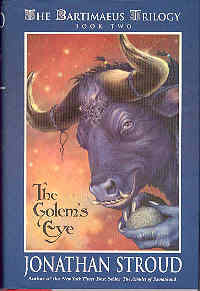
The Golem's Eye by Jonathan Stroud (Bartimaeus Trilogy, #2)
At only fourteen, Nathaniel is a rising star: a young magician who is quickly climbing the ranks of the government. …
lux ⛥ reviewed The Amulet of Samarkand by Jonathan Stroud (Bartimaeus, #1)
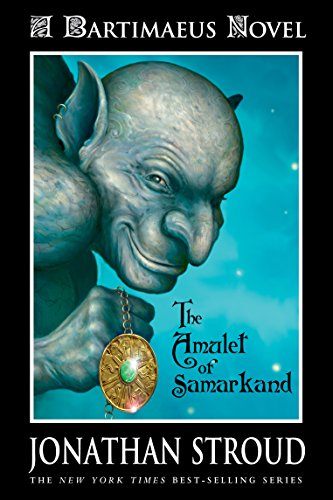
Nathaniel is a boy magician-in-training, sold to the government by his birth parents at the …
Review of 'The Amulet of Samarkand, Book One.' on 'Goodreads'
4 stars
The Amulet of Samarkand is a quick, witty, and fast-paced fantasy. It is the first of the Bartimaeus trilogy, and in my opinion quite an eye-opener. I enjoyed this novel greatly, the wide palette of characters was quite striking. I particular enjoyed the thoughts of the lead character, a sarcastic and often narcissistic djinni. They were cleverly expressed in footnotes, which added to the character's. . . finesse I should say.
Jonathan Stroud has created a very interesting fantasy world. In fact, I would classify it as an alternative history. Taking place in London, the seat of the modern-day British Empire, the plot revolves around Nathaniel, a preteen magician. London is riddled with such magicians, who comprise the ruling class of society. They control every aspect of the government, and summon powerful spiritual entities to keep citizens in check. Nathaniel is apprenticed to a fairly low-ranking magician, who he often …
The Amulet of Samarkand is a quick, witty, and fast-paced fantasy. It is the first of the Bartimaeus trilogy, and in my opinion quite an eye-opener. I enjoyed this novel greatly, the wide palette of characters was quite striking. I particular enjoyed the thoughts of the lead character, a sarcastic and often narcissistic djinni. They were cleverly expressed in footnotes, which added to the character's. . . finesse I should say.
Jonathan Stroud has created a very interesting fantasy world. In fact, I would classify it as an alternative history. Taking place in London, the seat of the modern-day British Empire, the plot revolves around Nathaniel, a preteen magician. London is riddled with such magicians, who comprise the ruling class of society. They control every aspect of the government, and summon powerful spiritual entities to keep citizens in check. Nathaniel is apprenticed to a fairly low-ranking magician, who he often holds in contempt. His ambitions surpass anything his master has achieved.
A pretty good book in general, The Amulet of Samarkand is sure to give anyone a laugh. I myself enjoyed it greatly. There is much to uncover about the mysterious Bartimaeus, which I'm sure readers will do in later novels. I believe, after I've reviewed the entire series, I might send Stroud an email requesting an interview. I hadn't planned on requesting authors directly, but I'm very eager to have a conversation with this one.
Overall Grade: A
The Amulet of Samarkand is a good book for those who like sarcasm and often narcissistic characters. A fairly fast read, it's sure to appeal to most people and give anyone a chuckle. Bartimaeus is a particular interesting character, one I believe will develop over the course of the series. Jonathan Stroud is a great writer, and I hope he will continue being so into the future.
lux ⛥ reviewed l'héritage by Christopher Paolini (eragon, #4)
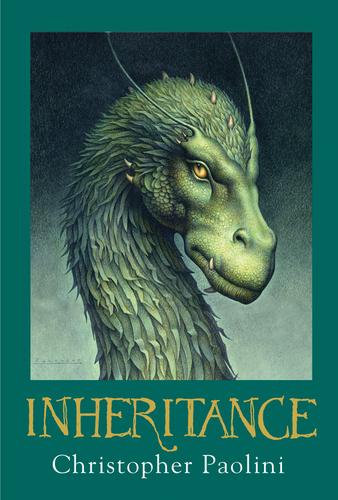
Il y a peu encore, Eragon n'était qu'un simple garçon de ferme, et Saphira, son …
Review of 'Inheritance (Inheritance Cycle #4)' on 'Goodreads'
5 stars
Reading the Inheritance Cycle has been a journey like no other. Truly a phenomenal and capturing series, it has forever established a spot in my heart. I will never lose the memories of thoughts I garnered from my first time reading it. Inheritance, the final chapter of the series, was a bittersweet conclusion. Truly one of the best books I've ever read, the ending saddened me. I was terribly reluctant to finish it. I feel as if a dear friend has been lost. . .
Despite my evident nostalgia, the tremendous positive feelings I experienced during this recent read evaporate any melancholy that could be lingering. Inheritance brought about the excitement and stay-up-late-to-read nights that any reader worships and yearns for. Indeed, you may be wondering why I rated this book so perfectly. The same happened with Brisingr—my honest reviewing skills have fallen short. I could not and will not …
Reading the Inheritance Cycle has been a journey like no other. Truly a phenomenal and capturing series, it has forever established a spot in my heart. I will never lose the memories of thoughts I garnered from my first time reading it. Inheritance, the final chapter of the series, was a bittersweet conclusion. Truly one of the best books I've ever read, the ending saddened me. I was terribly reluctant to finish it. I feel as if a dear friend has been lost. . .
Despite my evident nostalgia, the tremendous positive feelings I experienced during this recent read evaporate any melancholy that could be lingering. Inheritance brought about the excitement and stay-up-late-to-read nights that any reader worships and yearns for. Indeed, you may be wondering why I rated this book so perfectly. The same happened with Brisingr—my honest reviewing skills have fallen short. I could not and will not find anything wrong with this novel. I love it so.
One of the main things that really struck me about Inheritance was Eragon and Saphira's round-world revelation. When the trio (Glaedr included) was traveling to Vroengard, the home of the ancient riders, they ran into a storm of colossal proportions. A description from page 471:
"Since dawn, the clouds had only increased in size, and up close, they were even more intimidating. Near the bottom, they were dark and purplish, with curtains of driving rain connecting the storm with the sea like a gauzy umbilical cord. Higher up, the clouds were the color of tarnished silver, while the very tops were a pure, blinding white and appeared as solid as the flanks of Tronjheim. To the north, over the center of the storm, the clouds had formed a gigantic flat-topped anvil that loomed over all else, as if the gods themselves intended to forge some strange and terrible instrument."
The storm continues to give Saphira problems. The wind continually tries to push her off course, while the rain is blinding and threatens to completely diminish what remains of visibility. Forced to rise above the storm, Eragon uses energy from Glaedr's eldunari to enact a self-preserving spell—one that preserves body heat and provides a stable atmosphere to breathe.
As they rise to a seemingly impossible elevation, the clouds thin and stars begin to appear. Eragon is enamored by the sheer beauty and colors of the twinkling lights. But even more amazing, as he finally lowers his gaze to the horizon, Eragon notices something unusual. Instead of the sky and sea meeting in a straight line—as they should—the juncture between them curved, like the edge of a huge circle.
"'The world is round,' he whispered. 'The sky is hollow and the world is round.'"
This revelation was momentous, a true milestone in the character development of both Eragon and Saphira. Such illumination can only result in a drastic change of mind-frame. Throughout the remainder of the novel, readers should note the effects this had on the actions and thoughts of both, especially in the effort of finding their true names.
The paths of both Saphira and Eragon to finding their true names was another momentous event in Inheritance. Much introspection was put into the effort as they both struggled to uncover their aspects, even flaws. It was a joyous event when Saphira finally found hers, yet dampened by Eragon's slight jealousy. Out of frustration from lack of insight, he decides to go for a walk.
Eragon is away for the remainder of the night. After clearing a rubble strewn courtyard in the ruins of Doru Araeba (the fallen city of the riders) he perches atop a stone pillar, simply ruminating. His ruminations lead him on an inner journey of self-reflection.
"Then, as the first rays of dawn brightened the eastern sky over the ancient island of Vroengard, where the Riders and dragons had once lived, he thought of a name—a name such as he had not thought of before—and as he did, a sense of certainty came over him."
". . . And then he gasped, and he found himself both laughing and crying—laughing that he had succeeded and for the sheer joy of comprehension; crying because all his failings, all the mistakes he had made, were now obvious to him, and he no longer had any delusions to comfort himself with."
"'I am not who I was,' he whispered, gripping the edges of the column, 'but I know who I am.'"
This is the ultimate personal enlightenment; finding who you truly are. All of your flaws, your mistakes, become evident when you truly realize your identity. After reading this, I wondered if it could happen in real life, an illumination of the highest. It is true that anything is possible.
All in all, reading Inheritance was a profound spiritual experience. Just as Eragon endeavored to find his true name, I delved into a deep state of introspection, finding comparisons in my own life to Eragon's revelations. I gained much from this novel, probably the most I've ever received from fantasy. Realizations into the true nature of freedom, justified leadership, and fear were only a few. The greatest and most profound would have to be a new outlook of self. I understand now, that we are always changing. Our identity does not remain fixed. Actions and decisions of the past determine who we are now. To me, this is sacred knowledge. Who we want to be in the future can only arise by working on our actions now, at this very moment.
Overall Grade: A+
A truly remarkable conclusion to Christopher Paolini's Inheritance Cycle, Inheritance proves to a be more than any reader bargained for. Not that it's a bad thing. A thrilling, heart-grasping, and rich fantasy, Inheritance combines a fight for freedom and marvelous revelations of the self. Readers will enjoy the immense character development that took place in Eragon and his comrades. Indeed, finishing this series, understanding that it is finally over, may be a more than sad event for many.
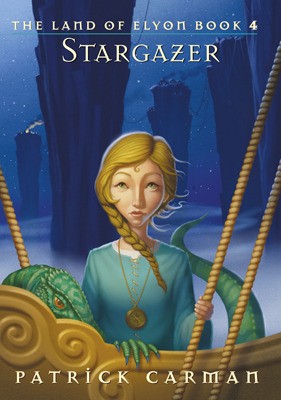
Stargazer by Patrick Carman (The Land of Elyon)
Patrick Carman returns to Elyon for the thrilling conclusion to the bestselling Land of Elyon series.
When last we …
lux ⛥ reviewed The Tenth City by Patrick Carman (The Land of Elyon)
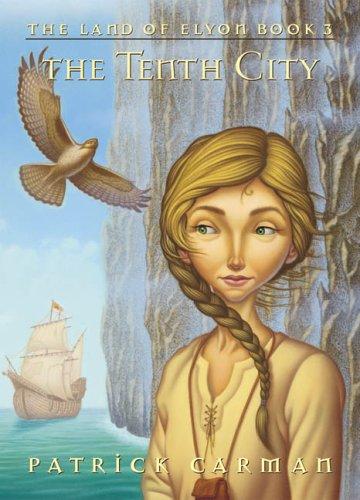
Alexa reveals the origin of the Land of Elyon while defending it against the evil …
Review of 'The Tenth City' on 'Goodreads'
4 stars
The third and final installment of the core Elyon trilogy offers a very satisfying continuation to the series. Perhaps the best yet, book 3 reveals many mystical truths about the Land of Elyon. Alexa's destiny begins to unfold as she fights to rid the world of Abaddon, the source of all evil. She isn't alone is this pursuit, although. With the help of of her friends aboard the ship, Warwick Beacon, the forces of good may triumph.
The Land of Elyon series is comprised of a core trilogy, a semi-prequel, and the concluding novel. The first three books detail Alexa's adventures in the Land of Elyon, as she struggles to fight evil. The semi prequel (Into the Mist) takes place directly after the events in The Tenth City, but most of the story is taken up by Roland's tale of his childhood. The final novel (Stargazer) is of Alexa's adventure …
The third and final installment of the core Elyon trilogy offers a very satisfying continuation to the series. Perhaps the best yet, book 3 reveals many mystical truths about the Land of Elyon. Alexa's destiny begins to unfold as she fights to rid the world of Abaddon, the source of all evil. She isn't alone is this pursuit, although. With the help of of her friends aboard the ship, Warwick Beacon, the forces of good may triumph.
The Land of Elyon series is comprised of a core trilogy, a semi-prequel, and the concluding novel. The first three books detail Alexa's adventures in the Land of Elyon, as she struggles to fight evil. The semi prequel (Into the Mist) takes place directly after the events in The Tenth City, but most of the story is taken up by Roland's tale of his childhood. The final novel (Stargazer) is of Alexa's adventure at the Five Stone Pillars where she discovers her true destiny.
Once again, Patrick Carman weaves his faith into his writing. The descriptions of the Tenth City being akin to heaven is the final confirmation of the Elyon-as-God analogy. It is the place where those who have left the realm of the living go to have new and better adventures in Elyon’s own city. Often, Alexa mentions returning to the Tenth City when her own adventures are complete. This gives the entire story an epic feeling.
Unlike the previous installment, Alexa’s character is much stronger. It undergoes a great deal of growth and development and she ends the book both wiser and sadder than she began it. She realizes and understands the power of Elyon as the greatest force of good in the world, and her destiny to be his agent. Alexa learns that the beauty of the Tenth City will be waiting for her. Most surprising, though, is the final revelation about Alexa’s true lineage. She finally learns where her love for adventure comes from. I don't want to give away any big spoilers, so you will have to read it for yourself!
The third installment of the Land of Elyon series could very well be the best yet. I enjoyed this adventure immensely and will cherish the spiritual impact it's allegories have had on me. Patrick Carman managed to create a tale that is infused with moral themes such as power, lust, and friendship. Contemporary issues such as respect for the environment also arise in the plot. His characters are very original, diverse, and definitely believable. They have both good and bad qualities. All in all, this a great book which I encourage anyone to read. Although, for the necessary flow of events, I recommend reading the series from the beginning.
lux ⛥ reviewed Into the Mist by Patrick Carman (The Land of Elyon)
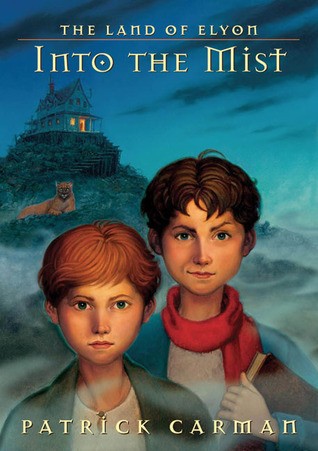
Before the walls went up...there were adventures. Follow young Thomas Warvold and his brother as …
Review of 'Into the Mist' on 'Goodreads'
5 stars
Into the Mist is a fantastic inclusion to the Land of Elyon series. It brings veteran readers a much needed understanding of the plot and new readers an excellent introduction. I would label this installment a semi-prequel, as the book starts out directly after the events of The Tenth City, but the majority of the story is of Roland's past as he tells his tale to Alexa. There are many interruptions in his tale (mainly by Yipes) and the story is brought back to the present-day events on the Warwick Beacon.
Into the Mist is a beautiful adventure of two brothers as they traverse a magical wilderness and make new friends. The magic of fantasy is evident in this book, along with the many qualities that contribute to a truly phenomenal story. It could very well be one of my favorite fiction novels of all time.
The story starts out …
Into the Mist is a fantastic inclusion to the Land of Elyon series. It brings veteran readers a much needed understanding of the plot and new readers an excellent introduction. I would label this installment a semi-prequel, as the book starts out directly after the events of The Tenth City, but the majority of the story is of Roland's past as he tells his tale to Alexa. There are many interruptions in his tale (mainly by Yipes) and the story is brought back to the present-day events on the Warwick Beacon.
Into the Mist is a beautiful adventure of two brothers as they traverse a magical wilderness and make new friends. The magic of fantasy is evident in this book, along with the many qualities that contribute to a truly phenomenal story. It could very well be one of my favorite fiction novels of all time.
The story starts out with ten-year-old Roland and his eleven-year-old brother Thomas. Neither remember their parents, and they only have each other for family. Their earliest memories are of an orphanage, but their mischief and pranks eventually get them transferred to The House on the Hill. This cruel and horrible place is run by an even fouler woman by the name of Madame Vickers. The House on the Hill is run down and perched upon a town's worth of garbage. Madame Vickers and her terrible son capture any unwanted orphans and force them to dig through the stinking, rotting garbage to find anything worth selling. The orphans are fed meagerly, and their sleeping quarters are located in the dark basement below the house. Roland and Thomas are in a nightmarishly grim situation.
One day, amid the rubble, Thomas and Roland find an old saddlebag that contains a strange piece of paper. The paper is inscribed with the words "Western Kingdom" and "Wakefield House", plus an interesting symbol that matches a design on the brothers' knees, a birthmark that resembles a tattoo. This is a calling for the boys to discover their true destiny. Out of curiosity (and maybe something greater) Thomas and Roland flee The House on the Hill to discover what the strange symbol means.
There are many reasons why I particularly favor this installment of the Land of Elyon series, but one is more prominent than all the others. During the story, Thomas and Roland are seemingly guided by curiosity throughout their adventures. One eventually learns that the godly force of Elyon has been the main influence on the lives of the brothers. He has been the drive that caused the boys to discover their destiny. Readers learn that Elyon has a plan for everybody and everything. Some people (Thomas and Roland for example) play a greater part than others in the grand scheme of things, but everybody has a part.
Into the Mist is both a fantastic prequel and continuation of the Land of Elyon series. This amazing fantasy is aided by its beautiful morals in creating a superb novel. After reading it, fans of the series should feel immensely satisfied and curiously thoughtful. It's definitely a book that turns your attention to the more magical and philosophical aspects of life.
Overall Grade: A+
A beautiful continuation of the series awaits readers. A new outlook of the land of Elyon should arise after understanding the past of Thomas and Roland Warvold. I highly recommend this book to those who like a good combination of adventure and morality.