Matthew Royal rated Penric and the Shaman: 3 stars
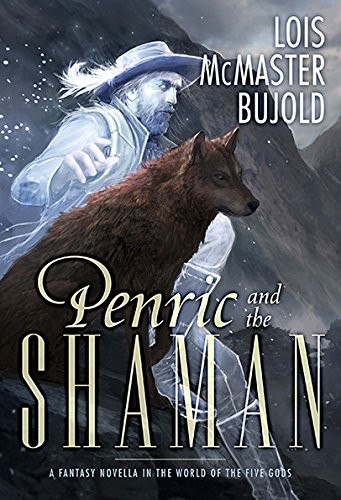
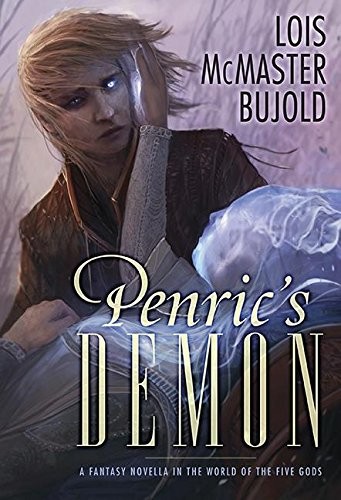
Penric and the Shaman by Lois McMaster Bujold
In this NOVELLA set in The World of the Five Gods and four years after the events in “Penric’s Demon”, …
Reading, Programming, Cooking, Renaissance Music
This link opens in a pop-up window

In this NOVELLA set in The World of the Five Gods and four years after the events in “Penric’s Demon”, …
I like this universe's idea of uphill and downhill (entropy) magic. Dunno if it's unique to the "Penric and Desdemona" subseries, the "World of the Five Gods" series, or Bujold's works in general, but I'm looking forward to reading more. This novella was an enjoyable entry point into her worlds!
I like this universe's idea of uphill and downhill (entropy) magic. Dunno if it's unique to the "Penric and Desdemona" subseries, the "World of the Five Gods" series, or Bujold's works in general, but I'm looking forward to reading more. This novella was an enjoyable entry point into her worlds!
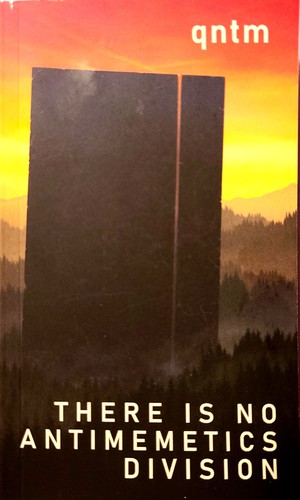
If you like Charles Stross's "Atrocity Archives" or Doctor Who's "The Silence" story arc, you're going to love "There Is No Antimemetics Division".
It explores the idea of what would an anti-meme war look like. I understand that the story was originally serialized on a blog, but it fits together pretty well. The final act was great, but just shy of mind-blowing.
I give 5 stars sparingly, but I knew this deserved one just 50 pages in. Overall, a great addition to my new sci-fi canon, because this story stays with me. I think about it during the day, and I feel like it shifts my perspective in an interesting way. I intended to ship it to my fellow-sci-fi-loving mom after I was done, but it's got more Lovecraftian gore and body horror than she'd like.
If you like Charles Stross's "Atrocity Archives" or Doctor Who's "The Silence" story arc, you're going to love "There Is No Antimemetics Division".
It explores the idea of what would an anti-meme war look like. I understand that the story was originally serialized on a blog, but it fits together pretty well. The final act was great, but just shy of mind-blowing.
I give 5 stars sparingly, but I knew this deserved one just 50 pages in. Overall, a great addition to my new sci-fi canon, because this story stays with me. I think about it during the day, and I feel like it shifts my perspective in an interesting way. I intended to ship it to my fellow-sci-fi-loving mom after I was done, but it's got more Lovecraftian gore and body horror than she'd like.

In a world with an uncertain future, do you imagine for the best or for the worst case scenario? Twelve …
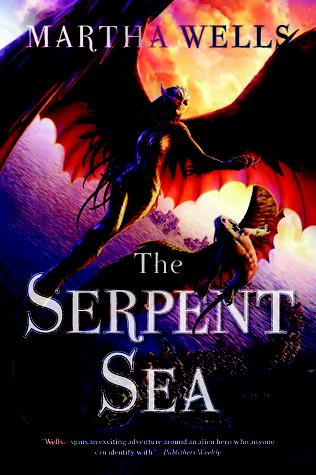
Much less world- and character-building than the first book, and the book really drags in the 3rd act.

I liked the approach, overall. It's disarming the fears or anxieties adult beginners may have approaching the piano. Some of the pieces toward the end actually don't sound half bad. I will say, there's not a ton of theory presented in the book, which I believe would go well with this sort of instruction.
I liked the approach, overall. It's disarming the fears or anxieties adult beginners may have approaching the piano. Some of the pieces toward the end actually don't sound half bad. I will say, there's not a ton of theory presented in the book, which I believe would go well with this sort of instruction.

This is somewhat a guilty pleasure read. I enjoyed it, despite recognizing plot tropes that made the outcome predictable.
The world Wells has built is interesting, and I want to see more!
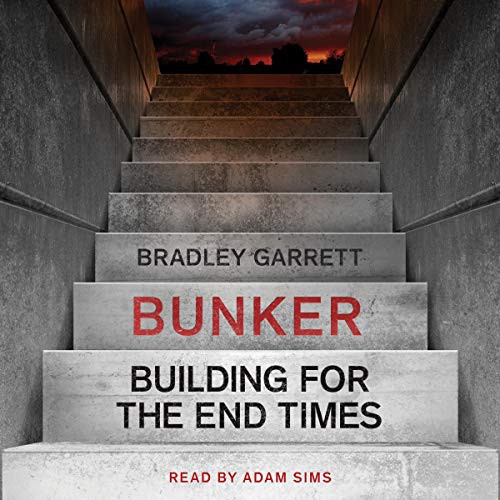
Garrett comes across as a rational skeptic, able to discern between reasonable folk and eccentrics. I've always been fascinated with the idea of having a secret passage, an underground house, a private island with an office 20 stories deep, and the prepping industry is designed to sell accessories for those dreams by fanning literally any fears. Who knew that Oppidum was cash-strapped vaporware?
Missing from the message of most preppers is what happens "after." A fair question to ask them for when the world collapses is "and then what?"
The most compelling messages I see in this book are from the Mormons. I love that they've already built their post-apocalyptic communities -- they've built pre-apocalyptic communities that have resource resilience at the individual and community levels.
The best outlet for your prepper impulses is to build more resilience into your life: keep a pantry, figure out how you would make …
Garrett comes across as a rational skeptic, able to discern between reasonable folk and eccentrics. I've always been fascinated with the idea of having a secret passage, an underground house, a private island with an office 20 stories deep, and the prepping industry is designed to sell accessories for those dreams by fanning literally any fears. Who knew that Oppidum was cash-strapped vaporware?
Missing from the message of most preppers is what happens "after." A fair question to ask them for when the world collapses is "and then what?"
The most compelling messages I see in this book are from the Mormons. I love that they've already built their post-apocalyptic communities -- they've built pre-apocalyptic communities that have resource resilience at the individual and community levels.
The best outlet for your prepper impulses is to build more resilience into your life: keep a pantry, figure out how you would make breakfast without any power or water, have an emergency plan and a basic emergency kit, build relationships with your neighbors and provide mutual support, participate in community disaster relief programs.
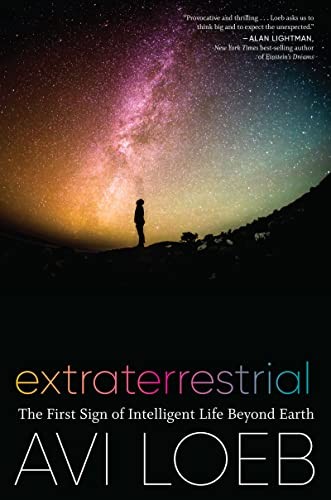
"And yet it moves" was Galileo's sotto voce remark, after the Church forced him to recant his statements about the Earth moving around the sun. Loeb criticizes astronomers who assert that Oumuamua's non-gravitational movement was due to outgassing, despite no visible evidence of outgassing.
The core idea of this book is that other astronomers freely admitting that no visible outgassing was detected, are nevertheless committed to the explanation and unreasonably refuse to consider other possibilities. Loeb's favorite possibility is that solar radiation pressure explains the acceleration, if Oumuamua is a thin mass, like the lightsails we've designed on Earth. He's coy about committing to alien construction of such a sail, but states it as a possibility.
Overall, the book is longer than it needs to be, and contains more autobiographical material than I like, but I do appreciate the sentiment that Science has to be open-minded and follow the data …
"And yet it moves" was Galileo's sotto voce remark, after the Church forced him to recant his statements about the Earth moving around the sun. Loeb criticizes astronomers who assert that Oumuamua's non-gravitational movement was due to outgassing, despite no visible evidence of outgassing.
The core idea of this book is that other astronomers freely admitting that no visible outgassing was detected, are nevertheless committed to the explanation and unreasonably refuse to consider other possibilities. Loeb's favorite possibility is that solar radiation pressure explains the acceleration, if Oumuamua is a thin mass, like the lightsails we've designed on Earth. He's coy about committing to alien construction of such a sail, but states it as a possibility.
Overall, the book is longer than it needs to be, and contains more autobiographical material than I like, but I do appreciate the sentiment that Science has to be open-minded and follow the data to wherever it leads, rather than prematurely pruning leads. Denying the possibility of it behaving like a lightsail simply because "it's never aliens" is intellectually lazy.
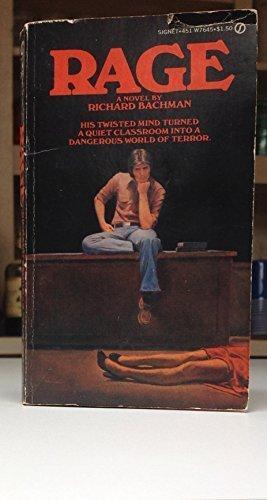
Rage (written as Getting It On; the title was changed before publication) is a psychological …
A very generation-specific story about societal repression.

The End of Eternity is a 1955 science fiction novel by Isaac Asimov with mystery …
Asimov is brain candy, but gourmet candy... His books are brain bonbons.
It's difficult to write a review about a book about time travel without spoilers, but this one is on par with the best Doctor Who episodes, but less convoluted than Primer.
It's a human-scale story about how time travel might be used by humans and how it might change humanity.
Asimov is brain candy, but gourmet candy... His books are brain bonbons.
It's difficult to write a review about a book about time travel without spoilers, but this one is on par with the best Doctor Who episodes, but less convoluted than Primer.
It's a human-scale story about how time travel might be used by humans and how it might change humanity.
![Gardner Dozois: The year's best science fiction (Hardcover, 2006, Griffin, Melia [distributor])](/images/covers/c073936c-1c76-4cb4-b96a-898401cf2eec.jpeg)