I read light, but broadly. Currently one of my favorite things is to dig up female sci-fi/fantasy authors from the 70s and 80s.
I find it difficult to separate my own personal experience of a book from its "objective" good or bad qualities and rate and review it in a way that could be useful for some hypothetical Universal Reader. I just wanna chat, really.
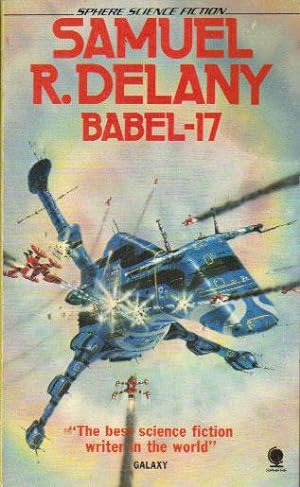
During an interstellar war one side develops a language, Babel-17, that can be used as …
I'm so excited to finally dive into Samuel R. Delany's bibliography. I've read a lot about him, a bunch of interviews, and he comes across as a very interesting, extremely intelligent and completely shameless person. All of which I admire and appreciate. I really hope his fiction won't disappoint, because I know his work can be a little bit strange and esoteric. But that's kind of what I'm hankering for right now.
I'm so excited to finally dive into Samuel R. Delany's bibliography. I've read a lot about him, a bunch of interviews, and he comes across as a very interesting, extremely intelligent and completely shameless person. All of which I admire and appreciate.
I really hope his fiction won't disappoint, because I know his work can be a little bit strange and esoteric. But that's kind of what I'm hankering for right now.
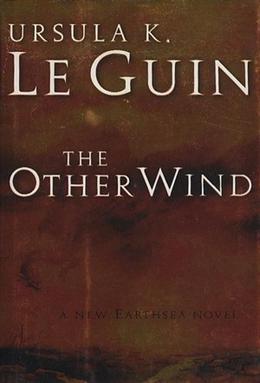
More than any other fantasy world I've ever read, Le Guin's Earthsea feels like a real place, filled with real people. Though her worldbuilding is more of a quick charcoal sketch than, say, Tolkien's intricate oil painting, there's an earthiness and solidity to her work that you just don't find very often in this genre. It's still so good and so rare and so refreshing. No one did it like her, man. No one.
More than any other fantasy world I've ever read, Le Guin's Earthsea feels like a real place, filled with real people. Though her worldbuilding is more of a quick charcoal sketch than, say, Tolkien's intricate oil painting, there's an earthiness and solidity to her work that you just don't find very often in this genre. It's still so good and so rare and so refreshing. No one did it like her, man. No one.
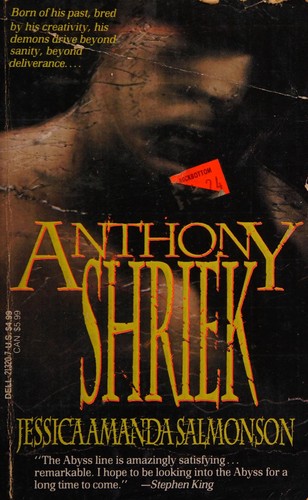
I was only able to read this book because of the Internet Archive. No local libraries carry it, it's out of print and the cheapest secondhand copy is 50 bucks (and that's without factoring in the costs of shipping it across the ocean...). It's so obscure I couldn't even pirate it. And yet, it's also a cult classic by Jessica Amanda Salmonson, a great, but underappreciated author and editor of anthologies of SF/F stories by female authors (I got my profile pic from the cover of one of her anthologies!). It's a damn good 90s horror that I had wanted to read for ages.
I'm well aware that not being able to read a mostly forgotten horror novel isn't the end of the world, but I also know that there are many people in countries that don't have as solid a library system as mine does, who rely on …
I was only able to read this book because of the Internet Archive. No local libraries carry it, it's out of print and the cheapest secondhand copy is 50 bucks (and that's without factoring in the costs of shipping it across the ocean...). It's so obscure I couldn't even pirate it. And yet, it's also a cult classic by Jessica Amanda Salmonson, a great, but underappreciated author and editor of anthologies of SF/F stories by female authors (I got my profile pic from the cover of one of her anthologies!). It's a damn good 90s horror that I had wanted to read for ages.
I'm well aware that not being able to read a mostly forgotten horror novel isn't the end of the world, but I also know that there are many people in countries that don't have as solid a library system as mine does, who rely on the Internet Archive to access textbooks, academic works and all kinds of learning material. So many important, but niche books will become completely inaccessible to anyone but the people lucky enough to live close to a library carrying it. Which will mostly be people in the global North.
I wasn't very optimistic about IA's chances in court. I know they're going to appeal, but I'm not holding my breath. But if they're forced to stop lending books, they'll be sorely missed. Losing their treasure trove of knowledge will be a huge blow globally.
Vervolg op Torenhoog en mijlenbreed, kan apart gelezen worden.
Jock Martijn is ontslagen als …
This is supposed to be a stand-alone sequel, but this far in, I'm feeling like I'm probably going to encounter some spoilers for the first book. So I'm going to put it on hold until I've read that one.
This is supposed to be a stand-alone sequel, but this far in, I'm feeling like I'm probably going to encounter some spoilers for the first book. So I'm going to put it on hold until I've read that one.
Vervolg op Torenhoog en mijlenbreed, kan apart gelezen worden.
Jock Martijn is ontslagen als …
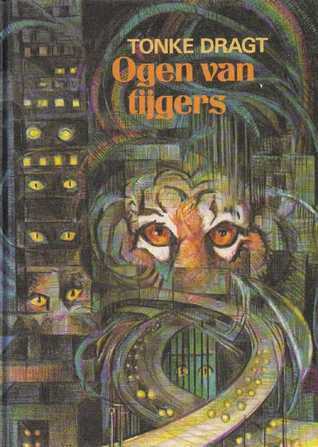
Tiger Eyes: a story of the future
Non-Dutch readers might know Tonke Dragt as the author of "The Letter for the King", a book which has recently been adapted into a Netflix series (...which I haven't watched.) This is probably also her most famous and beloved book over here. It even received a prize for being the best Dutch children's novel of the past fifty years. She also wrote science fiction for a slightly older audience - what we'd now call YA- and this book is one of those novels.
I'll just say a little bit about her life, because it's so interesting; She was born in what at the time was still the Dutch East Indies, and spend her early teens in an internment camp for Dutch women and children during the Japanese invasion of the country. It was during these years that she started writing, on …
Tiger Eyes: a story of the future
Non-Dutch readers might know Tonke Dragt as the author of "The Letter for the King", a book which has recently been adapted into a Netflix series (...which I haven't watched.) This is probably also her most famous and beloved book over here. It even received a prize for being the best Dutch children's novel of the past fifty years.
She also wrote science fiction for a slightly older audience - what we'd now call YA- and this book is one of those novels.
I'll just say a little bit about her life, because it's so interesting;
She was born in what at the time was still the Dutch East Indies, and spend her early teens in an internment camp for Dutch women and children during the Japanese invasion of the country. It was during these years that she started writing, on bits of stolen toilet paper according to the bio in one of her books. You can imagine that stuck with me as a child.
Tiger Eyes is sequel to an older novel, which was published before scientists knew that the surface of Venus was a barren wasteland. Maybe it's therefore her youth in the tropics that led her to imagine the planet as home to a lush, gigantic rainforest "of towering heights and miles across".
This in contrast to her vision of future Earth; a dense urban sprawl, dotted by the occasional nature reserve. We all have robotic domestic servants, and rain is scheduled to only fall at night. Tigers are extinct, and anything truly wild and dangerous has to be found off-planet.
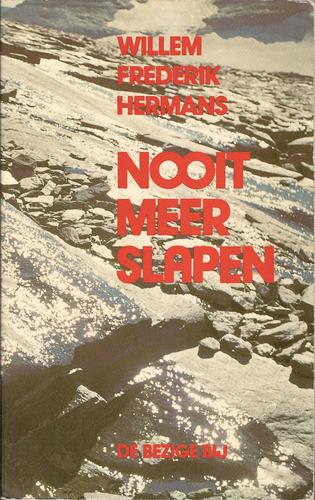
Am I finally of that age where I can genuinely appreciate a work of "real literature" or is this book just really that good, like everyone who recommended it to me said it was? Considering its age, this book feels like a surprisingly modern with themes that, if anything, have only become more relevant. Language and culture shock, anxiety and parental pressures, dealing with the "what-ifs" of life. These are nice, easily identifiable themes. Which doesn't mean that Hermans' approach isn't nuanced, it just means that you feel very smart when you realize "Ah! Here he's talking about the struggle between Man and Nature!" Which is another strong theme. One of the book's best qualities are how Hermans' writing makes you feel the desolation and eerie, dangerous beauty of the Lapland landscape.
The only thing that makes it feel very of its time are the really... iffy comments towards …
Am I finally of that age where I can genuinely appreciate a work of "real literature" or is this book just really that good, like everyone who recommended it to me said it was?
Considering its age, this book feels like a surprisingly modern with themes that, if anything, have only become more relevant. Language and culture shock, anxiety and parental pressures, dealing with the "what-ifs" of life.
These are nice, easily identifiable themes. Which doesn't mean that Hermans' approach isn't nuanced, it just means that you feel very smart when you realize "Ah! Here he's talking about the struggle between Man and Nature!"
Which is another strong theme. One of the book's best qualities are how Hermans' writing makes you feel the desolation and eerie, dangerous beauty of the Lapland landscape.
The only thing that makes it feel very of its time are the really... iffy comments towards black people. It's strange, since Hermans does brilliantly dissect the myth of the great European explorer, who conveniently forgets to mention all the locals who led the way and carried the provisions. And the way he contrasts how the indigenous Sami people thrive in this hostile landscape with the efforts of the educated scientist main characters to survive in the high north also doesn't seem very consistent with anti-blackness.
You'd think that someone with enough sense to recognize colonialist attitudes and reject them, would not also perpetuate the condescending ideas about blackness in those passages.
Our first person narrator and protagonist is a bit of a dickhead though, so maybe that's why.
Not to diminish any of the actual horrors visited upon these characters during the Soviet regime, but my god, considering the current housing shortage in the Netherlands, it was very difficult in those first few 100 pages trying to empathize with a very rich family losing their giant mansion, lmao.
(Oh, the state forces your 70 year old single, childless aunt to move out of her big, big house in the city centre to a nice, two-bedroom apartment also in the city centre? I... I really just don't think that's a bad thing, I don't feel sorry for her, I don't know what else to tell you.)
Not to diminish any of the actual horrors visited upon these characters during the Soviet regime, but my god, considering the current housing shortage in the Netherlands, it was very difficult in those first few 100 pages trying to empathize with a very rich family losing their giant mansion, lmao.
(Oh, the state forces your 70 year old single, childless aunt to move out of her big, big house in the city centre to a nice, two-bedroom apartment also in the city centre? I... I really just don't think that's a bad thing, I don't feel sorry for her, I don't know what else to tell you.)
Phil Hastings was a lucky man-he had money, a growing reputation as a screenwriter, a …
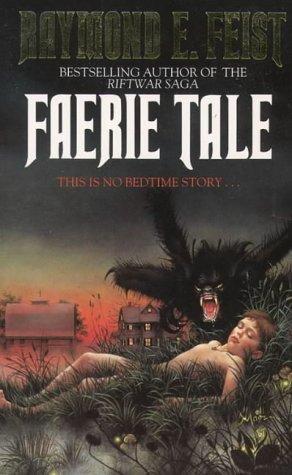
I am really picky when it comes to depictions of the Fair Folk in modern fiction. I often find that authors either make them too twee, or go too far in the other direction and make them too evil. Personally I prefer my fairies to be Strange - capital S. My favorite conceptualizations don't really think of them as either good or evil, but simply so different from humans, with such different ideas of what is polite, or valuable or moral, that they can't help but hurt us. This is a very delicate balance to strike. Brian Froud gets it right, I think, but my favorite interpretation of the Gentry is the late great Terry Pratchett. This book, however, comes close. It comes very close. Feist can't resist explaining the Fae just a little bit too much, and also relies just a little bit too much on the Seelie/Unseelie dichotomy …
I am really picky when it comes to depictions of the Fair Folk in modern fiction. I often find that authors either make them too twee, or go too far in the other direction and make them too evil. Personally I prefer my fairies to be Strange - capital S. My favorite conceptualizations don't really think of them as either good or evil, but simply so different from humans, with such different ideas of what is polite, or valuable or moral, that they can't help but hurt us.
This is a very delicate balance to strike. Brian Froud gets it right, I think, but my favorite interpretation of the Gentry is the late great Terry Pratchett.
This book, however, comes close. It comes very close. Feist can't resist explaining the Fae just a little bit too much, and also relies just a little bit too much on the Seelie/Unseelie dichotomy - which in my opinion often drifts into the very human tendency to categorize and label and divide into binaries, which is very antithetical to how I like the little folk to be. They're not quite Strange, but at least he manages to teeter beautifully on that edge between good and evil.
When it comes to pacing, though, he could've definitely spend a lot less time on the set-up. We're all here for the faeries, but instead the first 300 pages or so are mostly soap opera fare, with an occasional sprinkle of supernatural menace. More menace earlier on, please!
So, I've arrived at a point in the book where the main character seems to be fully doomed, and I'm afraid to go on reading. Because, oops, somewhere along the way I started to care about the guy.
Alfred, who aspires to be a great geologist after his scientist father died when he was a child, travels into the wilderness with three Norse students to do field work in the Arctic circle during the time of the midnight sun. He is intensely anxious and has an intense inferiority complex that's encouraged by his travel group's competency in an environment with which he is unfamiliar. I like to think I wouldn't be too proud to tap out in time, like Alfred, but my god, his emotions are uncomfortably recognizable to me.
The part where the book really started to click for me is a chapter early on that discusses …
So, I've arrived at a point in the book where the main character seems to be fully doomed, and I'm afraid to go on reading. Because, oops, somewhere along the way I started to care about the guy.
Alfred, who aspires to be a great geologist after his scientist father died when he was a child, travels into the wilderness with three Norse students to do field work in the Arctic circle during the time of the midnight sun. He is intensely anxious and has an intense inferiority complex that's encouraged by his travel group's competency in an environment with which he is unfamiliar.
I like to think I wouldn't be too proud to tap out in time, like Alfred, but my god, his emotions are uncomfortably recognizable to me.
The part where the book really started to click for me is a chapter early on that discusses English as the scientific (and artistic) lingua franca. Unless your main language is English, or to a lesser extent, one of the other "big" languages (French, German, Spanish), most scientific literature will never be translated into your language. Many great literary works won't be either. You have to learn another language to access them. This means that anything written in English is automatically cast in a light of authority and worldliness. While the own language seems boorish. The language of the everyday. Buying groceries and talking about the weather, not a language of art, philosophy and science.
And this book was written in the '60s! If the multiple guys I've known who went through a "I don't wanna speak Dutch, because English is the superior language" phase are to be believed - this has only become more true.
It really hit home with me, since I'm doing an international Master's programme and working in a position where I mostly speak English. I live in the Netherlands, but spend most days communicating in a different language. Partly that's on me, after all, I'm writing this in English too, but it's still a strange experience.
Language is an overarching theme throughout this book, with one of the issues that Alfred has to deal with being communication issues between himself and his Norse-speaking companions.
One thing I really like about those passages is that I feel that Hermans has really captured how ESL speakers speak among each other. People kind of stop caring about their accents, or having perfect grammar. Words of their first language start to sneak into exlamations and short sentences. The goal of speaking the language "like a native" is thrown out the window in favor of using it almost as a crude tool to hack away with at the communication barrier. It's kind of fun actually.
When a murdered woman is found in the city of Beszel, somewhere at the edge …
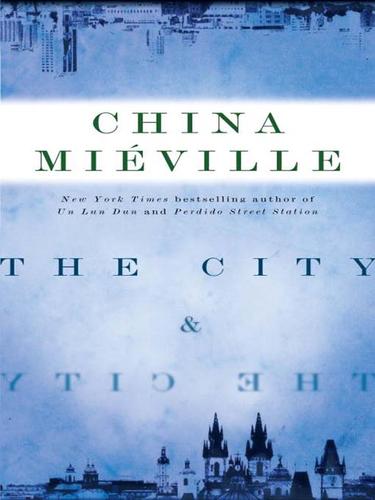
Since I just started playing Disco Elysium, I thought I should pick up this book from a great author I haven't read enough (yet). A lot of people recommended this to fans of the game and the similarities are clear; both detective stories, set in vaguely post-Soviet cities in worlds where reality is... just a little bit out of whack. Beautiful prose, as always, and it seems like it's a much more accessible story than the other book for adults I've read from him, Embassytown. (though maybe I was just a little bit too young for its highbrow themes? I should add it to the re-read list.)
Since I just started playing Disco Elysium, I thought I should pick up this book from a great author I haven't read enough (yet).
A lot of people recommended this to fans of the game and the similarities are clear; both detective stories, set in vaguely post-Soviet cities in worlds where reality is... just a little bit out of whack. Beautiful prose, as always, and it seems like it's a much more accessible story than the other book for adults I've read from him, Embassytown. (though maybe I was just a little bit too young for its highbrow themes? I should add it to the re-read list.)
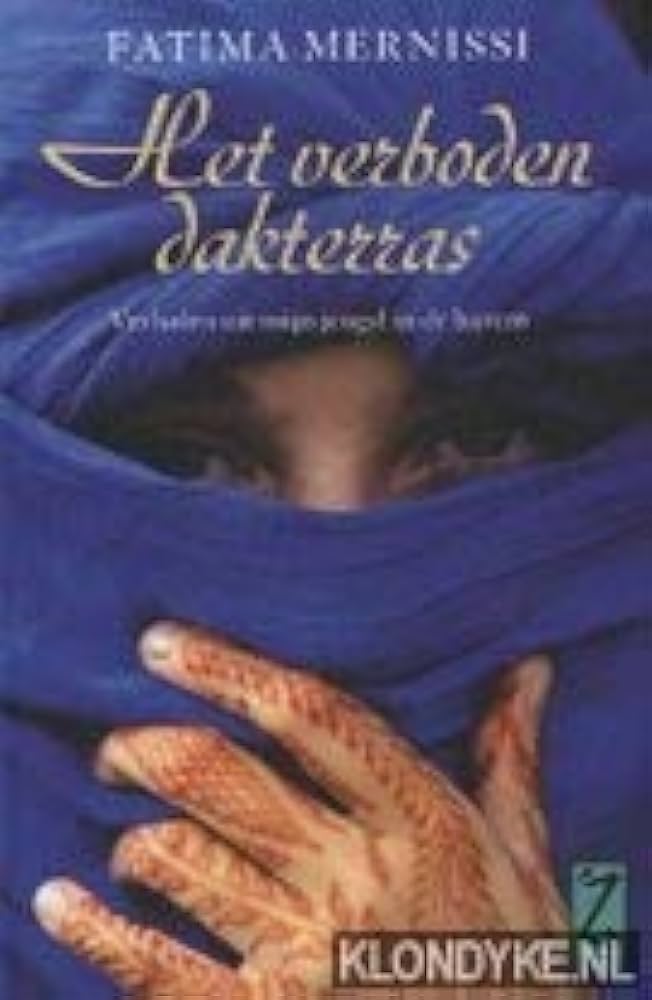
In 1940, harems still abounded in Fez, Morocco. They weren't the opulent, bejeweled harems of …
By the way, this book should be available in English as "The Harem Within" or "Dreams of Trespass - Tales of a Harem Girlhood". (I like that last title, "dreams of trespass" is very poetic.)
By the way, this book should be available in English as "The Harem Within" or "Dreams of Trespass - Tales of a Harem Girlhood".
(I like that last title, "dreams of trespass" is very poetic.)
In 1940, harems still abounded in Fez, Morocco. They weren't the opulent, bejeweled harems of …
Growing up in a harem
No rating
If highly recommend this book to anyone who's interested in the topics of feminism, women's rights and Islam. It skillfully circumvents the Western tendencies to either paint all Muslim women as oppressed doormats and all Muslim men as patriarchal brutes, as well as the tendency sometimes seen in more liberal spaces to refuse to acknowledge the religious oppression of women in Arabic countries entirely. And it does it while being an accessible and beautifully written memoir, rather than a dry academic text!
This book broadened my perspective so much by mentioning Muslim feminist thinkers (male and female) that I'd never heard of before. (This is the sort of book in which you do NOT skip the footnotes.) While Mernissi is a little child who feels the pressure to fulfill her mother's wish to be "a modern woman", most of the other characters are her family members of an older …
If highly recommend this book to anyone who's interested in the topics of feminism, women's rights and Islam. It skillfully circumvents the Western tendencies to either paint all Muslim women as oppressed doormats and all Muslim men as patriarchal brutes, as well as the tendency sometimes seen in more liberal spaces to refuse to acknowledge the religious oppression of women in Arabic countries entirely. And it does it while being an accessible and beautifully written memoir, rather than a dry academic text!
This book broadened my perspective so much by mentioning Muslim feminist thinkers (male and female) that I'd never heard of before. (This is the sort of book in which you do NOT skip the footnotes.) While Mernissi is a little child who feels the pressure to fulfill her mother's wish to be "a modern woman", most of the other characters are her family members of an older generation. Divorced women, women who live in a harem, are concubines, or former enslaved people. Though largely illiterate, they are smart and self-possessed, and they crave stories about Muslim women with more freedom and power than they have. Some of the most interesting and strong women in the book are the nine wives/concubines of Mernissi's grandfather.
There's a lot of passages that feel like little covert critiques of the space Western (especially second wave) feminism affords to sensuality, beauty, romance, polygamy (she's not a fan) and magic and that's very valuable too.
It's a funny coincidence, I ended my year with a book written by a female Moroccan author, and I started it with a book of poems from another Moroccan woman. She was probably about two decades old when Mernissi was born, so their lives overlapped too. I'm definitely going to review her work, too. It's just too interesting to not talk about.