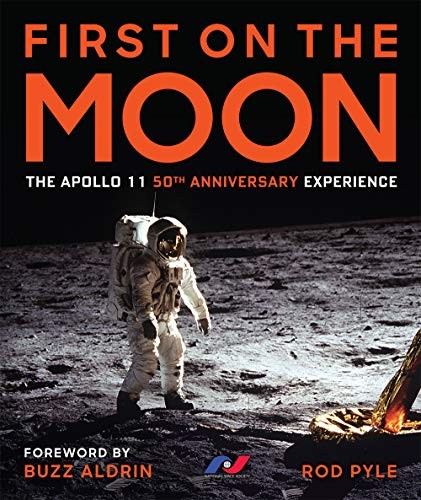
Very good book. The photos, covering the entire period from Sputnik through Apollo, are beautiful, as you would expect. The text focuses on the crew of Apollo 11, both in the command module and the professionals on the ground.
Learned the fascinating story of the design and production of the lunar landing module. Good interviews with children of Armstrong and Aldrin too.
Even if you watched all six hours of PBS’ “Chasing the Moon” film and other productions marking the half century since Apollo 11, you’ll probably learn something from this book. You’ll enjoy it too.
"Tech-guru Brian McCullough delivers a rollicking history of the internet, why it exploded, and how …
Review of 'How the Internet happened' on 'Goodreads'
4 stars
[b:How the Internet Happened: From Netscape to the iPhone|38212134|How the Internet Happened From Netscape to the iPhone|Brian McCullough|https://images.gr-assets.com/books/1524256229s/38212134.jpg|59883960] is the result of Brian McCullough’s researching and hosting the Internet History Podcast for the last few years.
The book’s subtitle tells you a little bit of what the book does and doesn’t cover: This is not about building the network and connecting the academics in the 1960s and 1970s. It is not a social history of the Internet, nor does it cover much of the open-source movement that underlies so much of what the internet is today.
What you will get in this book is a clear sense of how a military/academic network of mainframe computers and terminals familiar to very few became an essential part of most people’s lives. The narrative is often informed by the people at the center of the transformation. Among the topics covered:
* The transition …
[b:How the Internet Happened: From Netscape to the iPhone|38212134|How the Internet Happened From Netscape to the iPhone|Brian McCullough|https://images.gr-assets.com/books/1524256229s/38212134.jpg|59883960] is the result of Brian McCullough’s researching and hosting the Internet History Podcast for the last few years.
The book’s subtitle tells you a little bit of what the book does and doesn’t cover: This is not about building the network and connecting the academics in the 1960s and 1970s. It is not a social history of the Internet, nor does it cover much of the open-source movement that underlies so much of what the internet is today.
What you will get in this book is a clear sense of how a military/academic network of mainframe computers and terminals familiar to very few became an essential part of most people’s lives. The narrative is often informed by the people at the center of the transformation. Among the topics covered:
* The transition from proprietary commercial online services to the open World Wide Web * The browser wars of the 1990s * How the mainstream media botched online news in the early days * Amazon, eBay and the birth of online commerce * How we began to think of the internet as the “New Economy,” immune from business cycles, and how that bubble burst * The origins of online search * The birth of digital music and the copyright wars that ensued * The rise of blogging and social media after the bubble burst * A brief history of how Apple went from near-bankruptcy to being the wealthiest corporation on Earth
McCullough also tells us how Google managed to survive the dot-bomb crash of 2000-01 to become one of today’s dominant companies. This happened almost by accident.
The new version of AdWords had advertisers bid against competitors’ ads, but Google’s system was not simply pay-for-placement. Ever enamoured with math and the power of algorithms, Google ingtroduced an important new ranking factor for the ads it called a “Quality Score.” In essence, Google’s system took into account how often that ad was actually clicked on, in addition to how much an advertiser was willing to pay per click. … Over time, more money would come in from a 5-cent ad that was clicked on 25 times—than from a dollar ad that was only clicked on once. Brian McCullough, How the Internet Happened: From Netscape to the iPhone p.230
What this means is that Google discovered the importance of learning everything about its users (meaning: you and I), because they could make money from that knowledge. To fully understand, you should check out [b:The Age of Surveillance Capitalism: The Fight for a Human Future at the New Frontier of Power|26195941|The Age of Surveillance Capitalism The Fight for a Human Future at the New Frontier of Power|Shoshana Zuboff|https://images.gr-assets.com/books/1521733914s/26195941.jpg|46170685]. I’m reading that now, and will probably have a lot to say about it when I finish. Right now, I can tell you it succeeds in altering one’s perception of what’s wrong with Big Tech.
McCullough is more interested in the businesses that built the web, you’ll get a lot of stock prices, investment numbers, and net worth of the founders. If you liked the National Geographic Channel series, “Valley of the Boom,” you will enjoy the more detailed stories. All the main subplots get at least a mention. If the docudrama elements turned you off, you’ll appreciate the research and storytelling that McCullough delivers.
What scares me most about this book is that, for better or worse, Facebook’s Mark Zuckerberg comes off the best of all the book’s founders, as the person who (accidentally) really had the purest vision. Once he figured that out, he refused to sell out. That worked out, didn’t it?
I’ve read a lot about the history of the internet, and How the Internet Happened is one of the better ones. I started listening to McCullough’s podcast, which continues on, as a result of this book and learned a bit from both the source interviews and the collected text. You likely will too.
[b:Rock Critic Law: 101 Unbreakable Rules for Writing Badly About Music|34605649|Rock Critic Law 101 Unbreakable Rules for Writing Badly About Music|Michael Azerrad|https://images.gr-assets.com/books/1531943923s/34605649.jpg|55753963] is a fun, short read by the author of [b:Our Band Could Be Your Life: Scenes from the American Indie Underground, 1981-1991|29393|Our Band Could Be Your Life Scenes from the American Indie Underground, 1981-1991|Michael Azerrad|https://images.gr-assets.com/books/1543095533s/29393.jpg|522136]. It is filled with many, perhaps most, of the cliches music writers use as a crutch. You've seen these laws in action in every magazine, website, or book containing music reviews, interviews or profiles of rockers.
Two examples: Do you know why no critic ever has described an artist's third collection of songs as a "junior" album? I guess it's because of this law:
Second albums are a "sophomore effort," NEVER a "sophomore album." And an effort can never be freshman, junior or senior.
Also:
If a new group …
[b:Rock Critic Law: 101 Unbreakable Rules for Writing Badly About Music|34605649|Rock Critic Law 101 Unbreakable Rules for Writing Badly About Music|Michael Azerrad|https://images.gr-assets.com/books/1531943923s/34605649.jpg|55753963] is a fun, short read by the author of [b:Our Band Could Be Your Life: Scenes from the American Indie Underground, 1981-1991|29393|Our Band Could Be Your Life Scenes from the American Indie Underground, 1981-1991|Michael Azerrad|https://images.gr-assets.com/books/1543095533s/29393.jpg|522136]. It is filled with many, perhaps most, of the cliches music writers use as a crutch. You've seen these laws in action in every magazine, website, or book containing music reviews, interviews or profiles of rockers.
Two examples: Do you know why no critic ever has described an artist's third collection of songs as a "junior" album? I guess it's because of this law:
Second albums are a "sophomore effort," NEVER a "sophomore album." And an effort can never be freshman, junior or senior.
Also:
If a new group includes at least two former members of a now-defunct band, then it is "formed from the ashes" of that band.
If you want reasons behind these laws, or the history of how they've evolved, you're in the wrong place. Just enjoy both the "laws" and the accompanying illustrations.
If you write about rock, you may want to keep this near your writing place. Try to be a little more creative, huh? Thank you!
(Originally published at Notes from the Metaverse)
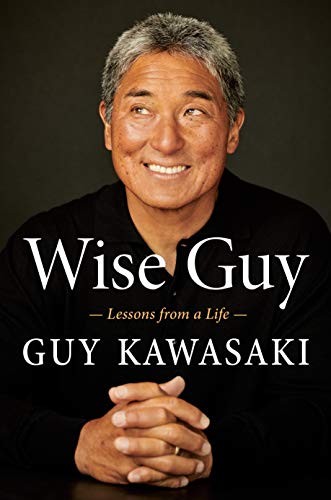
Disclaimer: This week marks the publication of Guy Kawasaki’s 15th book, Wiseguy: Lessons from a Life. Having read a few of his previous books, including The Art of Social Media and What’s The Plus? (his guide to the soon-to-be-disappeared Google Plus social network), I jumped at the chance to read an advance copy of this part-memoir, part-advice book.
tldr; Wiseguy is entertaining, but the wisdom isn’t very deep.
Chances are you’ve heard of Kawasaki through his long association with Apple or from his extensive participation on Twitter and other social media (see the book I mentioned in the disclaimer). Both of these facets of Kawasaki’s life are on display in Wiseguy, but this isn’t really about either. In the very first paragraph of the preface, he describes his intent: “it is a compilation of the most enlightening stories of my life.”
Yes, …
(Originally published at Notes from the Metaverse)
Disclaimer: This week marks the publication of Guy Kawasaki’s 15th book, Wiseguy: Lessons from a Life. Having read a few of his previous books, including The Art of Social Media and What’s The Plus? (his guide to the soon-to-be-disappeared Google Plus social network), I jumped at the chance to read an advance copy of this part-memoir, part-advice book.
tldr; Wiseguy is entertaining, but the wisdom isn’t very deep.
Chances are you’ve heard of Kawasaki through his long association with Apple or from his extensive participation on Twitter and other social media (see the book I mentioned in the disclaimer). Both of these facets of Kawasaki’s life are on display in Wiseguy, but this isn’t really about either. In the very first paragraph of the preface, he describes his intent: “it is a compilation of the most enlightening stories of my life.”
Yes, Steve Jobs makes multiple appearances, but the hardest hitting comment Kawasaki makes is that “it wasn’t easy to work for him; it was sometimes unpleasant and always scary, but it drove many of us to do the finest work of our careers.”
The most interesting bits of this book are the personal ones: growing up in Hawaii as the son of a politician. How he quit law school during orientation week. His various sporting pursuits: Playing football in high school. Falling in love with hockey (as a fan and player) in his 40s, and then taking up surfing in his 60s after his daughter went crazy for the sport.
The surfing stories also highlight another theme of the book: the amazing luck Kawasaki has had in meeting the right people at the right time. His surfing teachers include some of the most famous surfers ever (not that I would know, but he doesn’t hesitate to tell us).
Among the stories he tells is his accidental ride in a military fighter jet, arranged after a presentation to the Pentagon Mac Users Group. How he got to be a “brand ambassador” for Mercedes-Benz. How he tweeted his way to an evangelist job at Canva.
After each story, Kawasaki offers us the “wisdom” he gained from the story he’s just told. All these stories are meant to explain how he got to be a “wiseguy.”
Now there’s nothing wrong with the advice he shares. There’s some important ideas in here. For me, the problem is that it’s just not unique. If you’ve read even one self-help book in your life, you’ve probably encountered most of these. After reading the stories, Kawasaki doesn’t offer something he learned that seems counter-intuitive. or different.
Wiseguy: Lessons from a Life is a quick, entertaining read. It might inspire you to do great things. I am going to put one more book on my to-read list after Kawasaki recommends it three times in this 236-page book: If You Want to Write by Brenda Ueland. See how that goes.