Review of "The Renegade Writer's Query Letters That Rock" on 'Goodreads'
4 stars
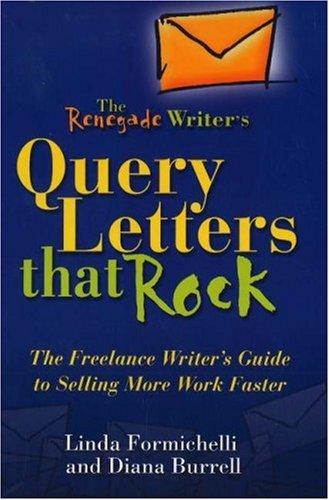
Was looking for inspiration as I jump back into freelancing to make some extra cash. Query Letters That Rock contain just that, with some worthwhile FAQs to start you out.
While some of the book is dated, with long-gone markets, but the advice is timeless.
Review of 'The man who fell to earth' on 'Goodreads'
3 stars
DISCLAIMER: I haven’t seen the movie, though I was driven to read the book while grieving for David Bowie.
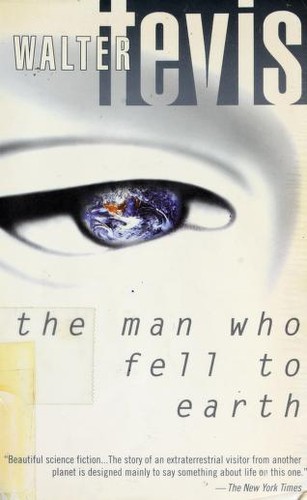
The Man Who Fell to Earth is, interestingly, dated and timeless at the same time. It’s populated with organization men that dominated the early 1960s, when this book was written, but winds up being a story about alienation and being alone. The three lead characters: alien entrepreneur Thomas J. Newton, his gin-soaked housekeeper, Betty Jo Mosher, and his chief scientist Nathan Bryce, are all lacking for companions in the world.
However, this is not a story about seeking companions, either. It’s a story about building a ferry boat to the stars. And making money. And doing science. There are no big battle scenes, or a climactic confrontation, but it offers much to think about. Some scenes will remind the modern reader of ET: The Extraterrestrial though.
One small complaint: Tevis …
DISCLAIMER: I haven’t seen the movie, though I was driven to read the book while grieving for David Bowie.
The Man Who Fell to Earth is, interestingly, dated and timeless at the same time. It’s populated with organization men that dominated the early 1960s, when this book was written, but winds up being a story about alienation and being alone. The three lead characters: alien entrepreneur Thomas J. Newton, his gin-soaked housekeeper, Betty Jo Mosher, and his chief scientist Nathan Bryce, are all lacking for companions in the world.
However, this is not a story about seeking companions, either. It’s a story about building a ferry boat to the stars. And making money. And doing science. There are no big battle scenes, or a climactic confrontation, but it offers much to think about. Some scenes will remind the modern reader of ET: The Extraterrestrial though.
One small complaint: Tevis tries very hard to predict new technological advances for his 1980s setting. Besides being pretty much all wrong, these predictions don’t advance the story much, either. But it’s very much science fiction of that period, after all, isn’t it?
The Man Who Fell to Earth is not a great novel, but worth reading when you’re feeling hopelessly different and alone.
"A transporting, good-humored, and revealing account of Greece's dire troubles, reported from the mountain villages, …
Review of 'The full catastrophe' on 'Goodreads'
4 stars
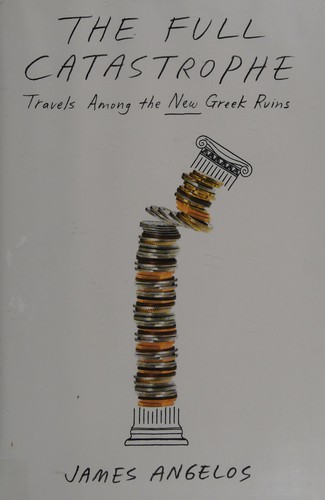
The Full Catastrophe: Travels Among the New Greek Ruins By James Angelos
The economic crisis in Greece has been dropping in and out of the headlines for years now. As I write this in late August, the governing Coalition of the Radical Left (SYRIZA using its Greek acronym) has stepped down after agreeing to a third round of austerity imposed by the European Union and European Central Bank. The country’s second parliamentary election of 2015 (which SYRIZA might still win) will happen in a month’s time.
Greek-American journalist James Angelos spent three years covering the crisis for the Wall Street Journal and other outlets. Some of the results of this reporting is collected in The Full Catastrophe. The book, which I received as part of LibraryThing’s Early Reviewers program, offers a good introduction to contemporary Greece and its people as they cope with the seemingly endless rounds of austerity.
…
The Full Catastrophe: Travels Among the New Greek Ruins By James Angelos
The economic crisis in Greece has been dropping in and out of the headlines for years now. As I write this in late August, the governing Coalition of the Radical Left (SYRIZA using its Greek acronym) has stepped down after agreeing to a third round of austerity imposed by the European Union and European Central Bank. The country’s second parliamentary election of 2015 (which SYRIZA might still win) will happen in a month’s time.
Greek-American journalist James Angelos spent three years covering the crisis for the Wall Street Journal and other outlets. Some of the results of this reporting is collected in The Full Catastrophe. The book, which I received as part of LibraryThing’s Early Reviewers program, offers a good introduction to contemporary Greece and its people as they cope with the seemingly endless rounds of austerity.
Angelos offers a variety of profiles that can seem to contradict themselves, but perhaps that’s intentional. Readers of the first chapter may come away with the impression that Greeks are lazy freeloaders who hate paying taxes and deserve what they’ve gotten since the global economic crisis hit. If you drop the book then, having had one’s suspicions confirmed (either of Angelos or his interview subjects), you’ll make a mistake. While sometimes he seems to make the case that modern Greece is a nation based on a shared mythology alone — not based on ancient gods, but on modern Turkish and Nazi enemies — that’s not really his thesis either.
What a reader will get here is a lively portrait of how ordinary Greeks are coping with the crisis. You will also get a hint of what darkness may result if Greece fails to cope. The last two chapters focus on what was then the beginning of today’s immigrant crisis, with refugees from African and Asian wars using Greece as the first place to land in Europe. Angelos talks with many immigrants also trying to cope. He is sympathetic to them, more so than many natives.
This portrait is followed by the rise of the neo-Nazi Golden Dawn party, which Angelos warns could be standing at the ready if government, and democracy, fails.
Ultimately, The Full Catastrophe is less an explanation of how Greece got into this mess, but suggests that it will somehow find its way out. The alternative is scary.
The world of The Milkman is intriguing: Government has gone by the wayside, replaced and displaced by three global corporations. Every adult is an employee of one of these three corporations, and their place in society depends on their pay grade--the lower the better.
Our story begins with the stabbing death of a young woman marketing researcher, and the investigation of this "act of insubordination" by Ambyr System Security (ASS) operative Ed McCallum. Though not immediately evident, this incident gets wrapped up with an independent website reporting on the quality of dairy products in upstate New York (excuse me, Niagara Falls Catchment). "The Milkman" is, in turn, to become the subject of a would-be blockbuster documentary by Sylvia Cho.
The story is told through the perspectives of McCallum, Cho, and Emory Leveski, "the Milkman." Michael Martineck explores aspects of this world, asking the Big Question of "What does a world …
The world of The Milkman is intriguing: Government has gone by the wayside, replaced and displaced by three global corporations. Every adult is an employee of one of these three corporations, and their place in society depends on their pay grade--the lower the better.
Our story begins with the stabbing death of a young woman marketing researcher, and the investigation of this "act of insubordination" by Ambyr System Security (ASS) operative Ed McCallum. Though not immediately evident, this incident gets wrapped up with an independent website reporting on the quality of dairy products in upstate New York (excuse me, Niagara Falls Catchment). "The Milkman" is, in turn, to become the subject of a would-be blockbuster documentary by Sylvia Cho.
The story is told through the perspectives of McCallum, Cho, and Emory Leveski, "the Milkman." Michael Martineck explores aspects of this world, asking the Big Question of "What does a world run exclusively by an oligopoly look like?
Another not-exactly Big Question explored by The Milkman is timely: When everything we know about the world sits in a device the size of a blood-pressure cuff wrapped around our forearm, what do you really know? There are two scenes where one character asks another to "make a call" for them, and the respondent had never done such a thing!
Of course, at least as important about that cuff is that it contains everything your employer knows about you. For this reason, some folks go offline to live outside society. These "ollies" play a role too.
The Milkman is an interesting story, with insights on criminal justice, corporate control, and the logistics of the movie business. Worth checking out.
Review of 'Consent of the networked' on 'Goodreads'
4 stars
Based on MacKinnon's experience as a CNN reporter in China, and subsequent founder of the Global Voices Online project, Consent of the Networked offers an interesting glimpse of how repressive regimes use “networked authoritarianism” to control their populations through their online activities, and how activists evade these controls.
She also addresses the moral and economic pressures on technology companies to bow toward these authoritarian regimes, even as the biggest companies (Google, Yahoo!, Facebook, and the like) spy on its users in search of ever greater profits.
Consent of the Networked also looks at the question of who should control the Internet. You will learn about the Internet Corporation for Assigned Names and Numbers (ICANN}, the International Telecommunication Union, the Internet Governance Forum and other obscure bodies that govern the net. These bodies decide issues that can affect everyone’s usage of the World Wide Web. The current controversy over net neutrality …
Based on MacKinnon's experience as a CNN reporter in China, and subsequent founder of the Global Voices Online project, Consent of the Networked offers an interesting glimpse of how repressive regimes use “networked authoritarianism” to control their populations through their online activities, and how activists evade these controls.
She also addresses the moral and economic pressures on technology companies to bow toward these authoritarian regimes, even as the biggest companies (Google, Yahoo!, Facebook, and the like) spy on its users in search of ever greater profits.
Consent of the Networked also looks at the question of who should control the Internet. You will learn about the Internet Corporation for Assigned Names and Numbers (ICANN}, the International Telecommunication Union, the Internet Governance Forum and other obscure bodies that govern the net. These bodies decide issues that can affect everyone’s usage of the World Wide Web. The current controversy over net neutrality is also covered here.
What is most inspiring and useful about this book is MacKinnon's reminder that the democratic promise of the Internet cannot be realized unless Internet users become active defending democracy; that is, we must become Netizens. Viewed within the context of governmental vs. corporate vs. "netizen" control, MacKinnon makes a strong case for a “Netizen-Centric Internet.”
I don’t agree with everything MacKinnon writes here. Some of the stories feel a little dated (though some were updated in an afterword for the paperback edition). Unlike other books I’ve read on this topic, MacKinnon is the one who urges all of us to get involved in the fight for democracy online, and offers resources to help you do just that (see the Get Involved page at www.consentofthenetworked.com). That’s the most important part of this book. Make your own voice heard.
"A bottom-up strategy [intended] to produce a focused, thorough, and compelling presence on the most …
Review of 'The art of social media' on 'Goodreads'
4 stars
The team of Guy Kawasaki and Peg Fitzpatrick have mastered social media as well as, or better than, just about anyone. It doesn’t hurt that Kawasaki is a tech marketing legend (Apple, Motorola and the like), but the 123 tips included in The Art of Social Media will be useful to anyone who wants to gather a following on the Internet.
This easy read (I think I knocked it out in 3-4 sessions) is less focused on individual services, but the principles shared will help you develop an overall social media strategy. When the Next Big Buzz social platform makes its appearance, you should be able to master it quickly.
This is not to say that you don’t learn a lot about Twitter, LinkedIn, Facebook, Instagram, SlideShare, Google+ and Pinterest. You’ll pick up stuff about optimizing posts for each of these platforms, mastering the use of hashtags across services, and …
The team of Guy Kawasaki and Peg Fitzpatrick have mastered social media as well as, or better than, just about anyone. It doesn’t hurt that Kawasaki is a tech marketing legend (Apple, Motorola and the like), but the 123 tips included in The Art of Social Media will be useful to anyone who wants to gather a following on the Internet.
This easy read (I think I knocked it out in 3-4 sessions) is less focused on individual services, but the principles shared will help you develop an overall social media strategy. When the Next Big Buzz social platform makes its appearance, you should be able to master it quickly.
This is not to say that you don’t learn a lot about Twitter, LinkedIn, Facebook, Instagram, SlideShare, Google+ and Pinterest. You’ll pick up stuff about optimizing posts for each of these platforms, mastering the use of hashtags across services, and trying to understand how each platform adds stuff to your newsfeed.
Among the truths unlocked: “There are only two kinds of people on social media: those who want more followers and those who are lying.” The key to getting more followers? “Share Good Stuff” Using social media to popularize events Don’t just slap your presentation slides on SlideShare; make sure the slides are self-explanatory.
I co-authored a book on social media ([b:Build Your Author Platform: The New Rules: A Literary Agent's Guide to Growing Your Audience in 14 Steps|18210976|Build Your Author Platform The New Rules A Literary Agent's Guide to Growing Your Audience in 14 Steps|Carole Jelen|https://d.gr-assets.com/books/1395145632s/18210976.jpg|25632322]), and am happy to say that Kawasaki and Fitzpatrick don’t contradict anything we said there. I’ll also say that I learned things from this book, particularly about Pinterest. You’ll learn new things too, no matter how far along you are in your social media journey.
Review of 'Technologies of citizenship' on 'Goodreads'
4 stars
This is a really important book for those concerned with the digital divide, and with the broader questions of how technology can help empower poor and working people often left out of the decision making process in the United States.
Virginia Eubanks is an academic with web design skills. The book focuses on a group of women living in a YWCA shelter in Troy, New York that Eubanks worked with. A left turn by local YWCA administration in 2002 led to the organizing of WYMSM, Women at the YWCA Making Social Movement, a group which facilitated a community technology lab, several workshops on poverty, welfare, and minimum wage issues, and a web-based local Women's Resource Directory. The group voluntarily disbanded in the summer of 2003. When reading between the lines, the reader suspects that a new executive director was less enthusiastic about the technology program.
Eubanks notes that poor folks …
This is a really important book for those concerned with the digital divide, and with the broader questions of how technology can help empower poor and working people often left out of the decision making process in the United States.
Virginia Eubanks is an academic with web design skills. The book focuses on a group of women living in a YWCA shelter in Troy, New York that Eubanks worked with. A left turn by local YWCA administration in 2002 led to the organizing of WYMSM, Women at the YWCA Making Social Movement, a group which facilitated a community technology lab, several workshops on poverty, welfare, and minimum wage issues, and a web-based local Women's Resource Directory. The group voluntarily disbanded in the summer of 2003. When reading between the lines, the reader suspects that a new executive director was less enthusiastic about the technology program.
Eubanks notes that poor folks are not lacking computers and other technology in their lives. The people who perform data entry tasks are not lacking in computer skills, and the women on the receiving end of the social welfare system sometimes feel their whole lives are managed and dominated by all-powerful computer screens owned by their case workers: "Sorry, the system won't allow that."
Eubanks tells a terrific story. One of the first things the new YWCA technology program did was teach residents about the inner workings of a computer. Using dated equipment donated to the facility, participants gleefully ripped these machines apart, asking what this wire did and what the modem card's purpose was. Learning how computers worked was genuinely empowering.
The descriptions and interviews included in Digital Dead End are useful and instructional, and the overall structure of the book is enlightening. Where Eubanks falters is in her concluding 9-point High-Tech Equity Agenda, that is, what to do next. It's fine as far as it goes, but doesn't really address the question of making poor and working people more powerful.
Nonetheless, Digital Dead End is a critical book for those interested in this subject.
A breathtaking joyride through the solar system several centuries hence, a world of marching cities, …
Review of 'Quantum thief' on 'Goodreads'
5 stars
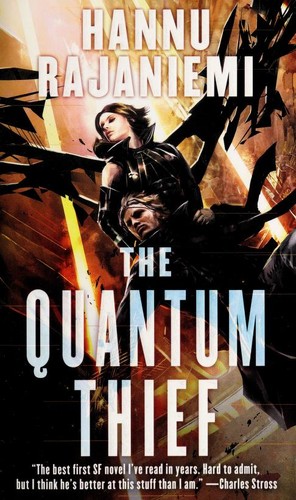
Wow! Rajaniemi takes his time describing this version of Mars, but once all the pieces have been assembled, the story just flies! The Big Idea explored in this novel is a world in which privacy is completely controlled by each individual, and other people know exactly what you want them to to know about you. While not essential to the overarching story, it's interesting to see how that might work out.
Wow! Rajaniemi takes his time describing this version of Mars, but once all the pieces have been assembled, the story just flies! The Big Idea explored in this novel is a world in which privacy is completely controlled by each individual, and other people know exactly what you want them to to know about you. While not essential to the overarching story, it's interesting to see how that might work out.
Review of '100 Books Every Folk Music Fan Should Own' on 'Goodreads'
3 stars
Everyone's a sucker for a list book, and publisher Rowman & Littlefield take advantage of this new trend in a series of book lists for music fans. Despite his apparent distaste for Woody Guthrie (at least he thinks the mythologizing of Guthrie has gone a little too far), Dick Weissman makes a pretty good argument for this collection in 100 Books Every Folk Music Fan.
Rather than a completely ordered ranking of "the best" books, Weissman offers essential texts in a variety of categories, from Historical Surveys to Folk Instruments and Instructional Materials. There are forays into various kinds of ethnic music, and the protest music usually most associated with the folk genre. Country, bluegrass and blues fans will also find worthy additions to their libraries as well.
The big weakness of the book is fairly understandable: As a teacher in the music and entertainment industry program at the …
Everyone's a sucker for a list book, and publisher Rowman & Littlefield take advantage of this new trend in a series of book lists for music fans. Despite his apparent distaste for Woody Guthrie (at least he thinks the mythologizing of Guthrie has gone a little too far), Dick Weissman makes a pretty good argument for this collection in 100 Books Every Folk Music Fan.
Rather than a completely ordered ranking of "the best" books, Weissman offers essential texts in a variety of categories, from Historical Surveys to Folk Instruments and Instructional Materials. There are forays into various kinds of ethnic music, and the protest music usually most associated with the folk genre. Country, bluegrass and blues fans will also find worthy additions to their libraries as well.
The big weakness of the book is fairly understandable: As a teacher in the music and entertainment industry program at the University of Colorado-Denver, Weissman tends to (a) favor books from university presses, and (b) occasionally lapses from ordinary English into academese. Those habits can be tough to break.
I'm probably not going to buy all the books here, but I learned about some new books (heck, even a new genre -- freak folk!). That's what you want from a list, right?
Many books about the history of technology focus on the creativity and ah-hah moments involved in building the tools and infrastructure that many of us take for granted today. "The Intel Trinity" gives you a bit of that, but also focuses on the history of the company which is nearly synonymous with the underpinnings of the modern personal computer: Intel.
The "trinity" referred to in the title are the founders of the company around whom the narrative focuses: Robert Noyce, Gordon Moore, and Andy Grove. The less-remembered Noyce was the quiet genius and risk-taker who hated conflict, but often made the decisions that made Fairchild Semiconductor and Intel succeed. Moore inadvertently created the "law" that drove the microchip forward. Grove was the Hungarian immigrant who survived a harrowing childhood under Nazi occupation, idolized Moore, hated Noyce, and became the most famous executive of the PC era.
"The Intel Trinity" is …
Many books about the history of technology focus on the creativity and ah-hah moments involved in building the tools and infrastructure that many of us take for granted today. "The Intel Trinity" gives you a bit of that, but also focuses on the history of the company which is nearly synonymous with the underpinnings of the modern personal computer: Intel.
The "trinity" referred to in the title are the founders of the company around whom the narrative focuses: Robert Noyce, Gordon Moore, and Andy Grove. The less-remembered Noyce was the quiet genius and risk-taker who hated conflict, but often made the decisions that made Fairchild Semiconductor and Intel succeed. Moore inadvertently created the "law" that drove the microchip forward. Grove was the Hungarian immigrant who survived a harrowing childhood under Nazi occupation, idolized Moore, hated Noyce, and became the most famous executive of the PC era.
"The Intel Trinity" is an important study of these three men and the company they created.