
loppear reviewed If We Burn by Vincent Bevins
a decade of non-US protest, to what ends?
5 stars
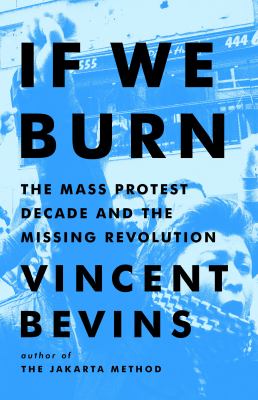
Outstanding journalist's history of 2010s protests and mass-media enabled uprisings, covering Arab Spring, Brasil & Chile, Hong Kong, and Ukraine. Using first-hand accounts and succinct late 20th-century local and global context about what power dynamics came before for each case study, this follows the movements in the streets and the outcomes over subsequent years. Ultimately challenges the narratives of horizontalism, leaderless movements, and corporate-tech-mediated uprisings as a path for change, with particular focus on co-opting of the same by right-wing elements and a need to pragmatically account for what power will fill the vacuum once regimes are toppled to realize any popular demands.
Outstanding journalist's history of 2010s protests and mass-media enabled uprisings, covering Arab Spring, Brasil & Chile, Hong Kong, and Ukraine. Using first-hand accounts and succinct late 20th-century local and global context about what power dynamics came before for each case study, this follows the movements in the streets and the outcomes over subsequent years. Ultimately challenges the narratives of horizontalism, leaderless movements, and corporate-tech-mediated uprisings as a path for change, with particular focus on co-opting of the same by right-wing elements and a need to pragmatically account for what power will fill the vacuum once regimes are toppled to realize any popular demands.