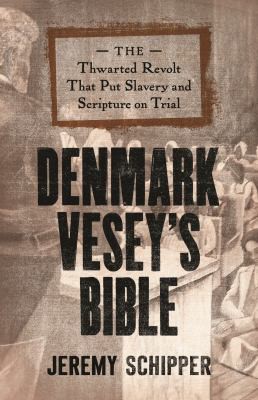

Trevor Burrows reviewed Denmark Vesey's Bible by Jeremy Schipper
Recommended.
4 stars
This was really good overall, although the title is a bit misleading. Everything we know about Vesey's use of biblical references is effectively second-hand, and often oblique or general. But after unpacking what we do know, Schipper contrasts that with local (Charleston) discussions of the affair that relied substantially on biblical references. This includes biblical defenses of slavery, and some really interesting discussion of proper religious instruction for enslaved persons.
So even though we don't know as much as we'd like about Denmark Vesey's understanding of the bible, we know how Charleston responded to the bible's invocation in the context of the planned rebellion. The book reads texts from several important voices of the time, effectively reconstructing a very local version of theological/religious debates over the meaning of biblical references to slavery.
Short and concise, but with great footnotes and a lot to chew on, I could see …
This was really good overall, although the title is a bit misleading. Everything we know about Vesey's use of biblical references is effectively second-hand, and often oblique or general. But after unpacking what we do know, Schipper contrasts that with local (Charleston) discussions of the affair that relied substantially on biblical references. This includes biblical defenses of slavery, and some really interesting discussion of proper religious instruction for enslaved persons.
So even though we don't know as much as we'd like about Denmark Vesey's understanding of the bible, we know how Charleston responded to the bible's invocation in the context of the planned rebellion. The book reads texts from several important voices of the time, effectively reconstructing a very local version of theological/religious debates over the meaning of biblical references to slavery.
Short and concise, but with great footnotes and a lot to chew on, I could see using this in an undergraduate classroom, maybe as a nice intro to discussions of Christianity and slavery in 19th c. US. Some great examples of critical source work here, too