#buddhism

See tagged statuses in the local The Library of the Uncommons community

Thubten Chodron: Working with Anger (AudiobookFormat, 2024, Shambhala Publications)

A Tibetan Buddhist nun offers her insights on anger, the ways that it manifests in …

Tibetan Buddhist Anger Management

This is an excellent practical book on dealing with anger with techniques mostly drawn from Tibetan Buddhism. Especially for the length of the book, which felt quite short to me, Thubten Chodron offers a balanced variety of techniques for many situations with plenty of examples. Almost all of the techniques are immediately applicable, and all of them have the potential to become more powerful and effective with extended practice. Beyond all this, she mentions enough sources and other books so that readers have plenty of material to work with if they want to dive into the topic more deeply.

#anger #angermanagement #Buddhism #TibetanBuddhism

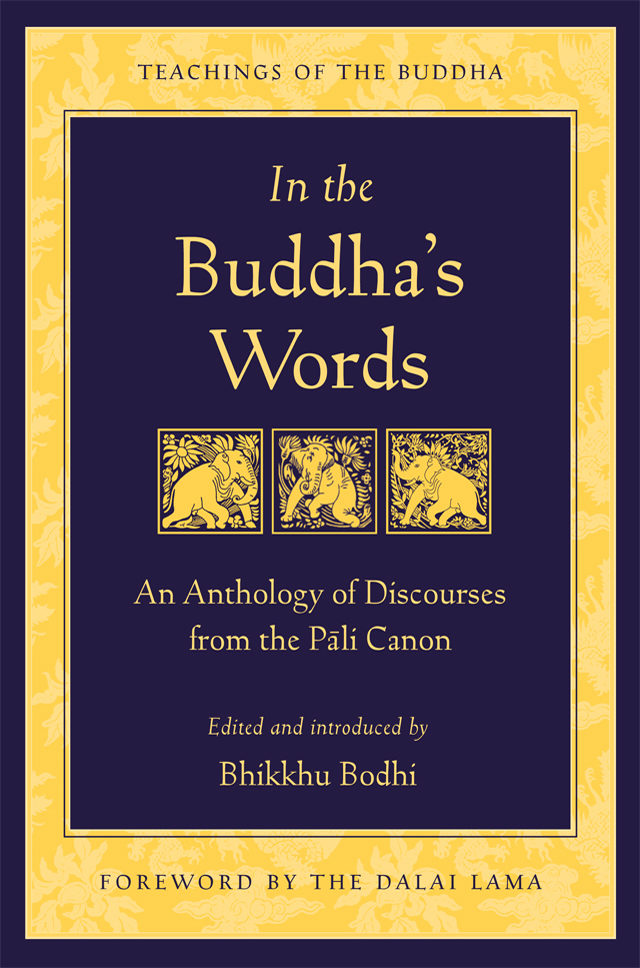
Bhikkhu Bodhi (duplicate): In the Buddha's Words (EBook, 2005, Wisdom Publications)

This landmark collection is the definitive introduction to the Buddha’s teachings—in his own words. The …

The fact that such texts as this sutta and the Kālāma Sutta do not dwell on the doctrines of kamma and rebirth does not mean, as is sometimes assumed, that such teachings are mere cultural accretions to the Dhamma that can be deleted or explained away without losing anything essential. It means only that, at the outset, the Dhamma can be approached in ways that do not require reference to past and future lives. The Buddha’s teaching has many sides, and thus, from certain angles, it can be directly evaluated against our concern for our present well-being and happiness. Once we see that the practice of the teaching does indeed bring peace, joy, and inner security in this very life, this will inspire our trust and confidence in the Dhamma as a whole, including those aspects that lie beyond our present capacity for personal verification. If we were to undertake certain practices—practices that require highly refined skills and determined effort—we would be able to acquire the faculties needed to validate those other aspects

In the Buddha's Words by  (Teachings of the Buddha)

One of the best explanations for how to approach the notions of #kamma and #rebirth I've seen. And also one of the readings of the Kālāma #Sutta which is well-integrated into the context of the rest of the #Nikāyas.

#karma #reincarnation #Buddhism #Buddha #KalamaSutta #suttas #EarlyBuddhism #Dhamma #Dharma

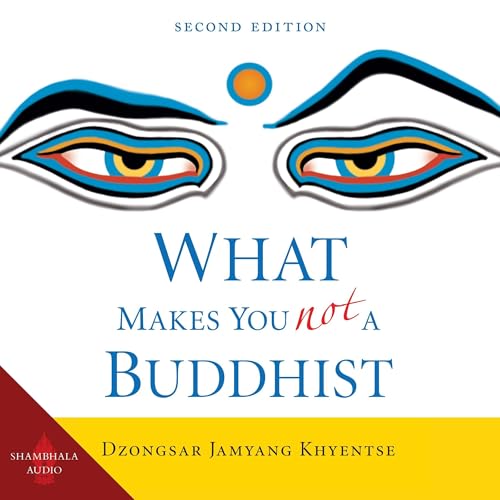
Dzongsar Jamyang Khyentse: What Makes You Not a Buddhist, Second Edition (AudiobookFormat, 2025, Shambhala Publications)

With a new preface, afterword, and updated material throughout, this iconoclastic and creative Tibetan meditation …

A Generous and Compassionate Wake-Up Call

This is probably the most generous attempt to transmit the essence of #Buddhism I've ever encountered. While the choice of framework and some of the references Dzongsar Jamyang Khyentse makes place him squarely within the #Tibetan tradition, this is a deeply #ecumenical work which reaches across all #Buddhist lineages and traditions. Will all traditions agree with everything he writes? Probably not, but it would be extremely difficult to be even more inclusive while also writing such a readable book.

What might make the book difficult for some is that he is quite direct about poking holes through a large swath of commonly cherished beliefs throughout. I experienced this as clever and illuminating as I would expect from a skilled skeptic debater, but I imagine that some might not appreciate this as a compassionate ripping-off of the band-aid or revealing pulling-out of the rug as I did.

Bonus points …

quoted In the Buddha's Words by Bhikkhu Bodhi (duplicate) (Teachings of the Buddha)

Bhikkhu Bodhi (duplicate): In the Buddha's Words (EBook, 2005, Wisdom Publications)

This landmark collection is the definitive introduction to the Buddha’s teachings—in his own words. The …

It is commonly assumed that the Buddha beckons us to recognize the reality of old age and death in order to motivate us to enter the path of renunciation leading to Nibbāna, complete liberation from the round of birth and death. However, while this may be his ultimate intention, it is not the first response he seeks to evoke in us when we turn to him for guidance. The initial response the Buddha intends to arouse in us is an ethical one. By calling our attention to our bondage to old age and death, he seeks to inspire in us a firm resolution to turn away from unwholesome ways of living and to embrace instead wholesome alternatives.

Again, the Buddha grounds his initial ethical appeal not only upon a compassionate feeling for other beings, but also upon our instinctive concern for our own long-term welfare and happiness. He tries to make us see that to act in accordance with ethical guidelines will enable us to secure our own well-being both now and in the long-term future. His argument hinges on the important premise that actions have consequences. If we are to alter our accustomed ways, we must be convinced of the validity of this principle. Specifically, to change from a self-stultifying way of life to one that is truly fruitful and inwardly rewarding, we must realize that our actions have consequences for ourselves, consequences that can rebound upon us both in this life and in subsequent lives.

. . .

The realization that we are bound to grow old and die breaks the spell of infatuation cast over us by sensual pleasures, wealth, and power. It dispels the mist of confusion and motivates us to take fresh stock of our purposes in life. We may not be ready to give up family and possessions for a life of homeless wandering and solitary meditation, but this is not an option the Buddha generally expects of his householder disciples. Rather, as we saw above, the first lesson he draws from the fact that our lives end in old age and death is an ethical one interwoven with the twin principles of kamma and rebirth. The law of kamma stipulates that our unwholesome and wholesome actions have consequences extending far beyond this present life: unwholesome actions lead to rebirth in states of misery and bring future pain and suffering; wholesome actions lead to a pleasant rebirth and bring future well-being and happiness. Since we have to grow old and die, we should be constantly aware that any present prosperity we might enjoy is merely temporary. We can enjoy it only as long as we are young and healthy; and when we die, our newly acquired kamma will gain the opportunity to ripen and bring forth its own results. We must then reap the due fruits of our deeds. With an eye to our long-term future welfare, we should scrupulously avoid evil deeds that result in suffering and diligently engage in wholesome deeds that generate happiness here and in future lives.

In the Buddha's Words by  (Teachings of the Buddha)

From the introduction to section 1, "The Human Condition".

The emphasis is mine.

#BhikkhuBodhi #Buddha #Nibbāna #Nibbaana #Nibbana #Nirvana #kamma #karma #aging #oldage #death #Buddhism #PaliCanon #ethics

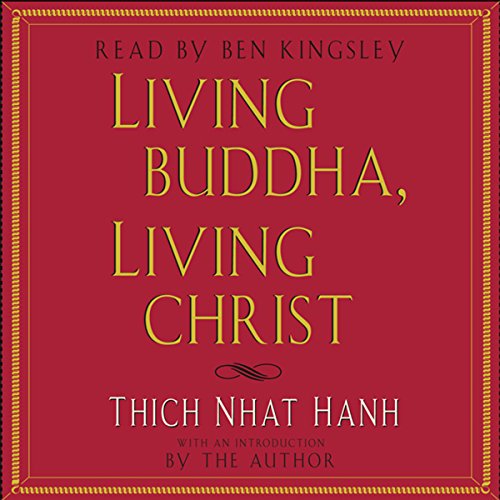
Thích Nhất Hạnh: Living Buddha, Living Christ (AudiobookFormat, 2010, Simon & Schuster Audio)

World-renowned thinker and scholar Thích Nhất Hạnh, considered by many to be a "Living Buddha", …

Beautiful and insightful. Listened to the abridged version because it was what I had easy access to. I'll reserve writing a review for if and when I read the full version, but even this short version has value for anyone wishing to look more deeply into Thích Nhất Hạnh's advice for everyone to be deeply rooted in their own tradition(s).

#ThichNhatHanh #Thay #Buddhism #Christianity #Interfaith

Sebene Selassie: You Belong (AudiobookFormat, 2020, HarperAudio)

From much-admired meditation expert Sebene Selassie, You Belong is a call to action, exploring our …

Within the introduction and roughly half of the first chapter, it's already among the most welcoming-feeling presentations of #interdependence / #interbeing / #emptiness (here presented as #belonging with good reason) I've ever come across. Also one of the better self-narrations I've heard in a while. Looking forward to how the rest of the book develops

#Buddhism

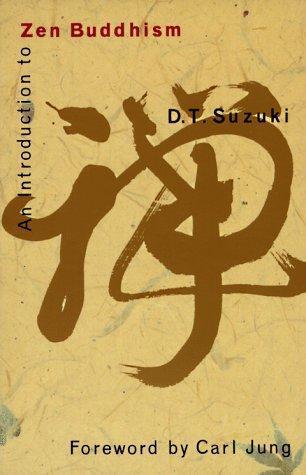
Daisetsu Teitaro Suzuki: Introduction to Zen Buddhism (1991)

It's ok

I watched a vid on Zen Buddhism, and got further interested in it. So I tried to find as good a book as I could. This was a good look into Zen Buddhism. At least from my perspective. It was odd hearing a very British voice reading it. It almost felt culturally voyeuristic.

The book goes over the history and believes and methods of Zen Buddhism.

I was surprised to learn how violent some of the prominent Zen figures of the history were. 30 lashes with a stick, someone thrown off a building, even a brutal death of a cat to make a point. Also be ready for some rather blunt language from some anecdotes.

Also be ready for inconsistent themes. Zen is not so much about a peaceful mind. As it is freedom from a consistent mind. Defying definitions, and logic. Even defying Buddhism.

It …