4thace finished reading Long Island Compromise by Taffy Brodesser-Akner
I powered through the end of the audiobook without stopping

Refugee from Goodreads. I try to review every book I finish. On Mastodon: noc.social/@Zerofactorial
This link opens in a pop-up window
I powered through the end of the audiobook without stopping
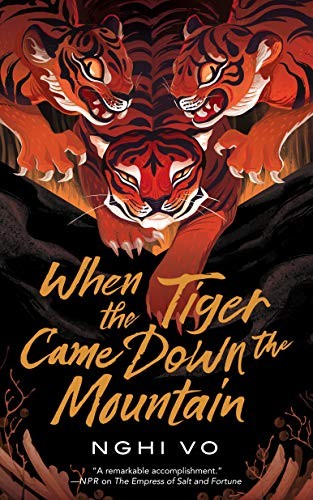
The cleric Chih finds themself and their companions at the mercy of a band of …
This is a novella in the same universe the author introduced in The Empress of Salt and Fortune. It is propelled by the details of worldbuilding which has been laid down. There are talking polymorphing tigers, mammoth cavalry fighters, ongoing strife between fantasy northern and southern realms, and a reverence for tales told as oral traditions. In this episode, the human characters are cornered by a trio of menacing tigers far from help. To buy time for themselves, they begin a storytelling exchange with episodes from the human point of view immediately rebutted by the same episode from the tigers' point of view. The story within a story is a kind of romance between human and tiger. Emotions ran high as the tale goes on and before the evening is over it is looking precarious for the human characters of the frame story. But ... there was a literal …
This is a novella in the same universe the author introduced in The Empress of Salt and Fortune. It is propelled by the details of worldbuilding which has been laid down. There are talking polymorphing tigers, mammoth cavalry fighters, ongoing strife between fantasy northern and southern realms, and a reverence for tales told as oral traditions. In this episode, the human characters are cornered by a trio of menacing tigers far from help. To buy time for themselves, they begin a storytelling exchange with episodes from the human point of view immediately rebutted by the same episode from the tigers' point of view. The story within a story is a kind of romance between human and tiger. Emotions ran high as the tale goes on and before the evening is over it is looking precarious for the human characters of the frame story. But ... there was a literal mammoth in the room when things all came to a head abruptly.
Good novellas can suggest large arcs without containing them. Since this came out in 2020 four (and soon five) further novellas in the same universe have been written by this author. Will I read any of the others? I might, if one just falls into my hands, but I did not love the outlines of the fictional world enough to want to seek them out intentionally.

(original review from 20 March 2018) This is my Lenten reading (listening) for this year. Unlike the others it is a recent work by a living author. This volume concentrates on the idea of the second half of life which he regards as the main focus of Christ's teaching, as distinct from the job of establishing a career, raising a family, conforming with the norms established by social institutions such as organized religion. In this part of life, the search for meaning becomes paramount, an idea with which I felt a good deal of kinship. I already feel like I can see the end of my career, and can begin to think about how I would want to fill up the remainder of my time here in a way that would lead to a deeper sense of contentment. He refers to "shadow work," I think in reference to Carl Jung's …
(original review from 20 March 2018) This is my Lenten reading (listening) for this year. Unlike the others it is a recent work by a living author. This volume concentrates on the idea of the second half of life which he regards as the main focus of Christ's teaching, as distinct from the job of establishing a career, raising a family, conforming with the norms established by social institutions such as organized religion. In this part of life, the search for meaning becomes paramount, an idea with which I felt a good deal of kinship. I already feel like I can see the end of my career, and can begin to think about how I would want to fill up the remainder of my time here in a way that would lead to a deeper sense of contentment. He refers to "shadow work," I think in reference to Carl Jung's idea of the unconscious side of personality, not the part which can occupy its time with pursuing tangible goals.
The style was approachable, yet somewhat hard to pin down at times because he tended not to speak in terms of actual individual experiences but more in the abstract. He had a kind of open attitude to exploring those things which an individual would have shunned during the earlier stage of life because they went against conventional morality. He took pains to classify the laws of institutions like the Church as primarily concerning themselves with the first half of life where a person is given clear commands on how to live in a good and upright manner, because these rules are not intended to bring enlightenment to someone finding their way through second half of life. I have this idea of a man or woman no longer preoccupied with piling up money or status, starting to explore serving others as a way to express their own worth. It may in some ways be easier to understand the lives of the great religious teachers from the perspective of an older person provided that they still have openness and courage to challenge orthodoxy.
I looked at other reviews of this book before I chose it to read, and saw a number of people saying that it was the most satisfying of this author's works. I am interested in looking at some of his other works in the future for my twice-yearly tradition.
(Additional comments 30 August 2025) I listened to this audiobook again and had kind of the same feeling about the elusiveness of the author's argument. It was clearer to me that his emphasis was on contrasting the rules for the later portion of light where attaining success and accumulating wealth become less important to an individual who begins to ask questions about meaning and connection instead. He mentions the image of the Greek hero Odysseus, at at several points in the narrative. These are he feels the the image of a man in a situation where the tools of his trade (an oar) no longer convey meaning to those he meets are most relevant to the point he is making at that moment. He doesn't see the structure of his book as taking the form of an orderly narrative, a hierarchy with a main point and subtopics. It is more episodic and meditative, I think because of his particular spirituality.

Humanity is a dying breed, utterly reliant on artificial labor and service. When a domesticated …
This book reminded me of two other books I've read in the past few years. One was [[The Cyberiad]] by Stanisław Lem which also had robots for characters, but which was more of a collection of satiric fairy tale stories than a sustained narrative, the other was [[The Children of Men]] by P. D. James which shares an end-of-the-world viewpoint but has nothing like the absurd humor of this book. It seemed to me like quite a departure from the rest of this author's work with a distinct sociological edge. The reader starts to want this bizarre world to start to make sense. The narrator, a robot called "Uncharles" for most of the book experiences a malfunction in the early chapters, and after he leaves his familiar surroundings wanders through a broken world hoping to find something similar to his previous existence. I think there might be a lot of …
This book reminded me of two other books I've read in the past few years. One was [[The Cyberiad]] by Stanisław Lem which also had robots for characters, but which was more of a collection of satiric fairy tale stories than a sustained narrative, the other was [[The Children of Men]] by P. D. James which shares an end-of-the-world viewpoint but has nothing like the absurd humor of this book. It seemed to me like quite a departure from the rest of this author's work with a distinct sociological edge. The reader starts to want this bizarre world to start to make sense. The narrator, a robot called "Uncharles" for most of the book experiences a malfunction in the early chapters, and after he leaves his familiar surroundings wanders through a broken world hoping to find something similar to his previous existence. I think there might be a lot of P. G. Wodehouse in the characterization of Uncharles. Along the way he encounters a being known as "The Wonk" whose breezy, cavalier attitude toward everything conceals a serious quest for meaning. It is a slow-paced telling partly to remind us of the love of orderly routine most simple machines like these robots favor, to make their chores easier. There are close scrapes with danger and lots of misunderstandings as they look for a place with the answers, only to find that they were mirages. By the end, the two of them reach a kind of understanding in a nice, cozy way with a hint of how the rest of the awful world might be induced to stop falling into ruin. But by this point, the reader might be too skeptical to believe a happy outcome possible.
I did like the way the audiobook was narrated by the author, but it is a slow process of making it to the end. If you pick this up, set aside enough time to make it through or you'll be frustrated. I was pleased to hear writer/blogger Dr. Janelle Shane called out in the acknowledgements for contributions to the creation of this book, of whom I am a fan.
Humanity is a dying breed, utterly reliant on artificial labor and service. When a domesticated …
Audiobook read by the author
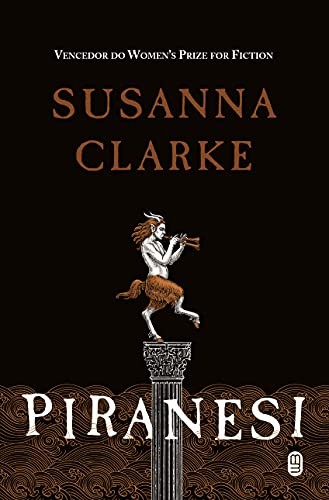
I think of this book as a novella but that is only in comparison with her first novel of over three times the page count of this one. The two works are quite different in most respects, despite both being in the fantasy genre. This story is told in journal entries by he viewpoint character but I think the true motivating factor for writing it is the unusual setting in a labyrinthine house with rooms swept and sculpted by the sea. There is a profusion of elaborate sculptures in every hall but no human designer and very few human characters present. In time we hear about the backstory of these players but never any full explanation for how the house came to be. The conflict comes from an antagonism between the characters, the narrator included, along with the sometimes violent working of the tides. The main character discovers that he …
I think of this book as a novella but that is only in comparison with her first novel of over three times the page count of this one. The two works are quite different in most respects, despite both being in the fantasy genre. This story is told in journal entries by he viewpoint character but I think the true motivating factor for writing it is the unusual setting in a labyrinthine house with rooms swept and sculpted by the sea. There is a profusion of elaborate sculptures in every hall but no human designer and very few human characters present. In time we hear about the backstory of these players but never any full explanation for how the house came to be. The conflict comes from an antagonism between the characters, the narrator included, along with the sometimes violent working of the tides. The main character discovers that he has forgotten most of his life while he was placed within the house and goes through his numerous journal entries to reconstruct what might have happened. The details of how people are able to travel to the secondary world are left a mystery. There is some suggestion that the sculptures are derived from events on earth arranged to express some essential meaning behind things. To me, it seemed like living in a vast museum that appeals to the eye and touch but leaves off any mention of the provenance of its collection. I thought the novel setting was the most successful aspect of the novel.
The cleric Chih finds themself and their companions at the mercy of a band of …
Ebook version
Ebook version on my phone

"A pioneer in the field of behavioral science delivers a groundbreaking work that shows how …
Audiobook
The plane is jam-packed. Every seat is taken. So of course the flight is delayed! …
This is not a tremendously deep book but still an entertaining one. It imagines what it would be like for all the passengers stuck on a flight to each receive the cause and year of their deaths. The protagonist delivering these turns out to have a past connection with telling people's fortunes and with actuarial science, and the way her over the top behavior affects the lives of a bunch of the passengers makes up the rest of the story. It is a long book with alternating chapters devoted to the protagonist and to the passengers. The author does her best to give the characters fleshed out lives, not stereotypical, not too perfect, not too despicable. Not long after the flight is when the first few death predictions start to come true, in a case of novel logic.
There's enough tension maintained throughout to keep a reader engaged with …
This is not a tremendously deep book but still an entertaining one. It imagines what it would be like for all the passengers stuck on a flight to each receive the cause and year of their deaths. The protagonist delivering these turns out to have a past connection with telling people's fortunes and with actuarial science, and the way her over the top behavior affects the lives of a bunch of the passengers makes up the rest of the story. It is a long book with alternating chapters devoted to the protagonist and to the passengers. The author does her best to give the characters fleshed out lives, not stereotypical, not too perfect, not too despicable. Not long after the flight is when the first few death predictions start to come true, in a case of novel logic.
There's enough tension maintained throughout to keep a reader engaged with the story up to the denouement which landed for me in a way I didn't exactly predict. It is put together with craft and reaches for life lessons by the end as a gift to readers who stuck through the entire tale. The author has wriitten bestselling novels and is clearly well-versed in the way popular fiction works.
I listened to this in audiobook form over the course of about six weeks. Not every story line grabbed me but there weren't any that really made me want to quit. It's not really my usual book fare but I feel like it was a solid production. I don't see myself looking for quite such a long bit of popular fiction so I don't know that I'm motivated to pick up another title by this author soon.
The plane is jam-packed. Every seat is taken. So of course the flight is delayed! …
Made my way through this fiction audiobook a little at a time and was not upset at the way it turns out
Original 1972 Norton printing

A moving and fascinating meditation on freedom, trust, loss, and our relationship with the natural …
I found this a soothing book for our time which can use a meditation on a largely forgotten little animal told in a lovely honest style. The author happened to come across an exposed newborn hare or "leveret" one day just before the Covid-19 pandemic put nations into lockdown, and chose to give it shelter in her house. Most people my age probably now about hares by association with the old Bugs Bunny cartoons, but I can remember seeing them racing around the grasslands of Northern California when I lived there, rangier than rabbits and non-burrowing. The species of hare in this book was once extremely common in England when the rural areas were less hemmed in by urbanization and industry, leaving a mark on the language. The animal is still maintaining itself without help from humankind.
As a professional speechwriter in the UK, the author certainly knows how …
I found this a soothing book for our time which can use a meditation on a largely forgotten little animal told in a lovely honest style. The author happened to come across an exposed newborn hare or "leveret" one day just before the Covid-19 pandemic put nations into lockdown, and chose to give it shelter in her house. Most people my age probably now about hares by association with the old Bugs Bunny cartoons, but I can remember seeing them racing around the grasslands of Northern California when I lived there, rangier than rabbits and non-burrowing. The species of hare in this book was once extremely common in England when the rural areas were less hemmed in by urbanization and industry, leaving a mark on the language. The animal is still maintaining itself without help from humankind.
As a professional speechwriter in the UK, the author certainly knows how to use words so they land with impact for a reader. She takes us through how she managed learned what she needed to do in order that the helpless leveret could survive into adulthood. Most of what she learned came from observation, though, since written accounts of captive hares and veterinary advice was scant. For its part, the leveret proved to be more adaptable than expected, coming up with a way to live in the human world and the open countryside on its own terms. In this book, the author never thought of the hare as a pet or domestic in any way but as a wild creature that decided to allow her to glimpse the principles by which it lived its life over three years. The author grew to appreciate the lessons it gave by example: stillness, love of habit, calm, and strength, among others.
It's been ten years since I read Helen Macdonald's book "H is for Hawk" but this book inevitably brought that one back to mind. I think they both stand up as testaments of what we can learn when we see animals for what they are.
A moving and fascinating meditation on freedom, trust, loss, and our relationship with the natural …
A pleasure to read
Ebook version