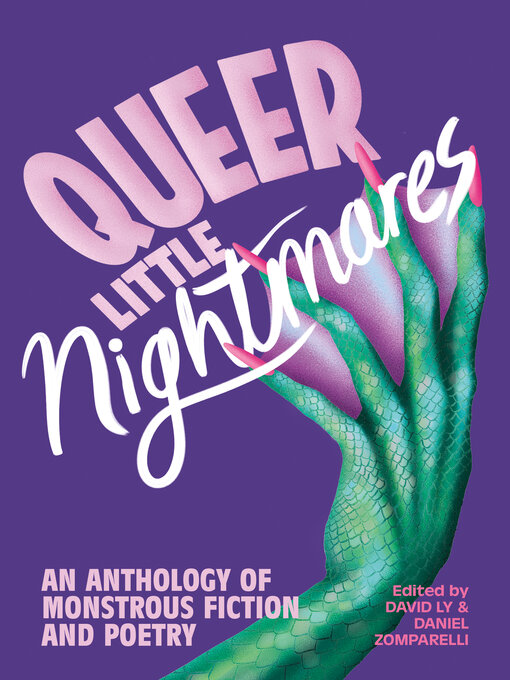
I found these generally took more effort that reading a regular novel because each time you have to adjust to the world of the story, you can't just dip in and out.
The stories I liked the most were the "Black Mirror" style ones where there was a strange technology or a twist. The "queer person turns into a monster" stories kind of ran together for me.
I also liked the stories for non-Western cultures that explored their own monsters.
Of the poems, Floral Arrangement I was the one I liked the best.
I found these generally took more effort that reading a regular novel because each time you have to adjust to the world of the story, you can't just dip in and out.
The stories I liked the most were the "Black Mirror" style ones where there was a strange technology or a twist. The "queer person turns into a monster" stories kind of ran together for me.
I also liked the stories for non-Western cultures that explored their own monsters.
Of the poems, Floral Arrangement I was the one I liked the best.
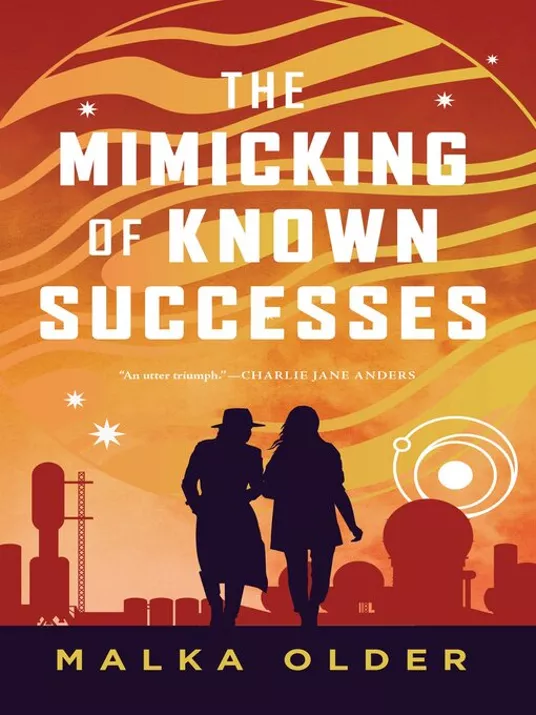
The Mimicking of Known Successes presents a cozy Holmesian murder mystery and sapphic romance, set …
A promising setting, a little light on mystery
3 stars
The world building here doesn't fundamentally make sense, there's no universe in which building 200,000 mile rails to colonize Jupiter is more feasible in terms of knowhow or resources that fixing Earth or even colonizing the Moon or Mars. However, you owe it to the author to suspend disbelief on the central premise and go for the ride. The worldbuilding about all the heat and light coming from gas flames was so good it felt like it was the initial idea that the setting formed around.
The strengths were the worldbuilding and the formal language that made everything feel retro-futuristic.
The primary weakness, in my view, was that a good mystery often involves a unique or creative "perfect crime". In order to write a perfect crime, you have to work within the rules of the real world. If your perfect crime involves a creative interpretation of a fictional …
The world building here doesn't fundamentally make sense, there's no universe in which building 200,000 mile rails to colonize Jupiter is more feasible in terms of knowhow or resources that fixing Earth or even colonizing the Moon or Mars. However, you owe it to the author to suspend disbelief on the central premise and go for the ride. The worldbuilding about all the heat and light coming from gas flames was so good it felt like it was the initial idea that the setting formed around.
The strengths were the worldbuilding and the formal language that made everything feel retro-futuristic.
The primary weakness, in my view, was that a good mystery often involves a unique or creative "perfect crime". In order to write a perfect crime, you have to work within the rules of the real world. If your perfect crime involves a creative interpretation of a fictional world, the rules you yourself made, it feels less clever. As an example, there's a reveal that a suspect had a creative way of riding the train. This didn't really feel like anything to me because the author hadn't previously established how people normally ride space trains.
There wasn't a lot to the love story, but I am guessing it will build in later installments.
I liked it and thought it was very funny that "conservative" is a swear.
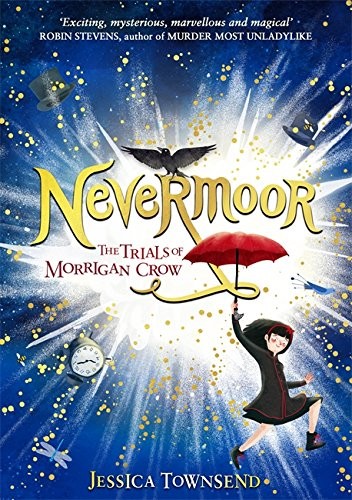
A cursed girl escapes death and finds herself in a magical world-but is then tested …
At Midnight, Jupiter North will Kill Dumbledore with an E-tool
5 stars
This is prime.
Nevermoor was a great series starter with a fun, imaginative world and a cast of funny, relatable characters. Morrigan and Jupiter were fun in different ways, the story was propulsive, and the worldbuilding was Dahl-esque, with confidence and verve.
The Christmas Eve chapter was wonderful and heartwarming, I want to read it every Christmas.
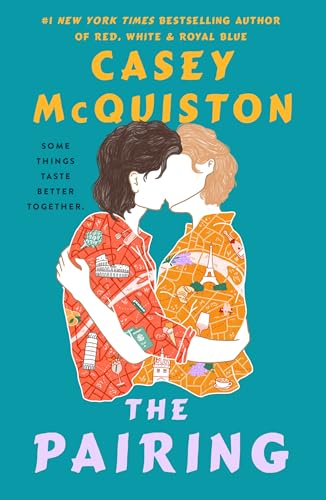
The wildly anticipated new novel from the author of the bestselling phenomenon Red, White and …
Middle of the Road Romance
3 stars
Theo was a worse person than Kit but a better narrator and Theo's section were more fun to read. Kit's sections were more of a chore and I didn't much like how he described things.
Theo was a good example of a nonbinary character and someone who was emotionally closed off.
The characters could be frustrating when they made up reasons not to be together. I get that that's kind of the point, but it rankled over the course of the whole book.
Wish fulfillment book that was honest about what it was. Author was clearly putting themselves in the role of Theo.
I'm not a foodie so the food descriptions didn't do it for me. Not the author's fault, but I sometimes felt like I was missing out.
Theo was a worse person than Kit but a better narrator and Theo's section were more fun to read. Kit's sections were more of a chore and I didn't much like how he described things.
Theo was a good example of a nonbinary character and someone who was emotionally closed off.
The characters could be frustrating when they made up reasons not to be together. I get that that's kind of the point, but it rankled over the course of the whole book.
Wish fulfillment book that was honest about what it was. Author was clearly putting themselves in the role of Theo.
I'm not a foodie so the food descriptions didn't do it for me. Not the author's fault, but I sometimes felt like I was missing out.
This was very deeply researched and very academic. Summers did a deep dive into decades and decades of archives. I especially appreciated when individual case studies were used to illustrate a point in the hospital's history.
The book didn't really feel like it put parts together. This had much more value as a presentation of research than a piece of writing. I had trouble latching onto a coherent thesis or throughline.
This was very deeply researched and very academic. Summers did a deep dive into decades and decades of archives. I especially appreciated when individual case studies were used to illustrate a point in the hospital's history.
The book didn't really feel like it put parts together. This had much more value as a presentation of research than a piece of writing. I had trouble latching onto a coherent thesis or throughline.
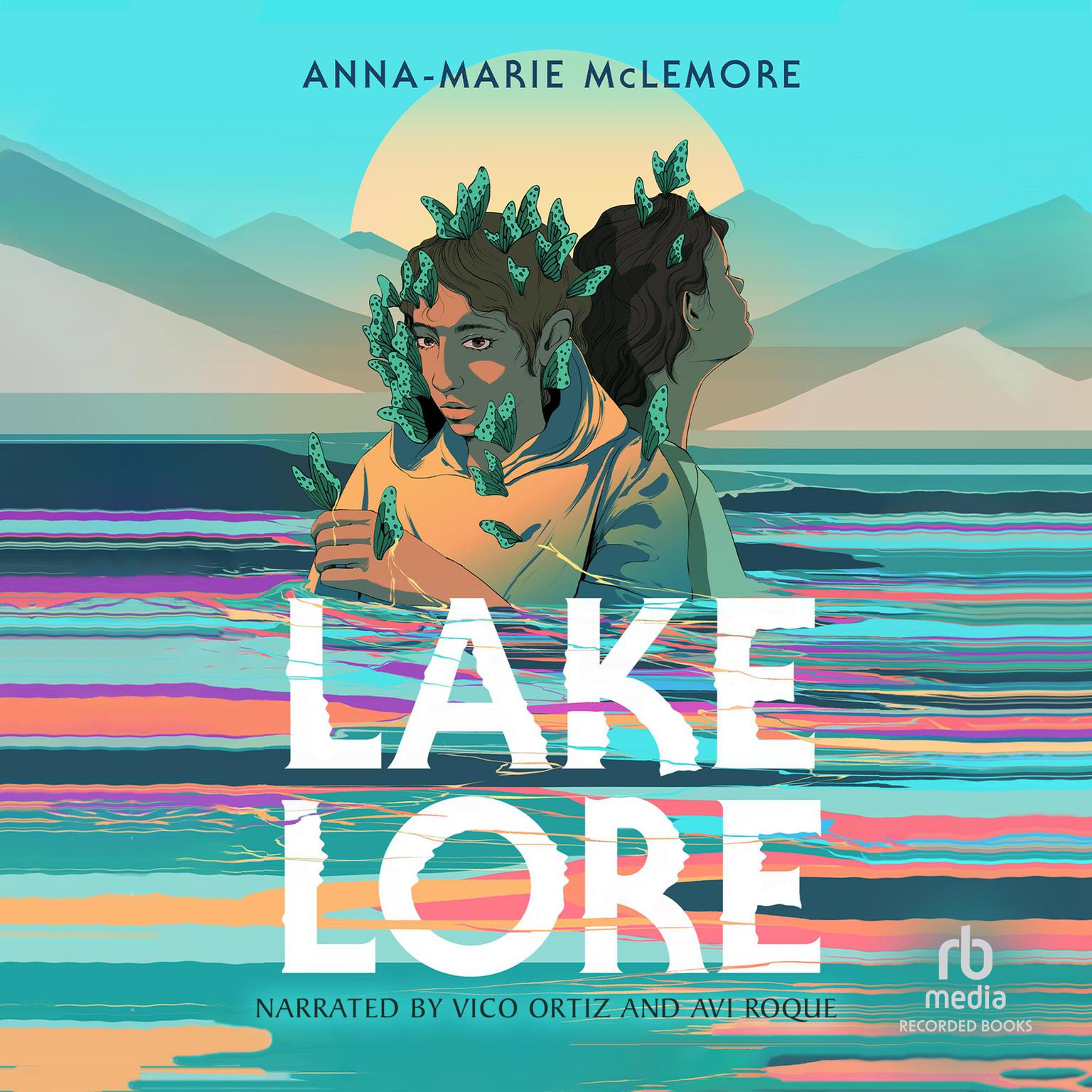
In this young adult novel by award-winning author Anna-Marie McLemore, two non-binary teens are pulled …
Tight focus on the characters' inner lives
3 stars
This sort of reminded me of the Netflix series Adolescence in that I found it more interesting as conceptual exercise than a story.
The book is in (usually) very short chapters and jumps back and forth between the viewpoint characters. In that way it's kind of an ADHD simulator. Early in the book I found it hard to tell Bastian and Lore apart from each other. That's sort of a commentary on how we tend to classify and box people in by ethnicity and gender expression, but it also forced me to take notes to remember which character was which. Later in the book we learned how Lore had to keep notes for everything, so the book succeeded at putting me into the shoes of the character.
This was a small story that focused on the inner lives of the two viewpoint characters and everyone else was pretty …
This sort of reminded me of the Netflix series Adolescence in that I found it more interesting as conceptual exercise than a story.
The book is in (usually) very short chapters and jumps back and forth between the viewpoint characters. In that way it's kind of an ADHD simulator. Early in the book I found it hard to tell Bastian and Lore apart from each other. That's sort of a commentary on how we tend to classify and box people in by ethnicity and gender expression, but it also forced me to take notes to remember which character was which. Later in the book we learned how Lore had to keep notes for everything, so the book succeeded at putting me into the shoes of the character.
This was a small story that focused on the inner lives of the two viewpoint characters and everyone else was pretty one dimensional. There's nothing wrong with a small story sometimes, but I felt that the world under the lake was underutilized. It was very richly described, but it taught the characters a simple lesson and then didn't figure much into the last third of the book.
All in all, very interesting conceptually and gave me a better emotional understanding of ADHD and Dyslexia, but not a lot of fun to read and I wasn't eager to get to each new chapter.
When you’ve been set up to lose everything you love, what is there left to …
Worthy, if prequelly, prequel
4 stars
This was a very solid entry that built on the world and fleshed out Haymitch's character. I was invested in the narrative and found Haymitch believable and compelling. Maysilee was a "mean girl" archetype written sympathetically, which was uncommon and enjoyable. Downside here was a bit too much prequel syndrome: trying a little too hard to fit in things from the original books.
I've long thought the the world building parts and the anticipation in the leadup to the games were more interesting than the games themselves, and Collins apparently agrees. The games don't start until halfway through and only take up about 30% of the book. Even then, Haymitch spends the majority of them staying out of the action.
The drumbeat of Haymitch taking on an ally and then watching them die starts to seem repetitive and that he barely gets a chance to know them, but …
This was a very solid entry that built on the world and fleshed out Haymitch's character. I was invested in the narrative and found Haymitch believable and compelling. Maysilee was a "mean girl" archetype written sympathetically, which was uncommon and enjoyable. Downside here was a bit too much prequel syndrome: trying a little too hard to fit in things from the original books.
I've long thought the the world building parts and the anticipation in the leadup to the games were more interesting than the games themselves, and Collins apparently agrees. The games don't start until halfway through and only take up about 30% of the book. Even then, Haymitch spends the majority of them staying out of the action.
The drumbeat of Haymitch taking on an ally and then watching them die starts to seem repetitive and that he barely gets a chance to know them, but that's kind of the point. It reminded me of the movie The Iron Claw in that way.
This book was more mature but less subtle than the previous entries, which is an odd fit. The writing was aged up a little with the audience, but the themes were somehow even less subtle than the original books. The thesis is stated in the epigraph, then pounded in throughout the book.
The book includes a brief epilogue set after the main series and a sample chapter of the first Hunger Games book, which I don't like because it would be pretty funny if you read this with no knowledge of the other books. Ultimate downer ending.
The casting for the movie is amazing, and I'll be there opening weekend.