F00FC7C8 reads books occasionally rated 2061: Odyssey Three: 3 stars
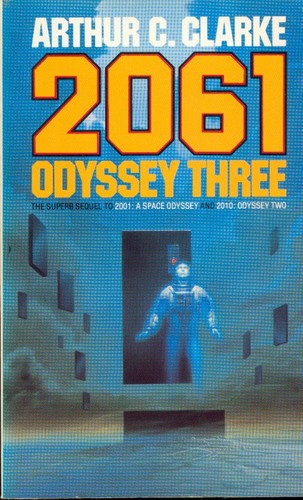
2061: Odyssey Three by Arthur C. Clarke (Odyssey #3)
A re-visitation of the imaginative future painted by Arthur C. Clarke in his previous two books [2001: A Space Odyssey][1] …
I'm an autistic sci-fi nerd. I don't read books often, but when I do, I read them way too fast.
This link opens in a pop-up window
A re-visitation of the imaginative future painted by Arthur C. Clarke in his previous two books [2001: A Space Odyssey][1] …
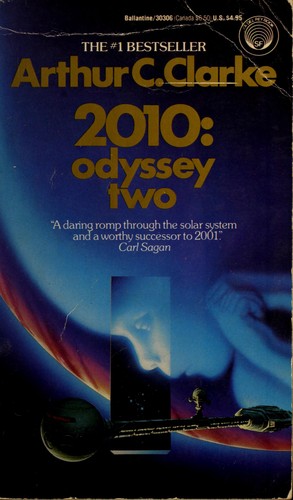
When 2001: A Space Odyssey first shocked, amazed, and delighted millions in the late 1960s, the novel was quickly recognized …
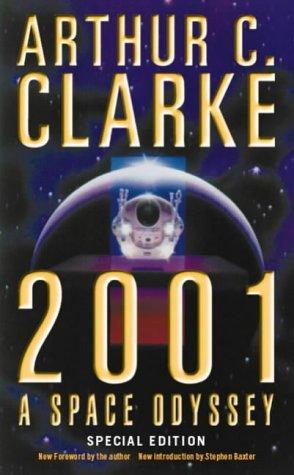
2001: A Space Odyssey is a 1968 science fiction novel by British writer Arthur C. Clarke. It was developed concurrently …
How can we make intelligent decisions about our increasingly technology-driven lives if we don’t understand the difference between the myths …
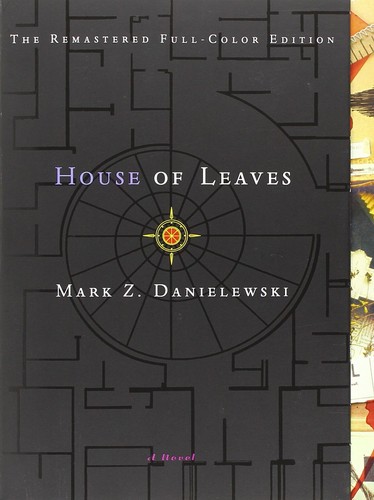
A young family moves into a small home on Ash Tree Lane where they discover …
Content warning Spoilers for some of the unusual features of this book and minor plot details. No major plot details are included.
Mark Z. Danielewski presents a haunted book by Zampanó with haunted commentary by Johnny Truant about a haunted movie about a haunted house that appears to be sentient, full of sprawling corridors that expand and contract. The surreal journeys through the house are amplified by experimental text layouts which describe experimental filmmaking choices, and with an unbelievable number of detailed fake citations, scattered throughout footnote mazes with three different authors, crossed-out paragraphs, text that changes color and orientation, the whole nine yards.
Throughout all of that, House of Leaves never feels gimmicky. Everything is purposeful. The biggest problem is the long-windedness of the passages attributed to Johnny Truant, and their rather un-sexy sex scenes. Those can be skipped, but they are worth reading as they contain a whole other layer of madness to this web of a story.
Introduction à la philosophie bouddhique zen, ses origines bouddhistes et taoïstes, son histoire et ses grands principes.
I enjoy Alan Watts' expositions of Eastern philosophy and mysticism, and his final novel, Tao: The Watercourse Way, is no exception. However, it's a posthumously released book, which was not finished in Watts' life. The introduction promises two chapters on the importance of Taoism to the modern world, which would probably have improved my opinion of the book a lot, but alas, Watts died before he could write them. (As an aside - between the posthumous nature of the book, the introduction and notes by a second author, and the strange formatting that included Chinese calligraphy in face, I was getting House of Leaves flashbacks from this whole thing.)
All that aside, this book does a decent job of introducing Taoist ideas to a Western audience, and has flashes of intellectual brilliance that make the read eminently worth it, but it should not be relied on to understand …
I enjoy Alan Watts' expositions of Eastern philosophy and mysticism, and his final novel, Tao: The Watercourse Way, is no exception. However, it's a posthumously released book, which was not finished in Watts' life. The introduction promises two chapters on the importance of Taoism to the modern world, which would probably have improved my opinion of the book a lot, but alas, Watts died before he could write them. (As an aside - between the posthumous nature of the book, the introduction and notes by a second author, and the strange formatting that included Chinese calligraphy in face, I was getting House of Leaves flashbacks from this whole thing.)
All that aside, this book does a decent job of introducing Taoist ideas to a Western audience, and has flashes of intellectual brilliance that make the read eminently worth it, but it should not be relied on to understand the history and practice of Taoism in China.
This is one of several works of Alan Watts that was compiled and published by his son, Mark Watts, after his death. Since it covers a wide range of periods in his life, the quality and depth of the essays vary greatly. Still, I would highly recommend picking this up for some of its more interesting sections. The Language of Metaphysical Experience especially spoke to me, as it perfectly expresses the usefulness of religion and mysticism despite their seeming irrelevance to all matters of the physical world. Tao and Wu-wei and the titular Become What You Are are also memorable.
At the root of human conflict is our fundamental misunderstanding of who we are. The …
This book criticizes the foundations of philosophy on a level I rarely see. It does so by appropriating the ideas of Eastern religions, particularly Hinduism, and likening them to recent developments in Western philosophy, science, and the current events of 1966. Not every conclusion Watts comes to is entirely reasonable, but he does a great job of explaining how ego dissolution happens, its effects, and why it is philosophically reasonable.
No other English translation of this greatest of the Chinese classics can match Ursula Le …
Not a translation - rather, this is Le Guin’s personal rendition of the book, based on a verbatim translation by Paul Carus, commentaries on various other translations, and some help from J. P. Seaton, a professor of the Chinese language. As one might expect from a translation by an English novelist, Le Guin does a good job of keeping the text’s poetic form and even makes it more accessible in some ways. Unlike Stephen Mitchell, Le Guin never confabulates large parts of the text to make it more poetical, but sometimes she does stretch the interpretation beyond that which might be reasonable. She also deletes several passages that she considers to conflict with the meaning of the text. Her commentary is just as fun to read as the translation itself. I appreciate that where most translators gender the sage or Master as “he”, or switching between “she” and “he” as …
Not a translation - rather, this is Le Guin’s personal rendition of the book, based on a verbatim translation by Paul Carus, commentaries on various other translations, and some help from J. P. Seaton, a professor of the Chinese language. As one might expect from a translation by an English novelist, Le Guin does a good job of keeping the text’s poetic form and even makes it more accessible in some ways. Unlike Stephen Mitchell, Le Guin never confabulates large parts of the text to make it more poetical, but sometimes she does stretch the interpretation beyond that which might be reasonable. She also deletes several passages that she considers to conflict with the meaning of the text. Her commentary is just as fun to read as the translation itself. I appreciate that where most translators gender the sage or Master as “he”, or switching between “she” and “he” as Mitchell did, Le Guin eschews gendered pronouns entirely. Those seeking a literal reading, or looking for mystical truth, may be disappointed, but this remains one of the easiest versions of the Tao Te Ching to recommend.
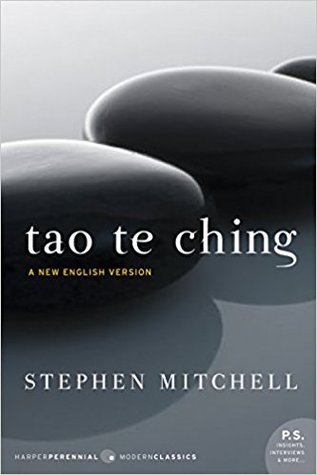
In eighty-one brief chapters, Lao-tzu's Tao Te Ching, or Book of the Way, provides advice …
Mitchell’s translation of the Tao Te Ching is by far the most approachable version I’ve read, but it comes at the cost of a highly, often deliberately Westernized text, far removed from the context of the original. Several chapters reference modern technology and science in lieu of Laozi’s metaphors, which are sometimes based on ancient Chinese ways of living - and sometimes this works, but sometimes it significantly weakens the text, as in chapter 49, where “horses hauling manure” is replaced with “factories making tractors and trucks” - which in my view is pointless and conflicts with the Daodejing’s naturalistic theme. Mitchell also “improvises” entirely new stanzas where he finds the source text to be unusually “narrow-minded”, which again makes the text more practical in some ways, but takes it further from anything that could reasonably be interpreted from the original Chinese.
(If you'd like a better translation of …
Mitchell’s translation of the Tao Te Ching is by far the most approachable version I’ve read, but it comes at the cost of a highly, often deliberately Westernized text, far removed from the context of the original. Several chapters reference modern technology and science in lieu of Laozi’s metaphors, which are sometimes based on ancient Chinese ways of living - and sometimes this works, but sometimes it significantly weakens the text, as in chapter 49, where “horses hauling manure” is replaced with “factories making tractors and trucks” - which in my view is pointless and conflicts with the Daodejing’s naturalistic theme. Mitchell also “improvises” entirely new stanzas where he finds the source text to be unusually “narrow-minded”, which again makes the text more practical in some ways, but takes it further from anything that could reasonably be interpreted from the original Chinese.
(If you'd like a better translation of the Tao Te Ching, I suggest Red Pine's 2009 revised translation, which comes with several commentaries, or John C. H. Wu's pocket edition.)
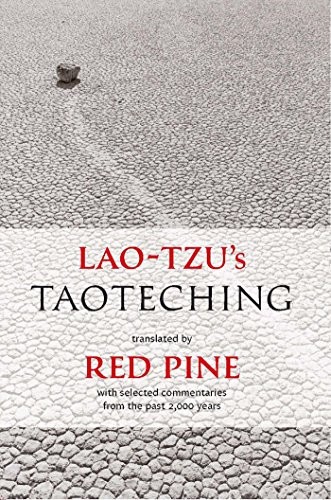
This is the first translation of Laozi that I recall reading in full, and probably my personal favorite. Porter does a great job of balancing poetry and literalism, most of the time. That combination makes Porter’s version somewhat less approachable than other versions, but it strengthens the experience of reading the book. In case you want to understand a given verse, each chapter comes with selected commentaries to help interpret the text where the translator does not, yet still allow the reader to form their own interpretation. This combined with the layout, where each two-page spread contains one chapter in Chinese and English plus commentaries, makes Red Pine’s version a good resource for interpretation. Though he still leans into romanticism within his own commentary, Porter primarily selects older Chinese commentators, which help counter such distortions.