

faticake rated The Ministry of Time: 5 stars

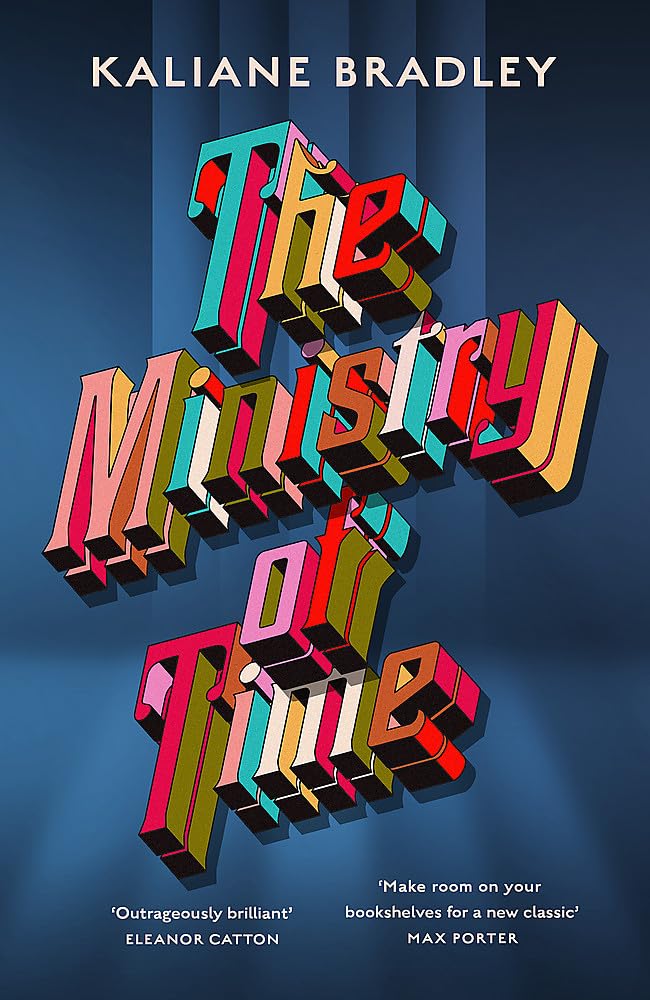
The Ministry of Time by Kaliane Bradley
In the near future, a civil servant is offered the salary of her dreams and is, shortly afterward, told what …
This link opens in a pop-up window

In the near future, a civil servant is offered the salary of her dreams and is, shortly afterward, told what …

"The Crucible meets The Virgin Suicides in this haunting debut about five sisters in a small village in eighteenth century …

"The Crucible meets The Virgin Suicides in this haunting debut about five sisters in a small village in eighteenth century …
Laurent Binet is a great storyteller, and while disbelief is stretched till almost breaking at times to make the story work, it works and is an enjoyable read.
Many people feel that their jobs could be accomplished in much less than 8 hours every day, but social and economic stigma forces us to spend needless time at work, which most would rather spend doing other things.
On top of that, some jobs that exist in current society can be considered outright malicious and exploitative, and as such society would benefit from these not being done.
The author presents various examples for both arguments supplemented by self reports from persons in different professions which corroborate that this is a shared feeling, and explore the different impacts such work arrangements have on people.
The explicit goal of the book is to highlight that our current economic system is very far from the rational ideal it sells itself as, and to point out the negative impacts this has on an individual and social level, to foster debate about …
Many people feel that their jobs could be accomplished in much less than 8 hours every day, but social and economic stigma forces us to spend needless time at work, which most would rather spend doing other things.
On top of that, some jobs that exist in current society can be considered outright malicious and exploitative, and as such society would benefit from these not being done.
The author presents various examples for both arguments supplemented by self reports from persons in different professions which corroborate that this is a shared feeling, and explore the different impacts such work arrangements have on people.
The explicit goal of the book is to highlight that our current economic system is very far from the rational ideal it sells itself as, and to point out the negative impacts this has on an individual and social level, to foster debate about the problem as a first step to addressing it.
While he does suggest Universal Basic Income could help solve some of these issues, he clearly states his goal is not to promote this or any other policy as a unique solution.
Piketty and his colaborators collected information about the distribution of incomes from labor and from capital around the world over the past couple of centuries.
This data allows them to show how economic inequality has changed over this period in different countries.
The findings are striking: economic inequality in the modern era is as high as during the "Gilded age", and it is continually becoming more extreme.
Piketty argues that contrary to Kuznets hopeful belief, the reduction of inequality observed by him in the USA was not an automatic result of a well functioning capitalist system, but a product of policies meant to achieve this reduction.
Had Kuznets had more data, he would have seen his inequality curve rise again.
For labor income to increase, the economy needs to grow.
For capital income to increase, part of the returns have to be reinvested.
…
Piketty and his colaborators collected information about the distribution of incomes from labor and from capital around the world over the past couple of centuries.
This data allows them to show how economic inequality has changed over this period in different countries.
The findings are striking: economic inequality in the modern era is as high as during the "Gilded age", and it is continually becoming more extreme.
Piketty argues that contrary to Kuznets hopeful belief, the reduction of inequality observed by him in the USA was not an automatic result of a well functioning capitalist system, but a product of policies meant to achieve this reduction.
Had Kuznets had more data, he would have seen his inequality curve rise again.
For labor income to increase, the economy needs to grow.
For capital income to increase, part of the returns have to be reinvested.
The fundamental force for divergence, making the rich richer, is the fact that the rate of return of capital (r) has historically been greater than the rate of growth of the economy (g), which means owning things has historically been the surest way to increase your income.
There is also a force for convergence, helping labor increase its income: education and diffusion of knowledge.
But historically this has not been anywhere near enough to compensate for the strong force of divergence.
The book was written more than a decade ago and the problems described have since become worse, the proposed solution still seems reasonable but politically unattainable as the countries of the world are still locked in a race to the bottom for corporate taxes.
Content warning Spoilers about the plot
This read like a rehashed yet unfinished Never Let Me Go. The world building seemed lazy because so many details were lacking. And I couldn't get past a "superintelligent" robot that didn't know how the sun worked.

From her place in the store, Klara, an Artificial Friend with outstanding observational qualities, watches carefully the behavior of those …
@athena@bookrastinating.com I DNF'ed this book because, as you said, we been knew if you're already anti-big tech
I picked up this book because it's been recommended by several well-known authors of locked-room murders. It was promising when I started reading because the language was easy to follow (perhaps credits to the translator) and the plot was interesting, straight-to-the point, and fast-paced. In the end, though, I found the solution to the mystery itself unbelievable, and the characters flat. I have a hard time following stories when I can't care less about the characters, and this story barely gave me anything about the bride and groom, who were, after all, the main characters in the mystery (aside from the detective). Maybe this book was groundbreaking in its time, but it's not for me.

In the winter of 1937, the village of Okamura is abuzz with excitement over the forthcoming wedding of a son …

In the winter of 1937, the village of Okamura is abuzz with excitement over the forthcoming wedding of a son …