Making News is Gaye Tuchman's exploration into the study in the construction of reality. The …
A great account of newswork and professionalization of journalism
4 stars
Tuchman’s book is a sociological study of journalism and is based on ethnographic work at multiple sites spanning a decade. She primarily focuses on analyzing newswork as a practice. She argues that American journalism has developed notions of facticity, professionalization and spatial-temporal understandings, which guide the daily work of news organizations.
She forcefully states that journalism is storytelling and not a veridical account of reality. She uses the Goffmanian concept of framing to make this argument, writing that journalists have figured out a set of rules and news story format that allows them to write interesting stories while shielding them from libel and accusations of bias.
She further elaborates the reliance of news organizations on other institutions such as the police, legislature and courts. I really liked her point about how time and space organizes newswork: certain stories (especially hard news) have to be broadcast as soon as …
Tuchman’s book is a sociological study of journalism and is based on ethnographic work at multiple sites spanning a decade. She primarily focuses on analyzing newswork as a practice. She argues that American journalism has developed notions of facticity, professionalization and spatial-temporal understandings, which guide the daily work of news organizations.
She forcefully states that journalism is storytelling and not a veridical account of reality. She uses the Goffmanian concept of framing to make this argument, writing that journalists have figured out a set of rules and news story format that allows them to write interesting stories while shielding them from libel and accusations of bias.
She further elaborates the reliance of news organizations on other institutions such as the police, legislature and courts. I really liked her point about how time and space organizes newswork: certain stories (especially hard news) have to be broadcast as soon as possible while lifestyle/feature stories do not have to be published so urgently.
As far as space is concerned, journalists have identified certain sites as places that reliably generate news — White House, city hall, police stations, courts and therefore they tend to frequent these places to gather news.
Similarly, journalists prioritize institutions of power as legitimate sources of news. The things that happen to the individuals associated with these institutions or the things these institutional actors do, are more likely to make news than stories about common people.
When all the aforementioned things are combined, it results in what Tuchman calls the news net, and this net tends to catch a particular kind of stories while many others slip away.
Journalists are going to miss many stories because of their social class, which primes them into thinking what stories are worth writing about and what aren’t, or the simple fact that they never heard a particular story.
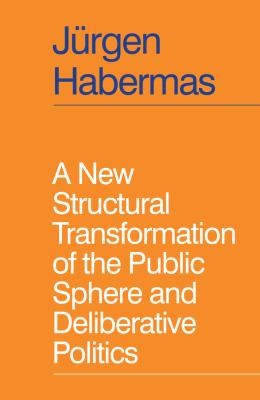
Jürgen Habermas’s book The Structural Transformation of the Public Sphere, first published in 1962, has …
Habermas' theory of public sphere and democracy are intertwined with each other
No rating
In his theory of public sphere, Jürgen Habermas is most concerned about the political public sphere since it plays an important part in his model of deliberative democracy. Habermas's theory of public sphere is likely to be misinterpreted if one doesn't simultaneously pay attention to his theory of democracy. Habermas argues that the empirical content of a constitutional democracy is dependent on the normative values underpinning it. Therefore, he is not a big fan of the binary of the empirical and the normative in his theory of democracy. Habermas gives a key role to the political public sphere, which finds its institutionalization in the traditional news media ecosystem of print, radio and television, in the "deliberative" part of his model of deliberative democracy. Consequently he does not look too favorably at the changes introduced by digital media and especially social media, which has led to the democratization of authorship of …
In his theory of public sphere, Jürgen Habermas is most concerned about the political public sphere since it plays an important part in his model of deliberative democracy. Habermas's theory of public sphere is likely to be misinterpreted if one doesn't simultaneously pay attention to his theory of democracy. Habermas argues that the empirical content of a constitutional democracy is dependent on the normative values underpinning it. Therefore, he is not a big fan of the binary of the empirical and the normative in his theory of democracy. Habermas gives a key role to the political public sphere, which finds its institutionalization in the traditional news media ecosystem of print, radio and television, in the "deliberative" part of his model of deliberative democracy. Consequently he does not look too favorably at the changes introduced by digital media and especially social media, which has led to the democratization of authorship of opinion.
Jürgen Habermas’s book The Structural Transformation of the Public Sphere, first published in 1962, has …
In his theory of public sphere, Jürgen Habermas is most concerned about the political public sphere since it plays an important part in his model of deliberative democracy. Habermas's theory of public sphere is likely to be misinterpreted if one doesn't simultaneously pay attention to his theory of democracy. Habermas argues that the empirical content of a constitutional democracy is dependent on the normative values underpinning it. Therefore, he is not a big fan of the binary of the empirical and the normative in his theory of democracy. Habermas gives a key role to the political public sphere, which finds its institutionalization in the traditional news media ecosystem of print, radio and television, in the "deliberative" part of his model of deliberative democracy. Consequently he does not look too favorably at the changes introduced by digital media and especially social media, which has led to the democratization of authorship of …
In his theory of public sphere, Jürgen Habermas is most concerned about the political public sphere since it plays an important part in his model of deliberative democracy. Habermas's theory of public sphere is likely to be misinterpreted if one doesn't simultaneously pay attention to his theory of democracy. Habermas argues that the empirical content of a constitutional democracy is dependent on the normative values underpinning it. Therefore, he is not a big fan of the binary of the empirical and the normative in his theory of democracy. Habermas gives a key role to the political public sphere, which finds its institutionalization in the traditional news media ecosystem of print, radio and television, in the "deliberative" part of his model of deliberative democracy. Consequently he does not look too favorably at the changes introduced by digital media and especially social media, which has led to the democratization of authorship of opinion.
All the stories in this volume are set in the year 2050, in The City. …
Excellent collection
5 stars
These are an excellent set of short stories written by late philosophy professor Aniket Jaaware. The stories are set in the year 2050 in a city called the City. Even though geeky, there aren't science fiction. Jaaware crafts a diverse set of characters in this short collection, offering a wide range of human experiences. The stories are immensely readable; they are open ended with a light touch of humor. At the same time they offer a poignant critique of the negative aspects of large metropolises, more so from the point of view of the marginalized, the destitute, the homeless. What I liked the most about this collection is that characters from previous stories make brief, fleeting appearances in the later stories. I will highly recommend this story collection to anyone with a nerdy side to them.
These are an excellent set of short stories written by late philosophy professor Aniket Jaaware. The stories are set in the year 2050 in a city called the City. Even though geeky, there aren't science fiction. Jaaware crafts a diverse set of characters in this short collection, offering a wide range of human experiences. The stories are immensely readable; they are open ended with a light touch of humor. At the same time they offer a poignant critique of the negative aspects of large metropolises, more so from the point of view of the marginalized, the destitute, the homeless. What I liked the most about this collection is that characters from previous stories make brief, fleeting appearances in the later stories. I will highly recommend this story collection to anyone with a nerdy side to them.
All the stories in this volume are set in the year 2050, in The City. …
These are an excellent set of short stories written by late philosophy professor Aniket Jaaware. The stories are set in the year 2050 in a city called the City. Even though geeky, there aren't science fiction. Jaaware crafts a diverse set of characters in this short collection, offering a wide range of human experiences. The stories are immensely readable; they are open ended with a light touch of humor. At the same time they offer a poignant critique of the negative aspects of large metropolises, more so from the point of view of the marginalized, the destitute, the homeless. What I liked the most about this collection is that characters from previous stories make brief, fleeting appearances in the later stories. I will highly recommend this story collection to anyone with a nerdy side to them.
These are an excellent set of short stories written by late philosophy professor Aniket Jaaware. The stories are set in the year 2050 in a city called the City. Even though geeky, there aren't science fiction. Jaaware crafts a diverse set of characters in this short collection, offering a wide range of human experiences. The stories are immensely readable; they are open ended with a light touch of humor. At the same time they offer a poignant critique of the negative aspects of large metropolises, more so from the point of view of the marginalized, the destitute, the homeless. What I liked the most about this collection is that characters from previous stories make brief, fleeting appearances in the later stories. I will highly recommend this story collection to anyone with a nerdy side to them.
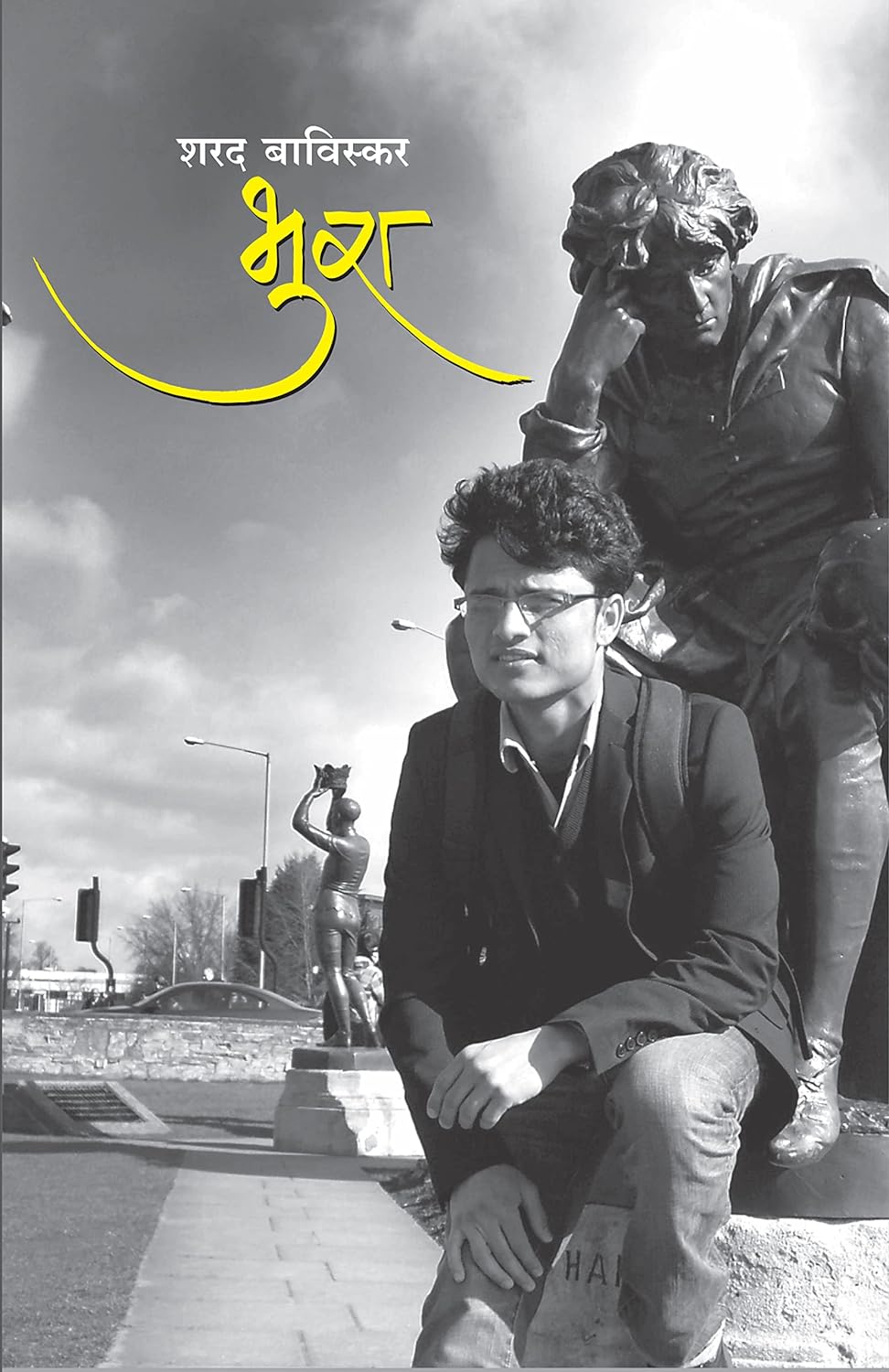
This is an autobiography of a French philosophy professor whose career trajectory was not a given. He almost drops out in the fourth standard, fails tenth standard but then goes on to finish his undergraduate studies with the help of subsidized education and parents fully supporting him with their meager resources. From that moment on, it's a story of consistent upward trajectory as the author studies abroad, finishes PhD and finally lands a professor's job at India's (arguably) most prestigious university.
The author hails from similar socioeconomic background as me and hence the book felt quite relatable. He also stresses the point that a person's success has much to do with systemic factors along with individual efforts. He also cautions against using a successful working class person as a token figure to demonize other working class people.
It was good to read Ahirani as it was sprinkled throughout …
This is an autobiography of a French philosophy professor whose career trajectory was not a given. He almost drops out in the fourth standard, fails tenth standard but then goes on to finish his undergraduate studies with the help of subsidized education and parents fully supporting him with their meager resources. From that moment on, it's a story of consistent upward trajectory as the author studies abroad, finishes PhD and finally lands a professor's job at India's (arguably) most prestigious university.
The author hails from similar socioeconomic background as me and hence the book felt quite relatable. He also stresses the point that a person's success has much to do with systemic factors along with individual efforts. He also cautions against using a successful working class person as a token figure to demonize other working class people.
It was good to read Ahirani as it was sprinkled throughout the book. I wish the French phrases and sentences were used more sparingly though as Marathi readers cannot be expected to understand those but I suppose that was to drive home the author's relationship with the French language.
All in all it's a great biography if you are interested in Maharashtrian rural life and higher education in general.
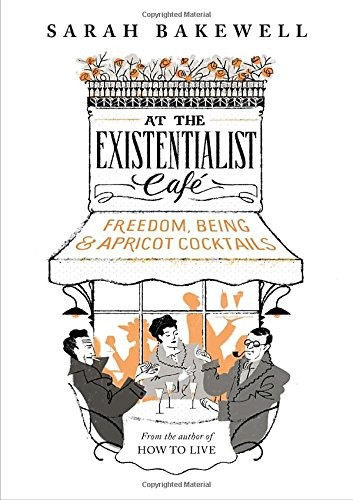
Named one of the Ten Best Books of 2016 by the New York Times, a …
This book is a great read. It offers a magisterial view of existentialism and phenomenology and the key figures in that tradition such Husserl, Heidegger, Sartre, Merleau-Ponty, Camus and Simone de Beauvoir. It takes turns between offering a quick rundown of key philosophical concepts and biographical details about the book's heroes. While shining light on their great philosophical insights, the author also takes them to task for their all-too-human flaws. It's also amusing to read about the quarrels between the philosophers, their broken friendships, affairs and bourgeois life in Paris.
This book is a great read. It offers a magisterial view of existentialism and phenomenology and the key figures in that tradition such Husserl, Heidegger, Sartre, Merleau-Ponty, Camus and Simone de Beauvoir. It takes turns between offering a quick rundown of key philosophical concepts and biographical details about the book's heroes. While shining light on their great philosophical insights, the author also takes them to task for their all-too-human flaws. It's also amusing to read about the quarrels between the philosophers, their broken friendships, affairs and bourgeois life in Paris.