oncobot started reading Trainspotting by Ирвин Уэлш
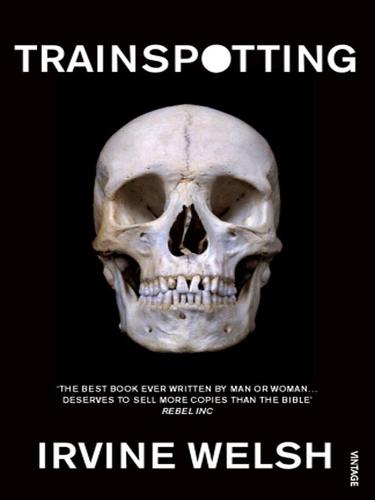
Trainspotting by Ирвин Уэлш
The seminal novel that changed the face of British fictionChoose us. Choose life. Choose mortgage payments; choose washing machines; choose …

This link opens in a pop-up window
No books found.
The seminal novel that changed the face of British fictionChoose us. Choose life. Choose mortgage payments; choose washing machines; choose …

Bahaism is a system of religious thought that presents itself as a peace-bringing force; accessible to, amenable to, compatible with, and harmonious with the multitudes of relgious traditions and their members.
The appeal of such a claim would seem clear to anyone familiar with the abundance of sectarian violence that fills both the world's history and the news of current events on most any given day.
In this book, Samuel Graham Wilson seeks to dispel the appeal of Bahaism for the Christian reader, to make the case that Bahaism is not what it claims to be, and do this in a way that is rhetorically rigorous, but also accessible to the general reader.
In this, the author succeeds.
raspberrypi.tailcd13e6.ts.net/wilson_bahaism-and-its-claims.html
Bahaism is a system of religious thought that presents itself as a peace-bringing force; accessible to, amenable to, compatible with, and harmonious with the multitudes of relgious traditions and their members.
The appeal of such a claim would seem clear to anyone familiar with the abundance of sectarian violence that fills both the world's history and the news of current events on most any given day.
In this book, Samuel Graham Wilson seeks to dispel the appeal of Bahaism for the Christian reader, to make the case that Bahaism is not what it claims to be, and do this in a way that is rhetorically rigorous, but also accessible to the general reader.
In this, the author succeeds.
raspberrypi.tailcd13e6.ts.net/wilson_bahaism-and-its-claims.html
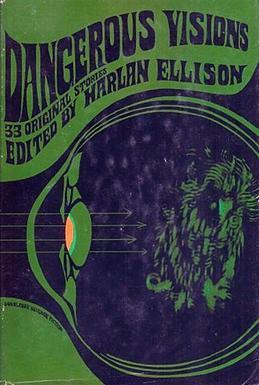
I was born in New York State, lived there until age twelve, then to Florida. Thus, I can see the Civil War from both side. Kieth Laumer, Dangerous Visions (Ellison, 1967) pg 484
— Dangerous Visions by Harlan Ellison (Dangerous Visions Anthologies, #1) (Page 484)
In producing ‘Dangerous Visions’ Harlan Ellison set out to create a speculative fiction collection that was different from others of its kind. It was to be different because it had been made differently.
Other anthologies were collected from among previously published works and those works had been selected and edited by the stodgy stiffs and squares who ran the periodicals that published them. Ellison’s stories would be new, avant-garde, mostly by young up-and-coming writers, ideally so bleeding edge as to have been unpublishable — radioactive.
It was the dawning of the Age of Aquarius. It was a dangerous time. The baby-boom had been dialed up to eleven and the youngest of them had just arrived at adulthood. Ellison looked to the writers among them and said “sock it to me”.
This is an unusual book, one composed of three different things. There are, of course, the stories …
In producing ‘Dangerous Visions’ Harlan Ellison set out to create a speculative fiction collection that was different from others of its kind. It was to be different because it had been made differently.
Other anthologies were collected from among previously published works and those works had been selected and edited by the stodgy stiffs and squares who ran the periodicals that published them. Ellison’s stories would be new, avant-garde, mostly by young up-and-coming writers, ideally so bleeding edge as to have been unpublishable — radioactive.
It was the dawning of the Age of Aquarius. It was a dangerous time. The baby-boom had been dialed up to eleven and the youngest of them had just arrived at adulthood. Ellison looked to the writers among them and said “sock it to me”.
This is an unusual book, one composed of three different things. There are, of course, the stories themselves: short to medium length works of speculative fiction. Not all of them are strictly science fiction. Then there are the forewords, one introducing each story and two introducing the book as a whole. Most of these forewords were written by Ellison. Finally, there is an afterword that follows each story, each afterword prepared by the story’s author.
Let’s begin with the endings. One might imagine that in telling his story, an author will put everything he has into that story, not leaving much interesting to say in an afterword. This turns out to be the case. The afterwords are mostly short, mostly forgettable, and mostly — by me — forgotten.
The stories themselves vary greatly in content, style, and quality. Some are very much worth reading. Some are quite bizarre. As a whole, they are certainly worth having read.
The surprising part was in the forewords, especially as these were the non-fiction parts — well, nominally non-fiction, anyway — of what was, on the whole, a book of fiction. Mostly, these were written by Ellison, though the book begins with a foreword by Asimov. Also, Ellison’s own short fiction story is introduced by Bloch, whose story forms a sort of couplet with Ellison’s.
In some cases, the foreword is nearly as long as the story it introduces and this interstitial material forms a substantial part of the book. I enjoyed Ellison’s non-fiction contribution to this book more than his fiction.
It would be poor form for an anthologist to out-shine his invited authors. Ellison’s fiction didn’t do this. But if he had, I don’t imagine it would have bothered him. It’s my impression that spending time with this author would be less pleasant than reading his work. I suppose it’s only in the exceptional case that one would like both the bacon and the pig. The author himself advises against meeting writers whose work you admire. He does this using vivid insults which I assume didn’t apply to any of the other authors in this book. Or, at least I hope they didn’t.
As for whether this book and its vision are, for the present-day reader, dangerous; I would compare it to the Tyrannosaurus Rex in a natural history museum. It is significant. It is certainly interesting to look at. You can envision it giving quite a fright to the older and smaller reptiles on the primeval savanna. But, you yourself are probably in no real danger.
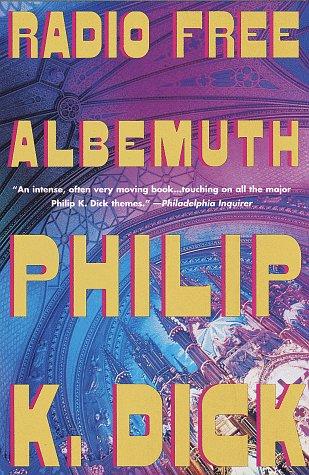
Science fiction novel, a wild and visionary alternate history of the United States.
It …
If an author casts himself as a central character, the dialogue he writes for himself cannot help being authentic but there are limits in the extent to which the resulting novel can genuinely remain fiction. In this novel, the author himself is a central character, through whose perspective much of the story is told. It is labeled as dystopian science fiction, but there is real doubt as to whether the author viewed it as fiction at all.
America’s dark prophet Philip K. Dick saw through the veil of perception that hangs before reality and stared unblinking into the abyss that lies beyond, seeing the world we have thus far only partly made our home.
It was in 1977, the year after he wrote this book, that Dick gave his speech titled “If You Find This World Bad, You Should See Some of the Others” in Metz, France. In …
If an author casts himself as a central character, the dialogue he writes for himself cannot help being authentic but there are limits in the extent to which the resulting novel can genuinely remain fiction. In this novel, the author himself is a central character, through whose perspective much of the story is told. It is labeled as dystopian science fiction, but there is real doubt as to whether the author viewed it as fiction at all.
America’s dark prophet Philip K. Dick saw through the veil of perception that hangs before reality and stared unblinking into the abyss that lies beyond, seeing the world we have thus far only partly made our home.
It was in 1977, the year after he wrote this book, that Dick gave his speech titled “If You Find This World Bad, You Should See Some of the Others” in Metz, France. In this book, he describes one of those others.
In this speech, he describes his understanding of a theological “orthogonal time” in which reality is a superposition of all potential realities, a layering for which Heaven and Hell are its bookends. It is through this framework that he understands the words of Jesus, that the kingdom of God is not out there, not in the layers of Dante, but within you. He claims to have had a religious experience, a firsthand encounter with the divine, a look beyond our usual space of four dimensions—a reality in which his recent works are not so much fictional reality as alternative reality.
Elements of ‘Radio Free Albemuth’ are present in this speech. It certainly appears to be a creative work. It is an overtly political work. Perhaps it is also a work of apocryphal scripture.
In some regards, this writing is very much a product of its place and time: California in the 20th century. The story begins in Berkeley and ends in Orange County, framing them as the state’s antipodes. Some of the dry humor at Berkeley’s expense early in the novel is hilarious. Some elements have aged better than others. The cultural power of the popular music industry is not now what it was when this book was written. Yet in other ways, the author is perhaps more predictive of our time than descriptive of his own.
It probably doesn’t spoil the story to compare its ending to that of ‘A Scanner Darkly’ which was published in 1977. ‘Radio Free Albemuth’ was published posthumously in 1985. The ending of ‘A Scanner Darkly’ is powerful. While their endings are similar, the ending of ‘Radio Free Albemuth’ lands perhaps a little more softly. It is nonetheless solid and well-directed.
Whether it is better to read this novel before or after watching the author’s speech in Metz is unclear.
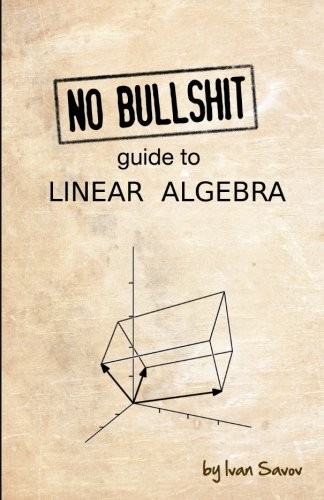
It may be best to begin with this book’s weakest element, and that is the title: No Bullshit Guide to Linear Algebra. The title implies that this book is fluffy, that it is not a serious book on mathematics; and that is not the case. I hesitated to buy this book because of its title.
This is a book on linear algebra, the branch of mathematics whose central object is the matrix. Of its nine chapters, the first chapter—the longest—covers algebra of the sort the reader likely studied in high school. If your knowledge of the fundamentals is sound, you can safely skip over this chapter. But don’t do that. Why not? There are several reasons. First, you may find something in there that you don’t already know. You don’t know everything. You wouldn’t want to miss it. Also, it can be useful to see a new perspective, to …
It may be best to begin with this book’s weakest element, and that is the title: No Bullshit Guide to Linear Algebra. The title implies that this book is fluffy, that it is not a serious book on mathematics; and that is not the case. I hesitated to buy this book because of its title.
This is a book on linear algebra, the branch of mathematics whose central object is the matrix. Of its nine chapters, the first chapter—the longest—covers algebra of the sort the reader likely studied in high school. If your knowledge of the fundamentals is sound, you can safely skip over this chapter. But don’t do that. Why not? There are several reasons. First, you may find something in there that you don’t already know. You don’t know everything. You wouldn’t want to miss it. Also, it can be useful to see a new perspective, to observe from a new vantage point how things all fit together. The author is disciplined and thoughtful in his use of notation and the first chapter is where things are first introduced. But, aside from all that, the text is genuinely well written. Good writing is a pleasure to read and there is no reason to deny yourself.
The next five chapters present the contents of linear algebra proper. This treatment is thin on rigorous proof. But, rigorous proofs are not particularly useful for creating comprehension and building intuition. What you do find here are well-crafted descriptions and thoughtful explanations, many of a very high quality. Some give a uniquely useful perspective. Also, despite its only taking 230 pages, this material goes beyond the basics and includes advanced topics, i.e., fancy stuff.
The last three chapters cover applications with one chapter devoted to probability and the final chapter to quantum mechanics. Fourier transforms are covered in the catch-all chapter. If a book’s ending is its destination, then that destination would be quantum computing and quantum information theory. That may not be the reader’s destination and that’s fine. As a personal note, I had read Feynman’s original quantum computing paper some time ago, but it didn’t really come together for me until Savov supplied the missing pieces that Feynman had not made clear—or at least not clear enough to me.
I must admit that, in these final chapters, the author sometimes allows himself a fig leaf’s worth of coverage for a volume’s worth of subject. Thus, it becomes harder to read in places and I didn’t always come away with the sense of crystal clarity that I took away from the earlier chapters. The author gives many pointers out for further exploration. In fact, those appear throughout the book.
If there were to ever be a third edition, any revision should certainly proceed from back to front. There are elements early in the book that should be trapped in amber and preserved for eternity, just as they are. But, as for the last section? If the applications section were expanded, perhaps tripled, so as to provide for longer explanations, I’m not sure it would still be a linear algebra book. The applications section already runs long, relative to the central part of the book. Likewise, removing any of this in the interest of brevity would be a tragedy. So, it is as it is meant to be.
I hope there are more works forthcoming from Ivan Savov.
raspberrypi.tailcd13e6.ts.net/no-bullshit-guide-to-linear-algebra.html
Quantum mechanics is not that weird.
— No bullshit guide to linear algebra by Ivan Savov (Page 510)
Science fiction novel, a wild and visionary alternate history of the United States.
It is 1969, and a paranoid …