Shauna rated The Ministry of Time: 3 stars
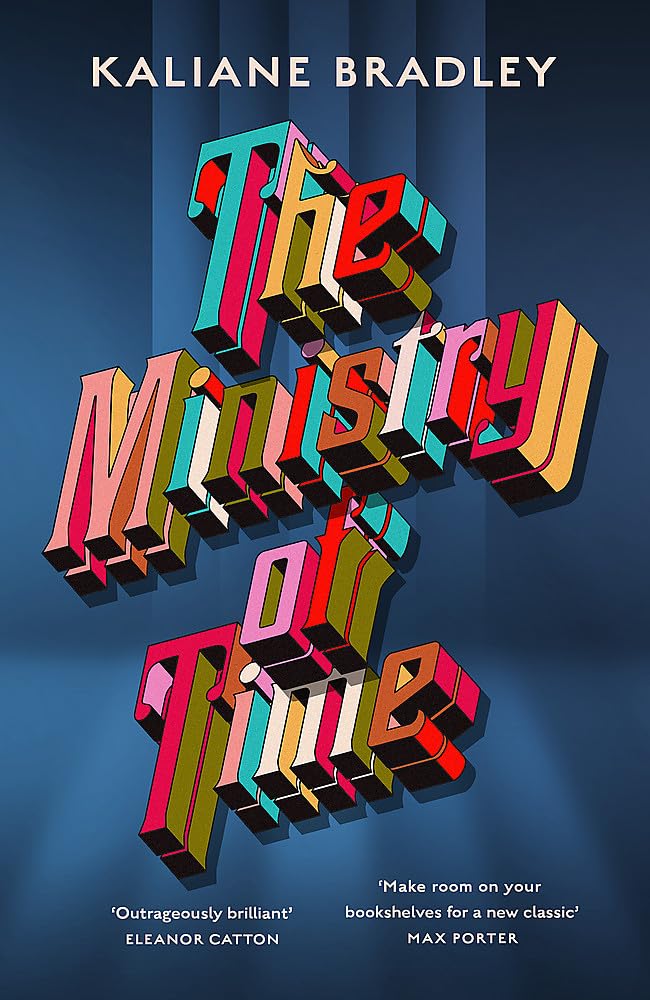
The Ministry of Time by Kaliane Bradley
In the near future, a civil servant is offered the salary of her dreams and is, shortly afterward, told what …

Hello! I am trying out bookwyrm. I am also @shauna@social.coop on Mastodon.
This link opens in a pop-up window
In the near future, a civil servant is offered the salary of her dreams and is, shortly afterward, told what …
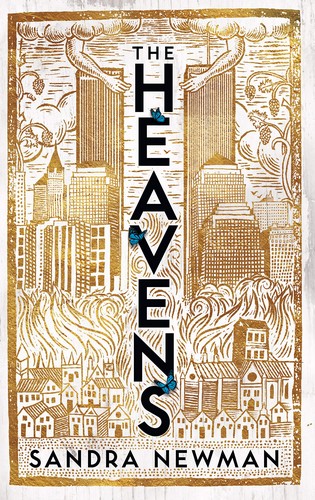
New York, 2000. Kate and Ben meet at a party and immediately fall in love. …
The Heavens is an interesting and largely successful mix of pop literary, historical fiction, and speculative fiction - with heavy helpings of romance and political commentary too. Its basic premise is a promising one: Kate, an otherwise ordinary twenty-something living in New York, lives another life in her sleep. In intermittent dreams she finds herself inhabiting the body of a woman, Emilia, in 1593 England. The chapters are told in alternating PoV. Odd numbered chapters are from the PoV of Ben, starting on the night he meets and falls in love with Kate. Even numbered chapters are from the PoV of Kate, usually inhabiting the body of Emilia.
It was a stay-up-late-to-finish read for me; Newman mixes in plenty of sharp details and moments of humor but overall moves at a brisk pace. That said, I can't give it 5 stars due to some plot holes towards the end …
The Heavens is an interesting and largely successful mix of pop literary, historical fiction, and speculative fiction - with heavy helpings of romance and political commentary too. Its basic premise is a promising one: Kate, an otherwise ordinary twenty-something living in New York, lives another life in her sleep. In intermittent dreams she finds herself inhabiting the body of a woman, Emilia, in 1593 England. The chapters are told in alternating PoV. Odd numbered chapters are from the PoV of Ben, starting on the night he meets and falls in love with Kate. Even numbered chapters are from the PoV of Kate, usually inhabiting the body of Emilia.
It was a stay-up-late-to-finish read for me; Newman mixes in plenty of sharp details and moments of humor but overall moves at a brisk pace. That said, I can't give it 5 stars due to some plot holes towards the end that took me out of the story a bit.
SPOILERS BELOW
Things that bothered me:
There's a moment towards the end of the story, in Ben's PoV, after he has stormed out of the mental hospital where Kate is being kept, where Kate's mother calls and tells him she has died in a fire. This doesn't seem like it should be possible? The universe resets when Kate goes back in time and changes something. If she's dead, the universe can't reset. I wish this had been omitted because it confused me and also serves no real purpose.
I didn't like the Jose reveal. Or rather, I liked it a lot, but I wished it had happened many chapters earlier. The way the book is structured allows her to hide Jose's identity - he is only ever thought of as a character when we're in Ben's PoV. But I don't think it makes sense that Kate would never think of Jose in her chapters - even if he's not there, as one of two time travelers she knows, he would come up when she's obsessing over what to do. There is a sort of incoherent dreaminess to Kate's Emilia chapters that also helps disguise Jose's identity, but honestly the incoherence annoyed me. Just don't try to make it a surprise, let Kate have her full faculties in England, and come up with some other twist for the end.
I thought the explanation for the time traveling was mildly unsatisfying, and I particularly disliked the idea that people trying to make things better always inherently make things worse.
Things I loved:
I did however love the overall message that people trying to save the world inherently make things work. I enjoyed the critique of great man theory.
I really liked the romance between Ben and Kate. I think if you didn't buy it, it would make the book unreadable, but l was into it. I was also really moved by Ben's internal conflicts around loving Kate and being afraid of her mental illness, given his past with his mother, which was seeded early in the story like a Checkov's gun.
I enjoyed the shifting universes each time Kate woke up, and the way her world kept getting closer to our own. I often these days, when looking at the world, feel a helpless "why does everything keep getting worse?" - this is a fantastic interpretation/variation of that feeling.
Overall, happily recommended.
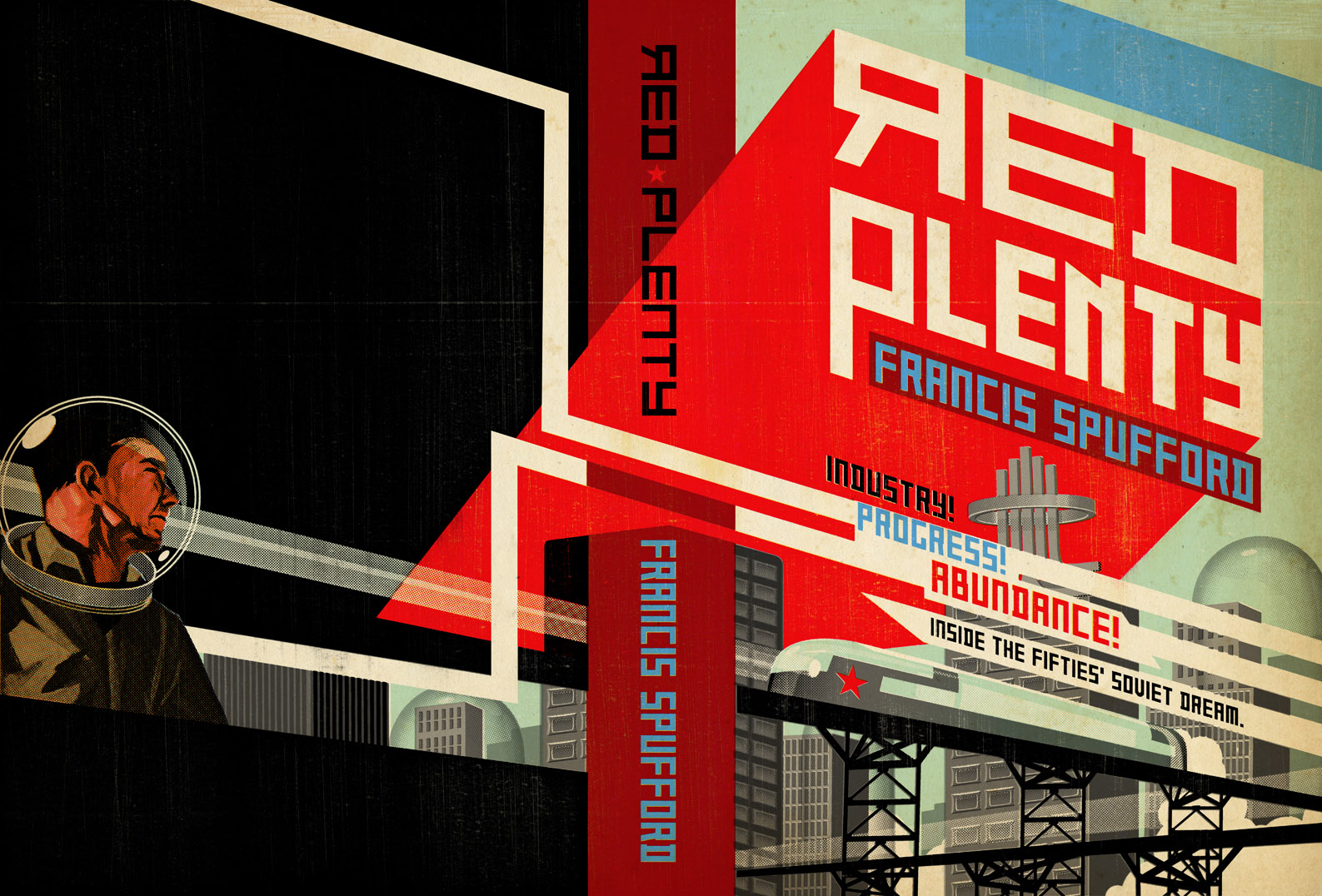
Strange as it may seem, the gray, oppressive USSR was founded on a fairy tale. …
This book had me at its premise: "a novel about the socialist calculation debate". If you are not interested in economic theory, you should skip it - the question of how best to run an economy is not just the main driver of the story and a topic of conversation among characters, there are several significant chunks of the book that are just straight-out lecture. I found the lecture-y bits to be very helpful context, so I will not dock stars for them, though I preferred the actual story (which is maybe 85-90% of the text).
The book follows many characters, real and some fictional, some we keep circling back to and some we never see again. Luckily Spufford has a knack for sketching interesting characters quickly. Still, this is not the kind of book that grips you hard and fast so you can't put it down. You can …
This book had me at its premise: "a novel about the socialist calculation debate". If you are not interested in economic theory, you should skip it - the question of how best to run an economy is not just the main driver of the story and a topic of conversation among characters, there are several significant chunks of the book that are just straight-out lecture. I found the lecture-y bits to be very helpful context, so I will not dock stars for them, though I preferred the actual story (which is maybe 85-90% of the text).
The book follows many characters, real and some fictional, some we keep circling back to and some we never see again. Luckily Spufford has a knack for sketching interesting characters quickly. Still, this is not the kind of book that grips you hard and fast so you can't put it down. You can read it in pieces here and there. That's fine - it succeeds in what it wants to be, not a thriller or an epic but a thoughtful exploration of an important question through the lens of storytelling.

In the summer of 1956, Stevens, the ageing butler of Darlington Hall, embarks on a …
Content warning spoilers for the ending
This book is not a love story but a character study. It's a meditation on professional dignity, and what happens when you sacrifice everything - every opportunity, every chance for connection, for human emotion - on the altar of that dignity. It's a book about misleading yourself. It's a book about giving in to sunk costs.
The last few pages are what made this story work for me. Because Stevens is a sympathetic, if deeply frustrating, narrator. I was rooting for him to have some kind of growth, to leave him ready to grasp the remains of the day. And it seemed like Ishiguro was leading him there, showing him reconsidering the value of bantering (and thus, human connection). But the very last thing Stevens thinks is how this will make him a better butler. Because in the end, he is too scared to be anything but what he has always been.
Superbly done by Ishiguro.
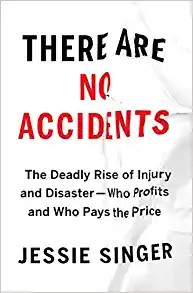
We hear it all the time: “Sorry, it was just an accident.” And we’ve been deeply conditioned to just accept …
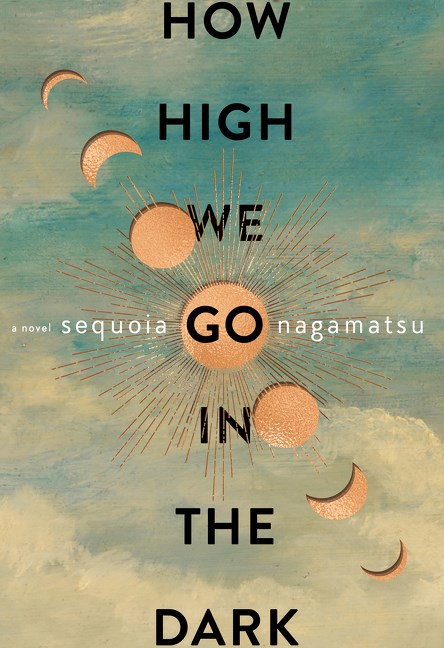
Beginning in 2030, a grieving archeologist arrives in the Arctic Circle to continue the work …
If I had known ahead of time what the structure and focus of this book was, I probably wouldn't have read it. That would have been my loss.
"How High We Go In the Dark" is a series of interconnected short stories set in the same world. This is not my favorite structural style: I prefer to follow a set of characters from beginning to end. Nagamatsu, though, has a rare talent for sketching out characters you can quickly attach to. I felt sorrowful every time I reached the end of a chapter and had to say goodbye.
In this way, the structure was a good fit for the world itself, and the story the author wanted to tell: one focused on death, loss, and how it transforms us. With some frequency, leaving a character at the end of their chapter meant watching them die.
This is …
If I had known ahead of time what the structure and focus of this book was, I probably wouldn't have read it. That would have been my loss.
"How High We Go In the Dark" is a series of interconnected short stories set in the same world. This is not my favorite structural style: I prefer to follow a set of characters from beginning to end. Nagamatsu, though, has a rare talent for sketching out characters you can quickly attach to. I felt sorrowful every time I reached the end of a chapter and had to say goodbye.
In this way, the structure was a good fit for the world itself, and the story the author wanted to tell: one focused on death, loss, and how it transforms us. With some frequency, leaving a character at the end of their chapter meant watching them die.
This is one the most depressing novels I've ever read, but it also deeply creative, empathetic, hopeful, and beautiful. It was satisfying seeing the strands from earlier chapters weave their way through the later ones. In a lesser writer's hands, this novel would be unbearable, but in Nagamatsu's, it becomes something hard to bear, yet worth bearing.
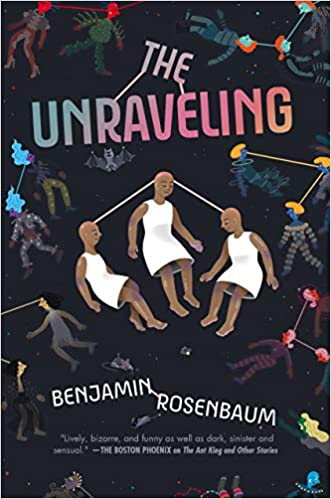
An ambitious and hotly-anticipated speculative fiction debut with literary crossover potential and fresh takes on …
Content warning some mild spoilers ahead
The Unraveling is set in the far future, in a world that's meant to be very different from our own. There is accordingly a ton of worldbuilding in this novel, ranging from the familiar to the wildly experimental. I won't spend much time on the familiar stuff - the hyper-networked reputation systems, computers in your head you can talk to, a small shadowy group that controls a massive society, etc. They're fine, but they're not what makes this book special.
There are two elements of the worldbuilding that really stand out. First, Rosenbaum has invented two entirely new genders, and a novel set of gender and family politics which much of the world, and the book, is based around. Second, in this far future society, people can inhabit multiple bodies at once. Combined, these elements make for a disorienting read. I found it fairly easy to follow along with the pronouns (xe/xir & ze/zir) used for the new genders, but following three bodies at once was much, much harder to get used to. The triple-narration confused more than it enlightened. Perhaps this was intentional - it certainly felt alien! - but it came at the price of taking me out of the story.
This book reminds me quite a bit of Ada Palmer's Terra Ignota series, both in its ambition and in the way that its narrative choices can alienate the reader. If you like rich world-building and explorations of gender, give this a shot.
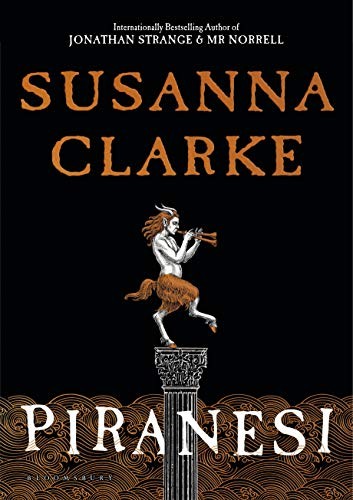
From the New York Times bestselling author of Jonathan Strange & Mr. Norrell, an …
This is one of those books that's unlike any other. It's surreal and dreamy and the sheer "what the heck's going on?" factor compelled me to read it all in one day.
A novel like this - light on plot, with an extremely limited cast of characters, told in an epistolary style - really sinks or swims on the narrative voice. Luckily the titular Piranesi is fun to read, and comes across as practical and clever, curious and sweet. His ignorance is charming rather than frustrating, and of course his naivete is all part of the mystery.
Highly recommended to anyone who loves an atmospheric and/or experimental story.
This is one of those books that's unlike any other. It's surreal and dreamy and the sheer "what the heck's going on?" factor compelled me to read it all in one day.
A novel like this - light on plot, with an extremely limited cast of characters, told in an epistolary style - really sinks or swims on the narrative voice. Luckily the titular Piranesi is fun to read, and comes across as practical and clever, curious and sweet. His ignorance is charming rather than frustrating, and of course his naivete is all part of the mystery.
Highly recommended to anyone who loves an atmospheric and/or experimental story.