Reviews and Comments

Michael Steeves

steevmi1@books.theunseen.city

Joined 3 years, 2 months ago

This link opens in a pop-up window

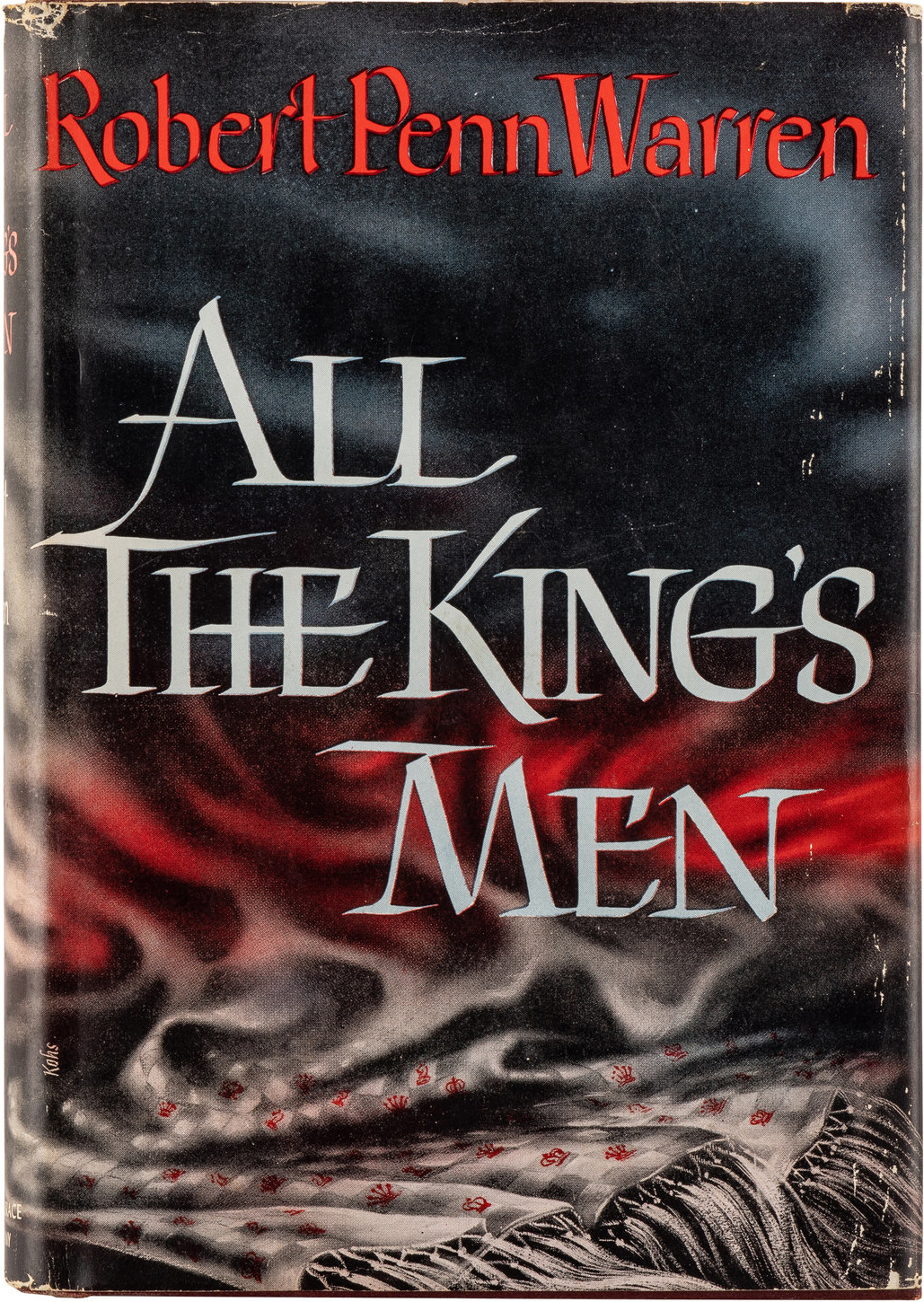
Robert Penn Warren: All the King's Men (Hardcover, 1946, Harcourt Brace & Company)

The story is about Willie Stark, a slick politician of humble birth, who was based …

Can you make good from evil

A work of fiction, but loosely based on the political career of Huey Long. Wikipedia talks about some of the themes in the book but for me the central question was the thread of if you can do good and make good works from bad means (or, "do the ends justify the means")?

The ultimate answer to this in the book is "not directly" -- Willie Stark fails in his primary goal of a hospital for all, but Jack Burden manages some level of "happily ever after" though not deliberately and more as an unlooked-for byproduct of pursuing a good goal through evil means.
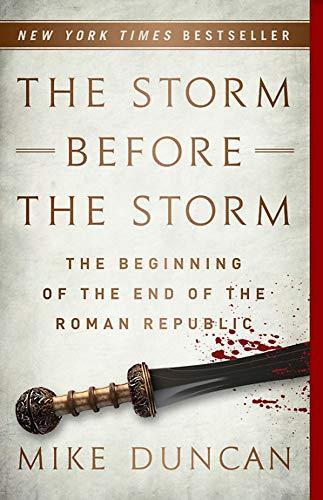
Mike Duncan, Mike Duncan: The Storm Before the Storm : The Beginning of the End of the Roman Republic (Paperback, 2018, PublicAffairs)

Everything old is new again

Everyone is familiar with the fall of the Roman Republic - Caesar crosses the Rubicon, becomes dictator for life, is murdered in the Ides of March and the in the ensuing civil war Octavian defeats Marc Anthony to become Augustus the first Roman Emperor.

Mike Duncan's book looks at the history of Rome in the years leading up to the Fall (146 - 78 BC) to try and answer the question of how Rome got to the point where Caesar was possible, and the answer is a combination of ambitious men who preyed on class, corruption, and Italian versus Roman fault lines to advance their careers, men who happily would shred the mos maiorum norms of Roman society to incite mob violence to further their ambitions. The penultimate leader, Sulla, ultimately set the stage for Caesar by showing how to use your legion as your own personal army to …

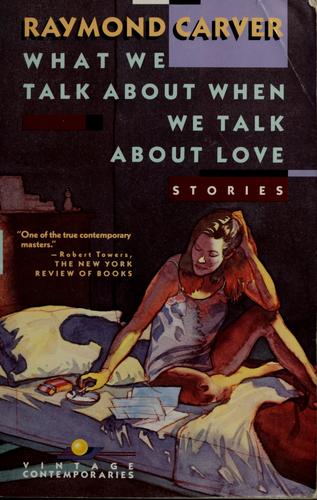
Raymond Carver: What we talk about when we talk about love (Paperback, 1989, Vintage Books)

In his second collection of stories, as in his first, Carver's characters are peripheral people--people …

A treatise on dysfunction and toxic masculinity

This book is a collection of Carver short stories, including the titular "What We Talk About When We Talk About Love". All of them feature some sort of loving relationship, usually breaking due to dysfunction (almost always helped along by toxic masculinity).

An OK read that went fairly fast (though because I didn't keep reading consistently I had a bit of a gap after the loan expired). I'm not really sure what it was trying to say other than "There's a lot of different ways to shoot yourself in the foot" though.

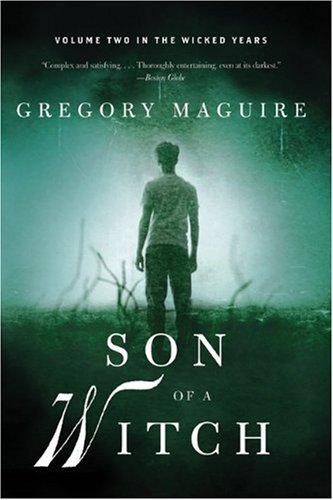
Gregory Maguire: Son of a Witch (Paperback, 2009, Harper Paperbacks)

Son of a Witch

Sequel to "Wicked", featuring Liir. It starts right after the death of Elphaba, and the first half of the story is told in flashback as Liir is found in a coma and close to death. The second half then continues his story through to the birth of his daughter. The Wizard is gone, replaced first with Glinda, then with a Scarecrow (though it's never clear if it's the Scarecrow), then to the Emperor who is also an Apostle for the Unnamed God.

Most of the story concerns Liir's development from clueless kid that views himself as being completely at the whims of fate and completely insignificant and has no responsibility to anyone or any thing to someone who maybe isn't a central character in his story but is at least someone that has agency and responsibility for his own choices and actions.

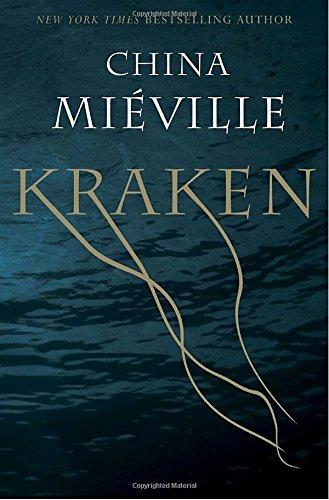
China Miéville: Kraken (Hardcover, 2010, Del Rey)

Kraken is a 2010 fantasy novel by British author China Miéville. It is published in …

Entertaining enough romp through mystic London

Billy is a staff member at museum who leads a tour into the museum's star attraction, an immaculately preserved giant squid, only to find that the massive tank has somehow vanished from the locked room.

This sends him off on adventures through London where he learns of its role as a world nexus for all manners of magic and cult activity while also trying to prevent the stolen squid from being used to spark a global apocalypse.

Not terribly deep, but an entertaining light romp.

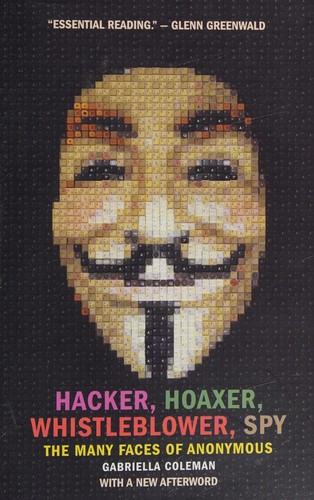
E. Gabriella Coleman: Hacker, hoaxer, whistleblower, spy (2015)

Half a dozen years ago, anthropologist Gabriella Coleman set out to study the rise of …

A summary of anthropologist Gabriella Coleman's time observing and floating on the surface of Anonymous. It walks through their history coming from places like /b/ to bursting on the scene taking aim at Scientology through times like OpTunisia and Occupy and ending with Stratfor.

The characterization of Anonymous as being the digital version of the trickster gods is apt - the chaos of the extreme decentralization of Anonymous along with their tactics (legal, illegal, and everything in between) resulted in some spectacular wins and some equally spectacular losses.

The book ended with the breaking of Edward Snowden's expose of the NSA's extensive surveillance activitiers, though that wasn't something that involved Anonymous. It attempts to end on a positive note that groups like Anonymous and the other groups might provide some sort of defense against the surveillance state, but in hindsight that hopeful optimism seems to have been rather …

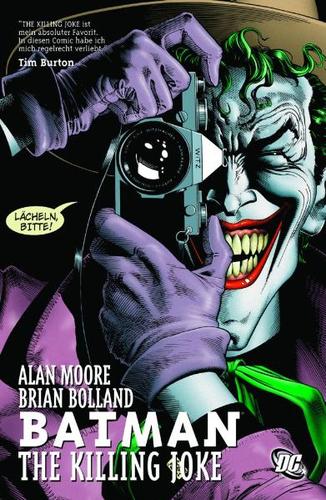
Alan Moore: The Killing Joke (Paperback, German language, 2009, PANINI Verlags-GmbH)

Eine grandiose Kollektion von Storys über den Mitternachtsdetektiv und seinen erbittertsten Erzfeind, den Joker! Neben …

A very quick read - Joker breaks out of Arkham Asylum, causes mayhem and havok, Batman shows up. As part of the graphic novel it also gives an origin story for the Joker (making him more of a tragic character than out-and-out villain) told in flashbacks as part of the story.

Entertaining enough, though ultimately not something that gave me anything other than a fairly bland and blase feeling after reading. The most notable thing about it was that I dug out my old Fire tablet that I had intended to toss into electronic recycling so that I didn't have to read this on the actual Kindle.

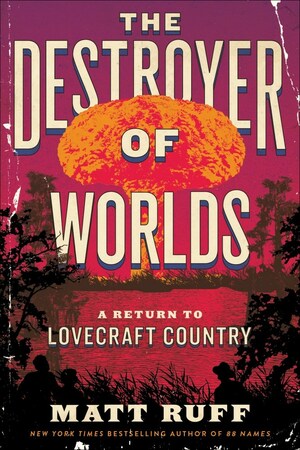
Matt Ruff: Destroyer of Worlds (2023, HarperCollins Publishers)

In this thrilling adventure, a blend of enthralling historical fiction and fantastical horror, Matt Ruff …

Back to Jim Crow and the Turner family

The new book picks up a short time after the end of the first book. The new book focuses more on Hippolyta and George, though Montrose and Atticus have a thread as well. They're still being used as pawns in the games of the various sorcerors, though as always they're adept at finding the gaps to maneuver in so that they're not completely powerless (the way they are in society as a whole).

The main threads cover Hippolyta, her son Horace, and Letitia, running an errand for the ghost Witham, Atticus and Montrose taking a trip to the plantation where their ancestor, the slave that would become known as Nat Turner, started his journey to freedom (and where they meet an old friend unexpectedly), Ruby and what became of her after the climax of the last book, and Hippolyta's husband George dealing with a cancer diagnosis.

I wonder …

Paul Theroux: The Tao of Travel (2011, McClelland & Stewart)

More a book of bromides and quotations

Chapters are organized around themes or topics, and then he presents a number of excerpts from other books that fit. Incredibly well read, but also not really something I'd strongly recommend. Looking forward to reading some of his books on his actual travels.

Paul Theroux: The Tao of Travel (2011, McClelland & Stewart)

Not really a book as such, but more a book made up of snippets from other books arranged by themes or topics for each chapter. It wasn't bad, but also not really something that I'd recommend in general. I was hoping for something that's probably more like his other books, which is a narrative around travels that the author has taken.