Otra joya de Ursula K. Le Guin
5 stars
Relectura de uno de los clásicos de Ursula K. Le Guin. Una maravilla.
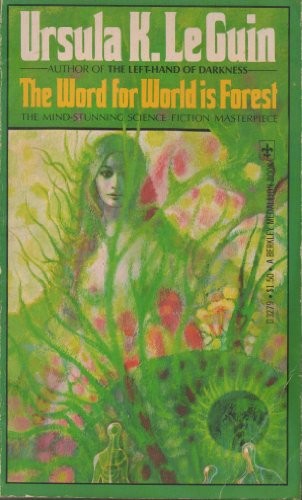
mass market paperback, 169 pages
Published Nov. 30, 1976 by Berkley.
Centuries in the future, Terrans have established a logging colony & military base named “New Tahiti” on a tree-covered planet whose small, green-furred, big-eyed inhabitants have a culture centered on lucid dreaming. Terran greed spirals around native innocence & wisdom, overturning the ancient society.
Humans have learned interstellar travel from the Hainish (the origin-planet of all humanoid races, including Athsheans). Various planets have been expanding independently, but during the novel it’s learned that the League of All Worlds has been formed. News arrives via an ansible, a new discovery. Previously they had been cut off, 27 light years from home.
The story occurs after The Dispossessed, where both the ansible & the League of Worlds are unrealised. Also well before Planet of Exile, where human settlers have learned to coexist. The 24th century has been suggested.
Terran colonists take over the planet locals call Athshe, meaning “forest,” …
Centuries in the future, Terrans have established a logging colony & military base named “New Tahiti” on a tree-covered planet whose small, green-furred, big-eyed inhabitants have a culture centered on lucid dreaming. Terran greed spirals around native innocence & wisdom, overturning the ancient society.
Humans have learned interstellar travel from the Hainish (the origin-planet of all humanoid races, including Athsheans). Various planets have been expanding independently, but during the novel it’s learned that the League of All Worlds has been formed. News arrives via an ansible, a new discovery. Previously they had been cut off, 27 light years from home.
The story occurs after The Dispossessed, where both the ansible & the League of Worlds are unrealised. Also well before Planet of Exile, where human settlers have learned to coexist. The 24th century has been suggested.
Terran colonists take over the planet locals call Athshe, meaning “forest,” rather than “dirt,” like their home planet Terra. They follow the 19th century model of colonization: felling trees, planting farms, digging mines & enslaving indigenous peoples. The natives are unequipped to comprehend this. They’re a subsistence race who rely on the forests & have no cultural precedent for tyranny, slavery or war. The invaders take their land without resistance until one fatal act sets rebellion in motion & changes the people of both worlds forever.
Relectura de uno de los clásicos de Ursula K. Le Guin. Una maravilla.
floresta é o nome do mundo tem uma estrutura caleidoscópica, múltipla como a floresta. em vez de uma narrativa exatamente coesa, o que temos são diferentes perspectivas, nenhuma delas unificadora do todo.
don davidson representa a mentalidade colonizadora em seu ápice destrutivo. é um homem arrogante, que direciona sua violência a tudo que seja vulnerável. ele por si só é um homem fraco. sua força vem de apetrechos: instrumentos mecânicos como armas de fogo e gafanhotos (os meios de transporte aéreo do livro), além de um status privilegiado nas hierarquias da colônia.
"os fracos conspiram contra os fortes, o homem forte tem de ser independente e cuidar de si" (cap. 7)
em athshe, uma terra cheia de vida, davidson vê apenas alvos: "creechies" aparentemente inofensivos que se escondem em tocas no meio da mata. árvores e demais seres, para don, são como objetos inertes, apenas aguardando para …
floresta é o nome do mundo tem uma estrutura caleidoscópica, múltipla como a floresta. em vez de uma narrativa exatamente coesa, o que temos são diferentes perspectivas, nenhuma delas unificadora do todo.
don davidson representa a mentalidade colonizadora em seu ápice destrutivo. é um homem arrogante, que direciona sua violência a tudo que seja vulnerável. ele por si só é um homem fraco. sua força vem de apetrechos: instrumentos mecânicos como armas de fogo e gafanhotos (os meios de transporte aéreo do livro), além de um status privilegiado nas hierarquias da colônia.
"os fracos conspiram contra os fortes, o homem forte tem de ser independente e cuidar de si" (cap. 7)
em athshe, uma terra cheia de vida, davidson vê apenas alvos: "creechies" aparentemente inofensivos que se escondem em tocas no meio da mata. árvores e demais seres, para don, são como objetos inertes, apenas aguardando para serem domesticados por ele. visão que se mostra extremamente enganosa. a agressividade de don em relação ao selvagem, em algum nível, é reação ao seu próprio medo inconsciente de ser engolido pela floresta.
"nada era puro, seco, árido, simples. faltava revelação. não havia como enxergar tudo de uma vez; nenhuma certeza." (cap. 2)
tanto lyubov como davidson, a seu próprio modo, temem a floresta. pois a floresta é escura, e em suas raízes (que carregam o mesmo nome da palavra "sonho", em athsheano) estão o inconsciente e os sonhos. don renega esse receio, e essa repressão extravasa em uma reação muito mais berrante. lyubov está consciente desse medo, mas tenta fazer as pazes com ele. diferente de don, que quer eliminar o que ele desconhece, lyubov crê que pode apreender a floresta. para ele, o que é visto como aleatório ou caótico é na verdade uma série de padrões extremamente complexos.
já selver, antes do contato com os humanos, é como os demais athsheanos. diferentemente de nós, autodenominados racionais porém dirigidos por uma série de impulsos que não temos conhecimento ou controle, os athsheanos estão em contato constante com sua interioridade. não há, para eles, distinção clara entre o inconsciente e o consciente. eles fazem parte da floresta, e vivem em intercâmbio com esse sistema, partilhando sensações e sonhos.
no entanto, com a chegada dos humanos, algo muda. selver passa a ter pensamentos violentos, como resultado das opressões sofridas. selver é, portanto deus-criador de um novo tipo de pensamento, que passa a circular nas mentes de seu povo tal qual um vírus.
num primeiro instante, a agressividade é útil em eliminar os humanos e reestabelecer o estado original das coisas. mas é um equilíbrio ilusório, pois nesse sistema aparentemente intacto há um novo elemento.
este livro foi o meu primeiro da ursula k. le guin, e provavelmente não será o último. ele faz parte do que os críticos denominaram como o "ciclo hainish" da autora. imagino que alguns temas e simbologias da autora ou desse ciclo ficaram perdidos em mim, mas a narrativa é bem inteira e riquíssima por conta própria.
Extraordinarily good. A completely straight-faced use of science fiction to show us where we are and where we will go if we do not kill the capitalism dragon. This world is contingent on so many horrible things that have happened, and it is fragile without the overwhelming violence required to maintain it. When we defeat capitalism—when we do what must be done to defeat it—will we heal afterwards? Or will we become something else oppressive?
brilliant take on colonialism, on change, on damage. it's really sad and frightening all the way through and it feels like a mudslide in that, once it's started, you know it won't stop. like, bad things will keep happening. there's no real happy ending.
but every word was worth reading.
brilliant take on colonialism, on change, on damage. it's really sad and frightening all the way through and it feels like a mudslide in that, once it's started, you know it won't stop. like, bad things will keep happening. there's no real happy ending.
but every word was worth reading.
I wish i owned the version with this cover! recommended this to a friend, thought i would reread to see if I liked it as much as i used to. I do. I definitely a message story and anti-colonialism is in the forefront. It's short and reads like a parable.
I wish i owned the version with this cover! recommended this to a friend, thought i would reread to see if I liked it as much as i used to. I do. I definitely a message story and anti-colonialism is in the forefront. It's short and reads like a parable.
[Prima recensione composta direttamente su Bookwyrm, yay!]
Conoscevo già il Ciclo Hainita di Ursula Le Guin per aver già letto The Left Hand of Darkness, che avevo apprezzato ma non del tutto colto, e The Dispossessed: An Ambiguous Utopia, che avevo adorato perché toccava tutti i tasti giusti al momento giusto. Ho voluto completare la tripletta dei romanzi centrali della serie, ergo ho recuperato pure The Word for World is Forest, già sapendo che trattandosi di una novella, non di un romanzo, ha un respiro e una complessità minore – ma trovo sia proprio questa la sua forza. Nella prefazione, Le Guin è molto franca: si rende perfettamente conto che l'opera nasceva come romanzo di denuncia "a tesi" nel pieno delle proteste contro la Guerra del Vietnam, e che proprio per questo raggiunge dei picchi taglienti di polemica e di "omelia" propagandistica, e i caratteri dei …
[Prima recensione composta direttamente su Bookwyrm, yay!]
Conoscevo già il Ciclo Hainita di Ursula Le Guin per aver già letto The Left Hand of Darkness, che avevo apprezzato ma non del tutto colto, e The Dispossessed: An Ambiguous Utopia, che avevo adorato perché toccava tutti i tasti giusti al momento giusto. Ho voluto completare la tripletta dei romanzi centrali della serie, ergo ho recuperato pure The Word for World is Forest, già sapendo che trattandosi di una novella, non di un romanzo, ha un respiro e una complessità minore – ma trovo sia proprio questa la sua forza. Nella prefazione, Le Guin è molto franca: si rende perfettamente conto che l'opera nasceva come romanzo di denuncia "a tesi" nel pieno delle proteste contro la Guerra del Vietnam, e che proprio per questo raggiunge dei picchi taglienti di polemica e di "omelia" propagandistica, e i caratteri dei personaggi sono monodimensionali rispetto ad altre sue opere... ma tutto ciò, secondo me, funziona benissimo lo stesso, perché il romanzo schierato è necessario, davanti a certi temi, e il tema qui è che in certe situazioni di violenza esistono inconfutabilmente una parte aggressora che agisce in malafede, e una parte offesa che ha diritto all'autodifesa: per citare Italo Calvino (uno che la guerra di Resistenza l'ha fatta e che Le Guin ammirava molto), è giustissimo che tutto il bene lo abbiano in cuore gli indigeni arboricoli di Athshe, il pianeta il cui nome vuol dire "foresta", mentre tutto il male stia nei soldati della spedizione coloniale terrestre, venuti a predare e saccheggiare e massacrare – perché nel futuro di Le Guin la mentalità fascista e capitalista non è venuta meno per un cavolo, e il napalm irrora le forestre extraterrestri come già aveva irrorato l'Indocina e la Palestina, ma se l'indigeno osa alzare un dito contro il colonizzatore predatore allora apriti cielo. In ogni caso, al di là della "facile" metafora bellica da riapplicare alla nostra situazione sulla Terra, questa "novella" minore si difende bene anche nella speculazione sociologica, che è la grande cifra della nostra autrice: la cultura delle comunità athsheane ha una tangibilità clamorosa, dall'architettura dei villaggi alla ripartizione dei ruoli sociali fra donne e uomini ("Agli uomini il lavoro intellettuale, alle donne quello politico, all'interazione fra loro l'etica"), fino alla splendida contrapposizione tematica fra la capacità degli athsheani di vivere veglia e sonno come un continuum e costruire di conseguenza la propria cosmologia, in contrasto con le tossicodipendenze varie ed eventuali dei Terrestri – e non è un caso che l'eroe della resistenza indigena, Selver, sia appunto uno sciamano addestrato a vivere nelle profondità del sogno, che usa le sue capacità per accogliere nella propria cultura il bene e il male portato dai Terrestri, mentre il capitano Davidson, l'antagonista che Le Guin, pur non volendo, ha dipinto come intrinsecamente malvagio, sia tale in quanto militare razzista, misogino, scientista, tossicomane e intellettualmente intrappolato in un circolo vizioso egoriferito, tale per cui la sua percezione delle cose salta di palo in frasca così da dargli sempre ragione a prescindere – letteralmente, l'archetipo (non lo stereotipo, l'archetipo) della peggiore merda che ha prodotto l'Occidente. Un romanzo breve violento e amaro, ma anche fonte di speranza. Un romanzo da leggere ora che l'Occidente sta ritornando apertamente fascista, e solo i popoli indigeni in rivolta hanno la superiorità morale per tentare di scrivere una diversa storia.
Another great read. It's relatively short but doesn't feel like anything is lost. The glimpses of League power and the Athshe societies felt really awe inspiring.
The whole "Hainish" universe is so cool! I love the different perspectives.
Another great read. It's relatively short but doesn't feel like anything is lost. The glimpses of League power and the Athshe societies felt really awe inspiring.
The whole "Hainish" universe is so cool! I love the different perspectives.
Genuinely amazed by how much Le Guin fits into what's pretty much just a novella. Colonialism, racism, environmental destruction, and toxic masculinity, sure, but also musings on the mental machinations therein. Particularly appreciated the way she plays with language -- the chapters from the point of view of the humans, particularly the truly awful Davidson, are brutal, while the chapters from the point of view of the Athsheans start off lyrical, almost dreamlike, but change over the course of the book as their ways of thinking are polluted by the Terrans. Highly recommended.
Genuinely amazed by how much Le Guin fits into what's pretty much just a novella. Colonialism, racism, environmental destruction, and toxic masculinity, sure, but also musings on the mental machinations therein. Particularly appreciated the way she plays with language -- the chapters from the point of view of the humans, particularly the truly awful Davidson, are brutal, while the chapters from the point of view of the Athsheans start off lyrical, almost dreamlike, but change over the course of the book as their ways of thinking are polluted by the Terrans. Highly recommended.
I don't generally enjoy science fiction, and although I do love Ursula le Guin's theory and ideas I have never managed to finish any of her books before this one. Her writing is good, but I find that science fiction often gets too tied up in hammering home its analogies without remembering to tell a good story. The Word for World is Forest does not have this problem.
Ostensibly, this is a novel about two races of human. The first are Terrans (from Earth) who have landed on a distant planet and are cutting down its rich forested surface because there is no wood left on Earth. The other are Athsheans, who are colonised, enslaved in all but name, and are being forced to live their lives in a "terran" way by sleeping at night and working in the daytime, for example. The book weaves in the injustices of …
I don't generally enjoy science fiction, and although I do love Ursula le Guin's theory and ideas I have never managed to finish any of her books before this one. Her writing is good, but I find that science fiction often gets too tied up in hammering home its analogies without remembering to tell a good story. The Word for World is Forest does not have this problem.
Ostensibly, this is a novel about two races of human. The first are Terrans (from Earth) who have landed on a distant planet and are cutting down its rich forested surface because there is no wood left on Earth. The other are Athsheans, who are colonised, enslaved in all but name, and are being forced to live their lives in a "terran" way by sleeping at night and working in the daytime, for example. The book weaves in the injustices of settler colonialism and the violence of technological war, telling a story that many of us are familiar with.
Although at times the book goes to great lengths to hammer its messages home, it remains interesting enough throughout. The real strength is in the way it presents "otherness". The Athsheans call their world "forest", and so all life comes from trees, just as terrans call their world "earth" as they are promethean, born from clay. Terrans cannot "dream" like the Athsheans without using hallucinogenics, and violence, once introduced as an idea to their society, cannot be unlearned.
Some of the analogies are unresolved. For example, all of the main characters are male, and no female character is given any prominent voice. Le Guin was not a writer who did things accidentally, but it's not clear whether she was critiquing how women are portrayed in similar novels, or how violence is a male obsession, or something else. Irrespective, this is still worthwhile, contemplative and an enjoyable book.
it's a fairly short and straightforward story about resistance to colonization, but embedded in it is a kind of complicated discussion about the legitimacy of violence. It seems like it was in part a commentary on the Vietnam War (which is even alluded to at one point).
Don Davidson is one of the more thoroughly unpleasant viewpoint characters I've read; fortunately he is meant to be villainous, & at any rate it's only from his point of view for about a third of the book. His motivation, worldview & actions are disturbing but accurate for a certain sort of man.
it's a fairly short and straightforward story about resistance to colonization, but embedded in it is a kind of complicated discussion about the legitimacy of violence. It seems like it was in part a commentary on the Vietnam War (which is even alluded to at one point).
Don Davidson is one of the more thoroughly unpleasant viewpoint characters I've read; fortunately he is meant to be villainous, & at any rate it's only from his point of view for about a third of the book. His motivation, worldview & actions are disturbing but accurate for a certain sort of man.
Das buch behandelt kolonialismus, hat also viele sehr gewalttätige und rassisitische szenen. Die geschichte ist eigentlich ganz einfach: 2 gruppen menschen, die in sehr verschiedenen umgebungen aufgewachsen sind, treffen aufeinander und hauen sich die köppe ein. Trotzdem war es spannend zu lesen, denn die Athsheaner haben eine interessante art, an die dinge heranzugehen.
Das buch behandelt kolonialismus, hat also viele sehr gewalttätige und rassisitische szenen. Die geschichte ist eigentlich ganz einfach: 2 gruppen menschen, die in sehr verschiedenen umgebungen aufgewachsen sind, treffen aufeinander und hauen sich die köppe ein. Trotzdem war es spannend zu lesen, denn die Athsheaner haben eine interessante art, an die dinge heranzugehen.




Purchasable
Purchasable
https://bookshop.org/books/the-word-for-world-is-forest/9780765324641.https://bookshop.org/books/the-word-for-world-is-forest/9780765324641.