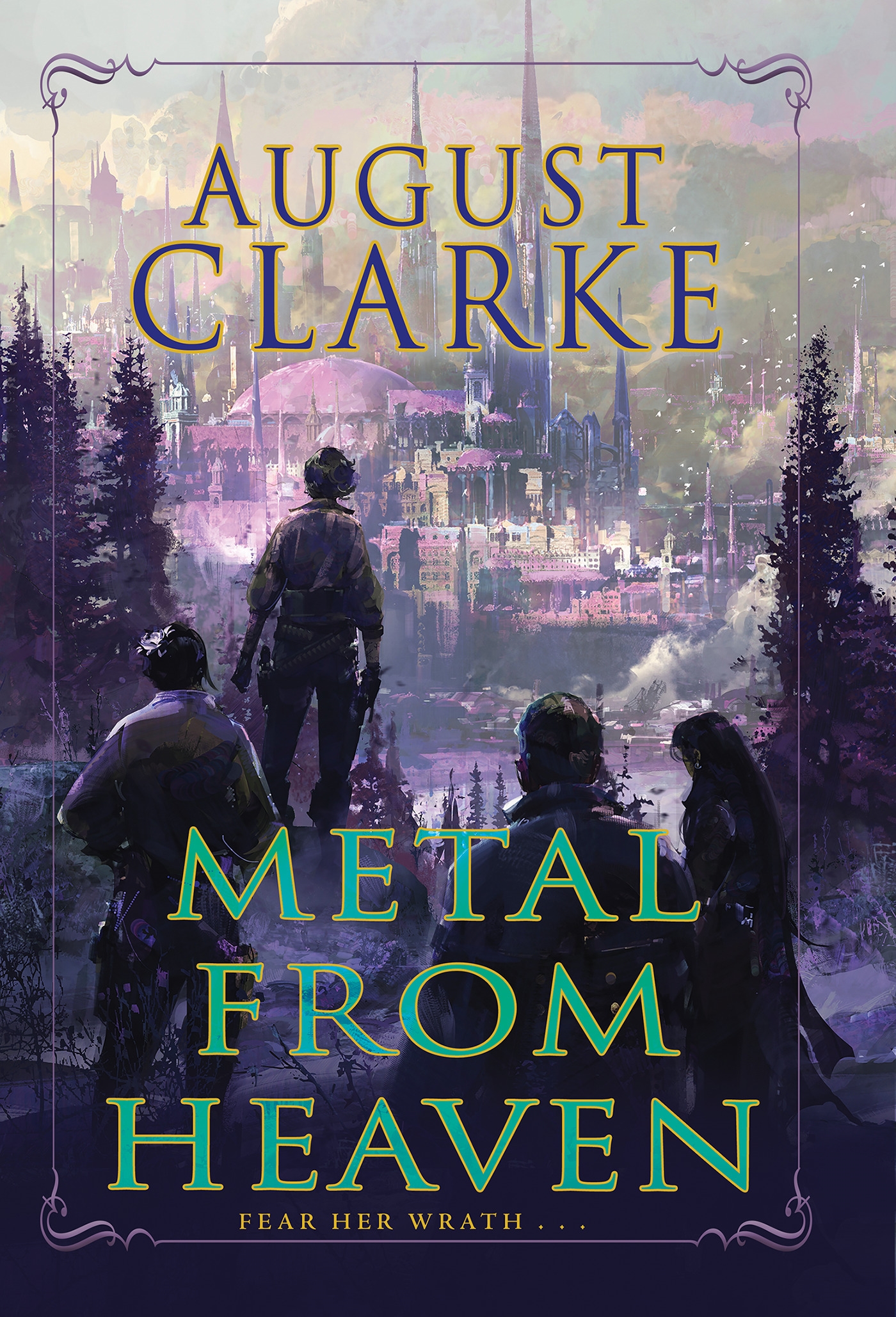

enne📚 reviewed Metal from Heaven by August Clarke
Metal from Heaven
5 stars
This is one of those 5/5 ratings where I don't think the book is perfect, but it gets it because it is so intensely targeted at my own interests and I'm so grateful to have read it. Some bullet points to entice you:
- anti-capitalism, anti-cop
- train heists
- found family vibes
- first person point of view with an internalized narration to a second person "you"
- fantasy religions that don't feel like direct analogies of real ones
- revenge plot and revolutionaries
- gaaaaaaay
The book is so unapologetically queer and kinky, it's great. The author credits Stone Butch Blues (among many other things) in the end notes, which feels entirely unsurprising. The gender-y and queer bits also both intersect with the in-world religions in realistic ways.
It's a book that desperately needs a map; there's a pile of countries, religions, and politics …
This is one of those 5/5 ratings where I don't think the book is perfect, but it gets it because it is so intensely targeted at my own interests and I'm so grateful to have read it. Some bullet points to entice you:
- anti-capitalism, anti-cop
- train heists
- found family vibes
- first person point of view with an internalized narration to a second person "you"
- fantasy religions that don't feel like direct analogies of real ones
- revenge plot and revolutionaries
- gaaaaaaay
The book is so unapologetically queer and kinky, it's great. The author credits Stone Butch Blues (among many other things) in the end notes, which feels entirely unsurprising. The gender-y and queer bits also both intersect with the in-world religions in realistic ways.
It's a book that desperately needs a map; there's a pile of countries, religions, and politics especially when it hits the Chauncey estate section. The book does a good job of keeping it all ~~straight~~ queerly differentiated but the world has so much texture--it's a ttrpg campaign setting crying out for illustration! It also feels like a living world; characters having a life both off-page and outside of the protagonist make it feel even more real.
The book opens with a labor dispute and police violence and sworn revenge, but from there it doesn't shy away from critiques of power and incrementalism and reformers. There's some wild rich people monologues where they unintentionally bare themselves as soulless vampires. There's a bandit charade of a hidden equitable country, pretending to be part of a baronial system.
Sunlight licked between bruisy limestone smokestacks and telegraphy spires, and the crumbling knuckled colonnades of an empire that's long gone.
I found the writing to be a delight: the narrator is at times unreliable, and the writing is full of dreamy metaphors. At times, somebody will bust out with a multi-page exposition about religion, or a set of introductions to a full dramatis personae worth of baronets. The final lap of the book has its own tonal shift that I won't get into for reasons. Somehow this all held together for me; maybe it's that none of these parts overstayed their welcome. I'm sure some folks will bounce off of this writing style, but I'm not folks, that's for sure.
Being a Hereafterist is a commitment to creating a brand-new world all the time. It is the method of making a new world, it does not stop, we are never there yet. We have never arrived at a restful Hereafter, we must keep making. We will become a liberated collective, a plague will roll over us, and a famine, and fifty thousand bullets, and we will need to make choices. We will need to change. We must resist the ossification of precedent. We march toward Hereafter, not tomorrow, we march past tomorrow, we know tomorrow will be hard.
In the end, this is a fuck yeah revenge story about disaster queers fighting capitalism with violence. It's less about answers or even hope, and more about conveying a sense of angry determinism working for a future none of them will see.