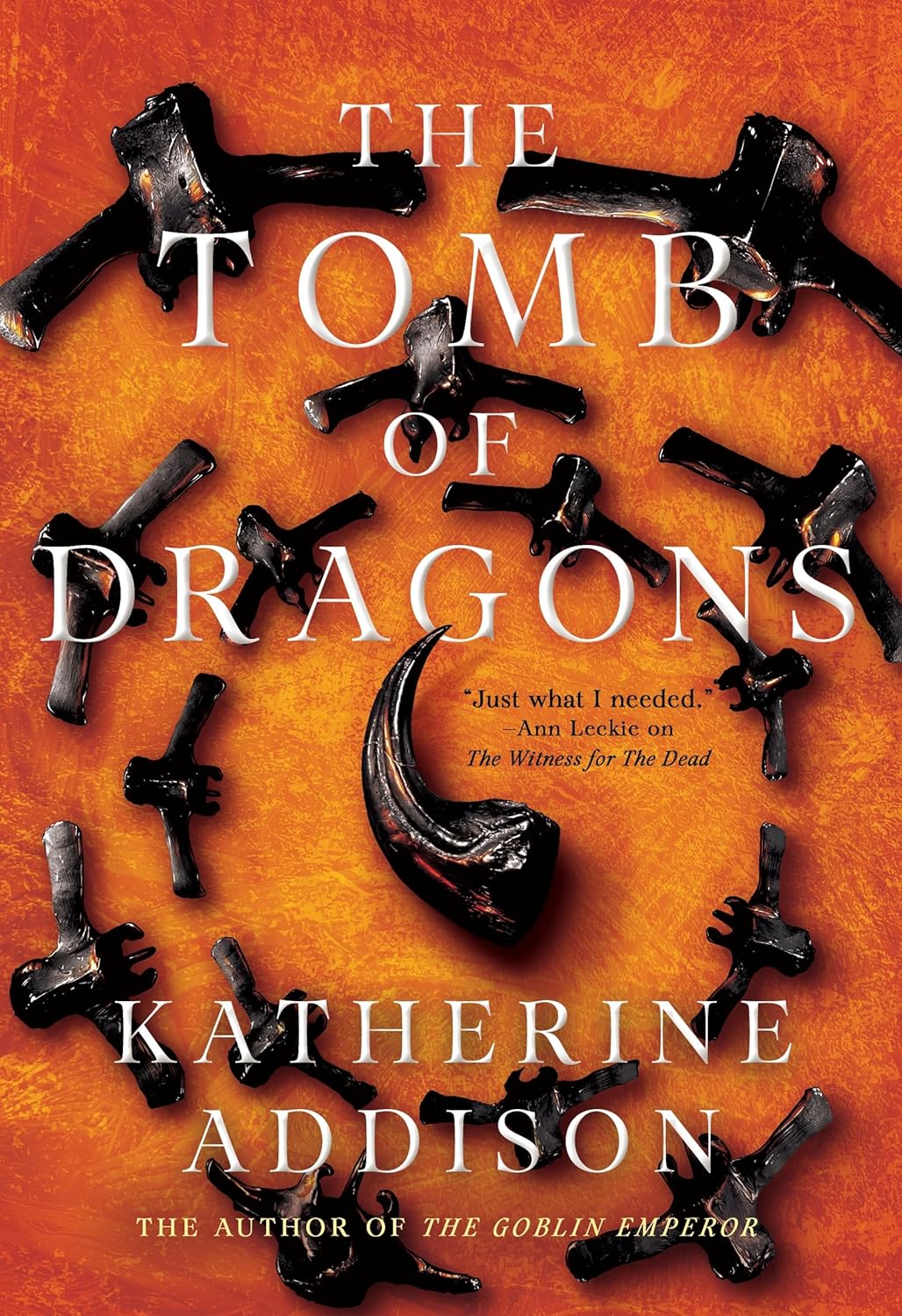
Thara Celehar has lost his ability to speak with the dead. When that title of Witness for the Dead is gone, what defines him?
While his title may be gone, his duties are not. Celehar contends with a municipal cemetery with fifty years of secrets, the damage of a revethavar he’s terrified to remember, and a group of miners who are more than willing to trade Celehar’s life for a chance at what they feel they’re owed.
Celehar does not have to face these impossible tasks alone. Joining him are his mentee Velhiro Tomasaran, still finding her footing with the investigative nature of their job; Iäna Pel-Thenhior, his beloved opera director friend and avid supporter; and the valiant guard captain Hanu Olgarezh.
Amidst the backdrop of a murder and a brewing political uprising, Celehar must seek justice for those who cannot find it themselves under a tense …
Thara Celehar has lost his ability to speak with the dead. When that title of Witness for the Dead is gone, what defines him?
While his title may be gone, his duties are not. Celehar contends with a municipal cemetery with fifty years of secrets, the damage of a revethavar he’s terrified to remember, and a group of miners who are more than willing to trade Celehar’s life for a chance at what they feel they’re owed.
Celehar does not have to face these impossible tasks alone. Joining him are his mentee Velhiro Tomasaran, still finding her footing with the investigative nature of their job; Iäna Pel-Thenhior, his beloved opera director friend and avid supporter; and the valiant guard captain Hanu Olgarezh.
Amidst the backdrop of a murder and a brewing political uprising, Celehar must seek justice for those who cannot find it themselves under a tense political system. The repercussions of his quest are never as simple they seem, and Celehar’s own life and happiness hang in the balance.
This is the final book in the Cemeteries of Amalo trilogy. I’ve read the first book although not the second (I’m a cheapskate and wait for discounts), so was aware I wasn’t up to speed with all the characters and events.
The tone and pacing remains at a leisurely amble, which is great for when you want a comfortable, low-stress read. I enjoyed the various mysteries that unfolded, although some were experienced rather secondhand. The explanations/solutions didn’t always feel “logical”. Without spoiling specifics, I found it hard to believe that some situations would have gone on for so long without being noticed or some kind of intervention. But a tightly knit plot isn’t what draws the reader in to this cosy, slice of life narrative.
Other reviewers have commented, and not always favourably, about where the romance element ended up. To me, it felt contrived. But given how …
This is the final book in the Cemeteries of Amalo trilogy. I’ve read the first book although not the second (I’m a cheapskate and wait for discounts), so was aware I wasn’t up to speed with all the characters and events.
The tone and pacing remains at a leisurely amble, which is great for when you want a comfortable, low-stress read. I enjoyed the various mysteries that unfolded, although some were experienced rather secondhand. The explanations/solutions didn’t always feel “logical”. Without spoiling specifics, I found it hard to believe that some situations would have gone on for so long without being noticed or some kind of intervention. But a tightly knit plot isn’t what draws the reader in to this cosy, slice of life narrative.
Other reviewers have commented, and not always favourably, about where the romance element ended up. To me, it felt contrived. But given how conveniently everything else fell into place by the end, and where Celehar ended up, I guess the author decided this was a way to avoid loose ends.
The Tomb of Dragons is the third book in the Cemeteries of Amalo trilogy. The first book in this series felt like a straight mystery in a fantasy setting, but by the time we get to this third book, the mystery portion gets balanced out by more politics and interpersonal growth and the story is stronger for it. I appreciate the way a number of plot points and characters from the previous books (including Goblin Emperor) all get woven into this story. The plot is just messy enough in a way that's believable, but tight in a way that makes events (especially of the first book) feel even more relevant. I loved it enough that I finished it and immediately reread Goblin Emperor because I wanted to be in the world a little bit more and revisit Thara back at the beginning.
In the previous book, Thara has lost …
The Tomb of Dragons is the third book in the Cemeteries of Amalo trilogy. The first book in this series felt like a straight mystery in a fantasy setting, but by the time we get to this third book, the mystery portion gets balanced out by more politics and interpersonal growth and the story is stronger for it. I appreciate the way a number of plot points and characters from the previous books (including Goblin Emperor) all get woven into this story. The plot is just messy enough in a way that's believable, but tight in a way that makes events (especially of the first book) feel even more relevant. I loved it enough that I finished it and immediately reread Goblin Emperor because I wanted to be in the world a little bit more and revisit Thara back at the beginning.
In the previous book, Thara has lost his ability to speak with the dead, and this book is partially about him dealing with understanding who he might be when he is unable to do the work that he has been called to for years. But, it's also about witnessing for a dragon genocide against an overwhelmingly powerful mining corporation, and about Thara learning to accept being cared for. It's got a lot going on.
One thing I always forget about these books are how name dense they are. Everybody has fantasy titles and surnames and personal names and get referred to in multiple different ways. It makes the world feel much more real, but foof does it create some friction to get back into it after a while away. Sometimes it also breaks out fantasy words like "revethvezvaishor’avar" which I can only assume is meant to be half joking, but it can feel like a lot.
If I have any real quibble with the book, it's that the legal climax of this book is a little underwhelming; however, the personal and emotional elements land perfectly for me. (The multiple hand holding scenes!!!)
On this note, the conversation with Iäna midway through the book is absolutely incredible. This moment has been building the entire trilogy, between Iäna's escalating kindness to Thara and Thara's inability to accept care for himself. It gets to be too much for Thara, where he just can't understand why Iäna is being so nice, and it turns into an incredible conversation hashing out what they mean to each other, the nature of friendships, and love. Honestly, Iäna is such an incredible role model.