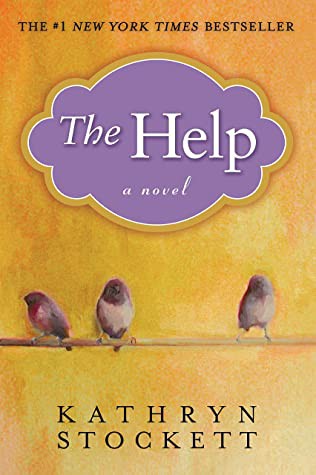
Aibileen is a black maid in 1962 Jackson, Mississippi, raising her seventeenth white child. She's always taken orders quietly, but lately it leaves her with a bitterness she can no longer bite back. Her friend Minny has certainly never held her tongue, or held on to a job for very long, but now she's working for a newcomer with secrets that leaver her speechless. And white socialite Skeeter has just returned from college with ambition and a degree but, to her mother's lament, no husband. Normally Skeeter would find solace in Constantine, the beloved maid who raised her, but Constantine has inexplicably disappeared.
Together, these seemingly different women join to work on a project that could forever alter their destinies and the life of a small town--to write, in secret, a tell-all book about what it's really like to work as a black maid in the white homes of …
Aibileen is a black maid in 1962 Jackson, Mississippi, raising her seventeenth white child. She's always taken orders quietly, but lately it leaves her with a bitterness she can no longer bite back. Her friend Minny has certainly never held her tongue, or held on to a job for very long, but now she's working for a newcomer with secrets that leaver her speechless. And white socialite Skeeter has just returned from college with ambition and a degree but, to her mother's lament, no husband. Normally Skeeter would find solace in Constantine, the beloved maid who raised her, but Constantine has inexplicably disappeared.
Together, these seemingly different women join to work on a project that could forever alter their destinies and the life of a small town--to write, in secret, a tell-all book about what it's really like to work as a black maid in the white homes of the South. Despite the terrible risks they will have to take, and the sometimes humorous boundaries they will have to cross, these three women unite with one intention: hope for a better day.
In 1960s Mississippi, white women and the black maids they employ navigate the upheaval of the civil rights movement. The contrast of ingrained racism and the deep emotional integration of black women into white family life is astounding. Potential for deep analysis, but you can also just enjoy the story.
This is one of the better books I've read in some time. The characters are compelling, the storyline well-developed and suspenseful, and the message still relevant.
Some people take issue with the book, and I have to agree that their concerns have merit. The people of colour are somewhat stereotyped. So are many of the white people, such as Hilly, if it comes down to it, but it's more problematic when victims of racism are stereotyped.
Also, some people raise concerns with what they see as racist attitudes and statements on the part of the author. This may be true, but it's important to remember that one can't always attribute the attitudes of the narrators to those of the author. Narrative voice does not equal author's voice.
For example, when Skeeter calls both black girls she plays with, "Mary," because she can't tell them apart--does this mean that the author …
This is one of the better books I've read in some time. The characters are compelling, the storyline well-developed and suspenseful, and the message still relevant.
Some people take issue with the book, and I have to agree that their concerns have merit. The people of colour are somewhat stereotyped. So are many of the white people, such as Hilly, if it comes down to it, but it's more problematic when victims of racism are stereotyped.
Also, some people raise concerns with what they see as racist attitudes and statements on the part of the author. This may be true, but it's important to remember that one can't always attribute the attitudes of the narrators to those of the author. Narrative voice does not equal author's voice.
For example, when Skeeter calls both black girls she plays with, "Mary," because she can't tell them apart--does this mean that the author has racist attitudes, or that she has drawn Skeeter in a believable and realistic way for someone who grew up in Mississippi in the 1940s and 50s? Yes, Skeeter becomes a champion of the maids, but would it really be likely that she would spring, fully formed in enlightenment, from her father's head and never reflect the racism she is taught, when she is a child--and even, to some degree, as an adult, even if she's better than the others to start with and learns more as the novel progresses? I doubt it.
Another criticism leveled at this book is that Skeeter becomes a sort of white saviour. If this were a big part of the book, it would be a fault I'd have difficulty overlooking. I dislike when stories that are intended to be anti-racist put the white person at the centre, teaching the people of colour how to save themselves. (Think "Dances with Wolves" or "Avatar" as examples, albeit with Indigenous people.) I think "The Help" is somewhat less guilty of this, although I can understand why some people might see it as a problem in this book. However, it is a story with multiple narrators--two of them maids who are black, and one of them the white woman, Skeeter. And, throughout, Skeeter is shown to be the one taking the least risk, and this becomes increasingly clear to her as the novel progresses. Also, if I remember correctly, the editor says that the stories written by Aibileen need the least work to make them publishable. So, even there, Aibileen is shown to be more skilled than Skeeter. Thus, while there might be a bit of white saviour syndrome happening here, I think the author does attempt to portray the maids as the real heroes, with Skeeter being merely the vehicle for them to express themselves.
Anyway, I think this book is well worth a read, while bearing in mind the criticisms.
It was well-plotted, but I felt Celia Foote's storyline concluded too early. Thought Minny and Aibileen were better imagists than was Skeeter, let alone characters. Maybe it's me, but I didn't see this as a weepfest and thought at least one major/minor character was one-dimensional (it's okay for the minor characters to be one-dimensional, but Stockett gives some who appear less in the novel more depth and complexity). Adept parallels between the hired help and their female employers practically hamstrung by convention.
It was well-plotted, but I felt Celia Foote's storyline concluded too early. Thought Minny and Aibileen were better imagists than was Skeeter, let alone characters. Maybe it's me, but I didn't see this as a weepfest and thought at least one major/minor character was one-dimensional (it's okay for the minor characters to be one-dimensional, but Stockett gives some who appear less in the novel more depth and complexity). Adept parallels between the hired help and their female employers practically hamstrung by convention.