Literally Graphic rated Brontorina: 4 stars

Brontorina by James Howe, Randy Cecil
Despite her size and not having the proper footwear, a determined dinosaur pursues her dream of becoming a ballerina.
An avid audiobook and comics reader with few IRL outlets for what has become a very special interest.
This link opens in a pop-up window
Despite her size and not having the proper footwear, a determined dinosaur pursues her dream of becoming a ballerina.
The master of the visual mash-up returns with his signature idiosyncratic take on the Constitution
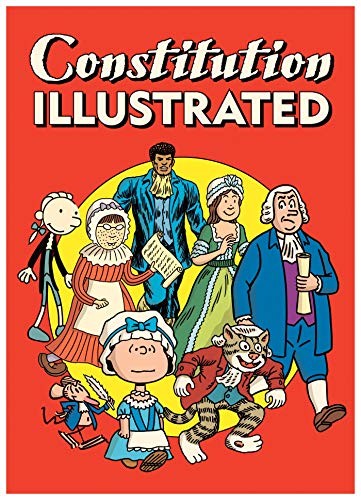
…today's pick is the Constitution Illustrated by R Sikoryak. Published by Drawn & Quarterly in 2020.
Content note for american exceptionalism.
While I've been sort of intrigued by the concept behind Sioryak's work over the years, I finally decided to pick this particular title up because I felt like (given current events) ragging on the constitution a bit. Even if it took me several more weeks and many headlines to actually make the time to finish this mental dump. I will also be reviewing this volume, but if you can't take me not liking the american constitution I suggest you move along, although hate watching, down voting and leaving negative comments boosts me in the algorithm just as good as anything else I suppose. Do what you will.
Keywords that came to mind reading this very compact volume: Diversity washing, comics history, copy and paste.
The …
today's pick is the Constitution Illustrated by R Sikoryak. Published by Drawn & Quarterly in 2020.
Content note for american exceptionalism.
While I've been sort of intrigued by the concept behind Sioryak's work over the years, I finally decided to pick this particular title up because I felt like (given current events) ragging on the constitution a bit. Even if it took me several more weeks and many headlines to actually make the time to finish this mental dump. I will also be reviewing this volume, but if you can't take me not liking the american constitution I suggest you move along, although hate watching, down voting and leaving negative comments boosts me in the algorithm just as good as anything else I suppose. Do what you will.
Keywords that came to mind reading this very compact volume: Diversity washing, comics history, copy and paste.
The publisher's summary (minus a short bit about all his other works) is "[Sikoryak] employs his magic yet again to investigate the very framework of the country with Constitution Illustrated. By visually interpreting the complete text of the supreme law of the land with more than a century of American pop culture icons, Sikoryak distills the very essence of the government legalese from the abstract to the tangible, the historical to the contemporary.
Among Sikoryak’s spot-on unions of government articles and amendments with famous comic-book characters: the Eighteenth Amendment that instituted prohibition is articulated with Homer Simpson running from Chief Wiggum; the Fourteenth Amendment that solidifies citizenship to all people born and naturalized in the United States is personified by Ms. Marvel; and, of course, the Nineteenth Amendment offering women the right to vote is a glorious depiction of Wonder Woman breaking free from her chains. American artists from George Herriman (Krazy Kat) and Charles Schulz (Peanuts) to Raina Telgemeier (Sisters) and Alison Bechdel (Dykes to Watch Out For) are homaged, with their characters reimagined in historical costumes and situations.
We the People has never been more apt."
Before digging into what I thought of the writing and art I would like to highlight that I really really really am a huge fan of graphic nonfiction and its potential to help people understand complex topics more easily via visual language. And while the summary I just read tries to say that this volume does that well, I would like to argue that it is at most a very shallow rendering. Because nothing about this book made anything about the constitution of the so called united states of america any easier to understand, and I truly feel like it was actually more difficult to understand being broken up like it was between so many tiny pages that were mostly illustration.
Even trying to integrate the timeline of how the current constitution came together over the past 200+ years, instead of tucking it way back in the final pages, would have been mildly helpful.
As it is, Sikoryak thinks he's doing some sort of heavy lifting by juxtapositioning lines from the constitution and vaguely related comic book icons. Albeit skillfully rendered on a technical proficiency level.
Some pages felt particularly egregious when one is not a fan of Hamilton's style of diversity washing the so called founding fathers. Did you know that Toni Morrison hated the musical Hamilton and helped fund the production of a play entitled "The Haunting of Lin-Manuel Miranda"? If not, I suggest you look into it.
Moving onto the constitution itself... Actually I don't know what to say. Because honestly, to the average person who I imagine watching this video who may not have realized that the constitution is not going to protect us. I don't really want to be rude to you and I am certainly not gloating.
As far as I know nothing in my star chart says anything about how perfectly they aligned in order to inoculate me from patriotism. But they somehow did. I've never been good at keeping a diary but I probably believed in some sort of american exceptionalism at some point, but that was a long time ago if at all. I honestly feel lucky, because it's certainly not something based on me being better or smarter then anyone else. But here we are. All cats are beautiful and all that jazz.
I'm going to make some statements now. Conclusions that I have come to over the years and you can agree with me or not. I don't have any receipts because I'm only now trying to collect them when I find myself learning new things. Thank you Obsidian. These ideas are certainly not unique to me, but I feel like saying them. I might let people disagree in the comments I might not. The youtube comments sections on my videos have never been a free speech zone that's for sure. Because I don't actually believe in free speech lol. But that's another video I've been meaning to make for years...
Anyway:
People who used to talk about going back to the original meaning of the founding fathers when it came to interpreting the constitution were almost never actually engaging in good faith. It was just words they could string together to sound smart, patriotic and get their way. I suspect that much is pretty obvious at this point.
The idea that the american constitution is the best is the stupidest idea on planet earth. So many constitutions have been created and amended since the american one. It is a ludicrous idea that none of them improved on the concept at all.
Point 2.5 would be if you've never engaged with any of those other constitutions, go check one out. You might learn something about a place other then so called america. most of which manage to survive without free speech don't ya know.
And with that, I guess I shall wrap up this very unusual review. Apologies to people watching this at some point close to its original publication as my posting is very sporadic. What can I say, there are many IRL things to be doing and never enough time in the day to do them all. But don't worry, the likelihood of my next video being more of the norm and nothing like whatever you call this mess is statistically very high.
Take care and remember all colonial settler states are a lie.
"On loving women is a collection of stories about first love and sexual identity. Diane Obomsawin shares her friends' and …
"On loving women is a collection of stories about first love and sexual identity. Diane …
Content notes for: nudity, sex, and one Blue is the Warmest Colour style short story featuring under age age gap fling with cheating.
What kinds of keywords came to mind? Lesbians, obviously, coming of age, slice of life, romance, and boarding schools.
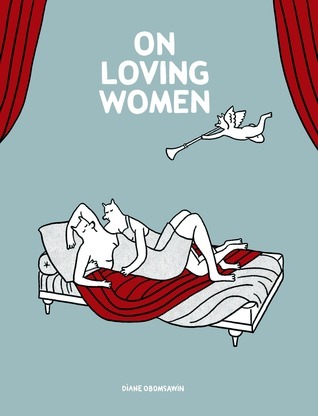
"On Loving Women is a new collection of stories about coming out, first love, and sexual identity by the animator Diane Obomsawin. With this work, Obomsawin brings her gaze to bear on subjects closer to home—her friends' and lovers' personal accounts of realizing they're gay or first finding love with another woman. Each story is a master class in reaching the emotional truth of a situation with the simplest means possible. Her stripped-down pages use the bare minimum of linework to expressively reveal heartbreak, joy, irritation, and fear."
The art style was interesting, and fits with the genre, but it was not really my favourite.
…Content notes for: nudity, sex, and one Blue is the Warmest Colour style short story featuring under age age gap fling with cheating.
What kinds of keywords came to mind? Lesbians, obviously, coming of age, slice of life, romance, and boarding schools.
"On Loving Women is a new collection of stories about coming out, first love, and sexual identity by the animator Diane Obomsawin. With this work, Obomsawin brings her gaze to bear on subjects closer to home—her friends' and lovers' personal accounts of realizing they're gay or first finding love with another woman. Each story is a master class in reaching the emotional truth of a situation with the simplest means possible. Her stripped-down pages use the bare minimum of linework to expressively reveal heartbreak, joy, irritation, and fear."
The art style was interesting, and fits with the genre, but it was not really my favourite.
Gender and sexuality were obviously pretty central to this collection of short stories. Apparently Obomsawin interviewed a number of people she knew across a wide age range, but since she chose to focus more on each person's first lesbian relationship all the stories feature fairly young protagonists. I was a bit concerned about the lack of trans representation, as I'm not sure if this was an oversight or a deliberate exclusion. An alibi fairly cursory searches via duck duck go did not appear to reveal anything, but Obomsawin does not appear to be a terribly online person either.
Similarly, racial diversity seemed to be largely ignored. But living in a still pretty segregated society, it's not hard to believe that since Obomsawin was drawing from her personal contacts there could just not be much diversity to draw on. That said, I'm not sure if the different animal heads Obomsawin uses was supposed to denote racial different? So there is a chance it just flew right over my head.
Class did feel like one of the things that did really differentiate some of the characters from each other.
And, again, might have missed something but the assumption seemed to be that everyone was pretty able bodied.
So yeah, to conclude, I am glad I finally got around to reading this book as it's been on my TBR for what feels like forever. That said, as I already mentioned, not a new favourite. I have been feeling very unnerved by my ratings of late though, always feeling like I'm rating things to highly or to lowly. So let us see... I think I'm going to follow my gut and start with a two out of five stars, which always feels harsh, but it was OK so there's that.
In a series of personal essays, prominent journalist and LGBTQIA+ activist George M. Johnson explores his childhood, adolescence, and college …
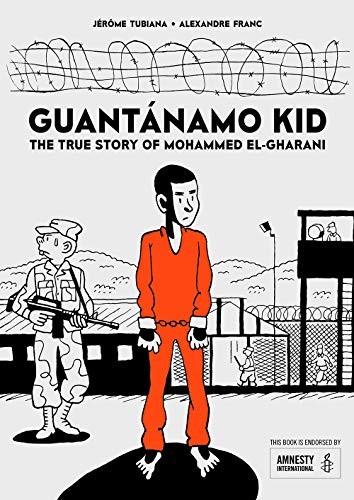
Saudi Arabia offers few prospects for the bright young Mohammed El-Gharani. With roots in Chad, …
And today’s pick is Guantánamo Kid: The True Story of Mohammed El-Gharani by Jérôme Tubiana and Alexandre Franc. Originally published in 2018 by a French publisher. it was translated to English and published in 2019 by Self Made Hero. Endorsed by Amnesty International.
Content notes for: 9/11, harm to children, lots of torture, n-word, nudity, and suicide.
A heavy read, the torture is described but not shown in detail on the page.
Looking at the creative team we have writer Jérôme Tubiana. Flipping to the back of the book, he is described as an independent journalist and researcher with a focus on “conflicts and migrations in the Sahel and the Horn of Africa”. Online search brings up work with Al Jazeera, The London Review of Books, he’s written reports for the United States Institute of Peace and been an operational advisor for Doctors Without Borders.
And …
And today’s pick is Guantánamo Kid: The True Story of Mohammed El-Gharani by Jérôme Tubiana and Alexandre Franc. Originally published in 2018 by a French publisher. it was translated to English and published in 2019 by Self Made Hero. Endorsed by Amnesty International.
Content notes for: 9/11, harm to children, lots of torture, n-word, nudity, and suicide.
A heavy read, the torture is described but not shown in detail on the page.
Looking at the creative team we have writer Jérôme Tubiana. Flipping to the back of the book, he is described as an independent journalist and researcher with a focus on “conflicts and migrations in the Sahel and the Horn of Africa”. Online search brings up work with Al Jazeera, The London Review of Books, he’s written reports for the United States Institute of Peace and been an operational advisor for Doctors Without Borders.
And we have art by French artist Alexandre Franc. Although work he has illustrated and/or written include Agatha: The Real Story of Agatha Christie, Extinctions: Twilight of the Species, Evolution: Darwin, God and the Horse-People and much more.
What kinds of keywords came to mind: inhumane, anti-state, coming of age, community, faith, shit disturber, and manipulation.
“Saudi Arabia offers few prospects for the bright young Mohammed El-Gharani. With roots in Chad, Mohammed is treated like a second-class citizen. His access to healthcare and education are restricted; nor can he make the most of his entrepreneurial spirit. At the age of 14, having scraped together some money as a street trader, Mohammed seizes an opportunity to study in Pakistan. One Friday in Karachi, Mohammed is detained during a raid on his local mosque. After being beaten and interrogated, he is sold to the American government by the Pakistani forces as a member of Al-Qaida with links to Osama Bin Laden, but Mohammed has heard of neither. The Americans fly him first to Kandahar and then to Guantánamo Bay.”
Starting with the art. I will admit that at first my expectations were not particularly high. The style is lightly cartoonish black and white with fairly straight forward page layouts. As I read through Guantanamo Kid however I became very impressed with the nuance Franc brought to the narrative. Moving the level of cartoonishness up and down to match the ridiculousness of the evil being enacted. There were visual metaphors and symbolism. And the text was nicely spread out and broken down into easy to consume chunks.
Similarly I found the writing to be extremely good in all the ways I could think to test it. Although that certainly is not all encompassing.
To start with, I was struck by how respected and relatable Mohammad felt throughout the book. Not someone to be pitied, not a thin shadow to act as inspiration-porn, or a monstrous other. Mohammad is a young muslim boy whose family moved from the Congo to Medina to be close to this spiritual centre. They are excluded by the state of Saudi Arabia but have family and community.
Moving into his time in Guantanamo Bay, I appreciated how the resistance of Mohammed and his comrades was highlighted in such detail. Obviously this book is nonfiction, but in my media consumption I have come across far too many stories that turned the enslaved, enprisoned and otherwise appressed into passive objects in need of saving. When revolutions, revolts, escapes, and strikes all say otherwise.
I will note that Guantanamo Kid does not do something I generally appreciate in nonfiction. Namely, the author himself is not at all present in the main body of the book and his perspective is not necessarily articulated outright. I do feel like Jerome’s perspective is pretty obvious, although my own personal bias is certainly playing a roll in this because I went into this book agreeing with it. There is also a pretty wide range of reportage on Guantanamo that agree on what we might call the facts of the situation. That said I did really appreciate the final section that was only text and explained further how Jerome and Mohammed crossed paths, the interview process that went into making the book, and updates from Mohammed’s life after the graphic novel concluded.
Looking at the intersections of identitiy I examine in each of my reviews.
Disability actually got a lot of air time. Before Guantanamo Mohammad’s father is disabled while he is fairly young and after Mohammad is forced to smuggle himself into different countries to get medical care to help him recover from torture. While in Guantanamo we also have some insight into how the community took care of each other. Some people were not on the frontline of resistance to the guards because they were more physically fragile.
Race is obviously another important aspect of the narrative alongside dialect, country of origin, citizenship, class and many other ways we divide each other up and make the other more monstrous. In my ignorance I was not aware that any of the detainees were Black. Moving from Mohammad’s detention in Pakistan to Guantanamo we see the death of his naiveté and induction into the American flavor of both anti-Black racism and Black culture. And while Mohammad’s residence is always despite the state, after his release in particular Jerome is sure to dive into all the ways in which Mohammad is displaced and without an easy homeland.
Human sexuality was horribly mostly explored in the ways it was used to humiliate and torture Mohammad and other detainees. Although we do have the briefest mention of polygamy at the end of the epilogue as Mohammad does go on to marry two women.
And finally, gender was again not really a focus of the story beyond the basics unescapables. That said, because it is a thing I like to harp on about, I did appreciate the very clear depiction of not only men working at Guantanamo but also women, as some people suffer under the notion that people who appear to have XY chromosomes are intrinsically nicer.
Wrapping things up. Obviously I generally try and steer away from language that implies that anything is a universal must read. But this time around it is sorely tempting. With 30 people still locked up in Guantanamo it’s still incredibly important for people to be fully aware of the kind of shit that so called america has perpetrated there. And obviously I do feel like there’s stuff to learn here that can impact how we see other things that imperialist powers do. Five stars if you didn’t already guess.
Saudi Arabia offers few prospects for the bright young Mohammed El-Gharani. With roots in Chad, Mohammed is treated like a …
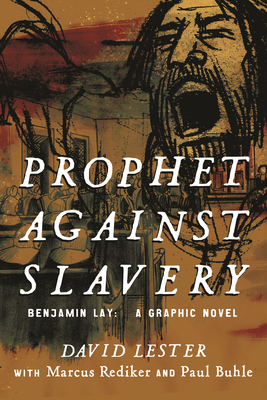
The revolutionary life of an 18th-century dwarf activist who was among the first to fight …
And today's pick is Prophets Against Slavery: Benjamin Lay by David Lester With Marcus Rediker (who wrote the book that this is a graphic novel adaption of) and Paul Buhle. This volume was published by Beacon Press in 2021. Unfortunately my library only has the digital edition. But we'll make it work.
Content notes for torture, chains, nudity and suicide.
While I would characterize the depiction of torture of both white quakers and enslaved Black people as more matter of fact then edgy, your milage may vary. It is certainly trying to make a point.
I picked this book up shortly after I started writing my review of Under the Banner of King Death Review both because I was pretty impressed with that book and because they are from the same creative team, plus the content for this volume sounded really intriguing.
Keywords that came to …
And today's pick is Prophets Against Slavery: Benjamin Lay by David Lester With Marcus Rediker (who wrote the book that this is a graphic novel adaption of) and Paul Buhle. This volume was published by Beacon Press in 2021. Unfortunately my library only has the digital edition. But we'll make it work.
Content notes for torture, chains, nudity and suicide.
While I would characterize the depiction of torture of both white quakers and enslaved Black people as more matter of fact then edgy, your milage may vary. It is certainly trying to make a point.
I picked this book up shortly after I started writing my review of Under the Banner of King Death Review both because I was pretty impressed with that book and because they are from the same creative team, plus the content for this volume sounded really intriguing.
Keywords that came to mind include: quakers, disability, morality and prophetic.
The publisher's summary is "The revolutionary life of an 18th-century dwarf activist who was among the first to fight against slavery and animal cruelty.
Prophet Against Slavery is an action-packed chronicle of the remarkable and radical Benjamin Lay, based on the award-winning biography by Marcus Rediker that sparked the Quaker community to re-embrace Lay after 280 years of disownment. Graphic novelist David Lester brings the full scope of Lay's activism and ideas to life.
Born in 1682 to a humble Quaker family in Essex, England, Lay was a forceful and prescient visionary. Understanding the fundamental evil that slavery represented, he would unflinchingly use guerrilla theatre tactics and direct action to shame slave owners and traders in his community. The prejudice that Lay suffered as a dwarf and a hunchback, as well as his devout faith, informed his passion for human and animal liberation. Exhibiting stamina, fortitude, and integrity in the face of the cruelties practiced against what he called his "fellow creatures," he was often a lonely voice that spoke truth to power.
Lester's beautiful imagery and storytelling, accompanied by afterwords from Rediker and Paul Buhle, capture the radicalism, the humor, and the humanity of this truly modern figure. A testament to the impact each of us can make, Prophet Against Slavery brings Lay's prophetic vision to a new generation of young activists who today echo his call of 300 years ago: "No justice, no peace!"
As I already highlighted, this is the second book by Lester, Rediker and Buhle that I'm reviewing this year so please check out the link to The Banner of King Death review to find out more about each of them.
Looking at the writing and art style I enjoyed both and feel like this creative team has demonstrated an above average skill at putting together graphic novels that are both highly political and very interesting and easy to read. This balance has proven difficult for many, so kudos. My only complaint is that this does veer close to alternative great men of history territory.
Page layouts were varied and Lester does a very nice job using pattern, the juxtaposition of different line qualities and visual metaphors.
Looking at the different identities and themes I like to look at in each of my reviews:
Race should come first because this book's narrative centers around the trans Atlantic slave trade that targeted Black Africans. That said, the eyes we are looking through are those of a white man who was also a quaker and a little person. This framing is not necessarily a problem in and of itself. Benjamin Lay is a striking figure and is an abolitionist even when his fellow quakers were not. That said, I (albeit as a white person myself) do think it would have been a good idea to work in more then one line and one action by Black people. Because as it stands, as I read this volume it felt like, despite the fact that Lay was initially inspired to abolition by the suicide of an enslaved person who refused to continue to allow themselves to be enslaved, Black people were almost exclusively objects that were acted upon rather then 3D characters that, among other things, talked and often fought for their own freedom.
Doing a bit of research it is fair to say that the majority of documented rebellions of Black slaves (sometimes in solidarity with poor white people and indigenous people) happened after Lay's life. Communication was not what it is now and news like this could have been suppressed. I'm not an expert. But I do think that it would have made the book better to figure out a way to provide the reader with this wider context, even if Lay was not aware of it.
I feel strongly about this because it wasn't until after I graduated university and started educating myself further that I fully appreciated that Black chattel enslavement didn't end because white people became more enlightened, but is largely due to many Black people through time and space taking their own emancipation into their own hands. Which not only changed my perspective on historical events, but also about the potential nature of future change. I probably could have explained that in a slightly more succinct way, but if you want to correct this issue for yourself I would recommend checking out Nat Turner by Kyle Baker, Run For It by Marcelo d’Salete and Maroon Comix_ Origins & Destinies.
Disability and ability also played a much larger role then average in this graphic novel. As I mentioned Benjamin Lay was a little person. The book, as you have likely already noted, uses the term Dwarf. Searching around the world wide web it didn't seem like the most favored term but also maybe not a slur either? Very big question mark. Definitely don't take that as a statement of any kind of authority. Also, some of the racial terms also felt similarly dated...
Anyway, Benjamin's condition certainly combines with his other identities to present a very unique and striking figure of history. I appreciated how the volume did highlight that people accused Lay of being "cracked in the head" for being an abolitionist. It reminded me of a similar movement in white enslavers to characterize Black people's apatite for freedom as a mental illness.
Overall, I thought that Prophets Against Slavery did a pretty good job of depicting the unique collection of struggles and strengths that kept our protagonist ticking.
An aspect of identity that doesn't always come up in any review is that of religious identity. With Lay's identity as a quaker being an outsized motivational factor. And while many quakers were abolitionists, that was not the case for Lay's community and he felt this was hypocritical because quakers were a christian sect that had faced a lot of persecution back in England and were supposed to see their fellow humans as equals.
In addition to apposing slavery, Lay did not wear woolen garments and became a vegetarian.
There is also some mention of the lollards, levelers and the diggers. A selection of other interesting subversive English uprisings. My notes also include a line "But they are protestant lol". Which I don't exactly remember writing down but I assume it had more my own anti-protestant biases and not Lay's? And of course not all protestants, but good heavens.
Overlapping religiousness with the only sexuality represented. Lay married Sarah Smith Lay who apparently shared his short stature but was perceived by the community as much more quiet and pious. It even sounds like the quacker community recognized her as having been blessed by the spirit to be a minister of the gospel.
Neither cis gender or any other sort of gender was very much explored in this volume perhaps unsurprisingly.
Class had a bit of a passing representation since Lay was much poorer then the rich enslavers he was critiquing.
Place was mentioned as Lay moved around but I didn't come away feeling like it was particularly developed.
Wrapping things up. A lot to chew on, which is always fun. Not as good as Under The Banner of King Death, but that only means they are on an upward trajectory. Four stars.

A fabulous fable about points of view and a creative lesson on opposites." — Starred review, Booklist Mr. Round and …
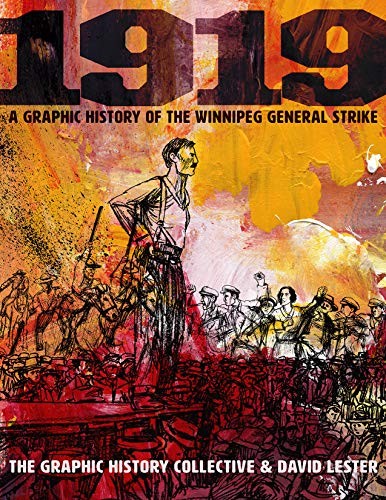
After suffering the hardships and horrors of the First World War, workers and soldiers faced …
Content notes for police repression and violence.
Looking at the violence specifically, it was interesting how the use of line was really apparent to build up the kinetic energy of a scene. In contast, it also felt like the more violence that was present in a frame the looser the art style became. The book overall also leans more towards pretty basic and oversized page layout, which impacts the pace of the action as well.
Looking at the Graphic History Collective. They also collaborated to produce Direct Action Gets the Goods: A Graphic History of the Strike in Canada, which I reviewed back in November. The collective kicked things off in 2008 to " We produce alternative histories - people's histories - in an accessible format to help people understand the historical roots of contemporary social issues." There current members include Sean Carleton, Robin Folvik, Kara Sievewright and …
Content notes for police repression and violence.
Looking at the violence specifically, it was interesting how the use of line was really apparent to build up the kinetic energy of a scene. In contast, it also felt like the more violence that was present in a frame the looser the art style became. The book overall also leans more towards pretty basic and oversized page layout, which impacts the pace of the action as well.
Looking at the Graphic History Collective. They also collaborated to produce Direct Action Gets the Goods: A Graphic History of the Strike in Canada, which I reviewed back in November. The collective kicked things off in 2008 to " We produce alternative histories - people's histories - in an accessible format to help people understand the historical roots of contemporary social issues." There current members include Sean Carleton, Robin Folvik, Kara Sievewright and Julia Smith. You can find out more, and see all of their very interesting posters, at their website of the same name. Link in the description.
What kinds of keywords apply? 100 year anniversary, violent government repression, capitalism, colonization, solidarity, and workers.
As far as the words per page level, this book does a very good job. Especially in contrast to many very dense and generally older labour related comic books. Even with all the name dropping, this felt more like a jumping off point then trying to be the be all end all of on the Winnipeg general strike. Besides a short set of preface, acknowledgment, introduction, we also got a notes on drawing, a short photo essay, and notes + bibliography. For just 120 pages we are coming at the story from many different angles, I do kind of wish there was a bit more in the comic (some of the full page layouts felt a bit unnecessarily) but I have no attention span so I guess I can't complain.
The art overall was pretty striking and the poses are very energetic. As I've already mentioned, there's some interesting stuff being done around the depiction of violence. My only quibble is it does feel a bit oversized.
As far as gender goes, everything seems pretty binary but we do get a more balanced representation of men and women. Which is a nice push back to some of the patriarchal ideas of yesteryear. I really like how this book stresses the true diversity of tactics that went into this effort. Obviously industrial society 100 years ago is probably, hopefully, peak ableism. But this representation of diversity also highlights the fact that the most physical stuff is not the only thing that's needed. That said, I wish them having one obvious wheelchair user at the end when we show modern protest doesn't put this book above probably half the labour history comics I've reviewed on this channel. Standards are so low.
Sexuality doesn't really come up at all, and I feel like that's fair.
Class is fairly central, obviously.
And while the book does outline what was happening on Canada's colonialist nation building front at the time, I would have liked to know more about the racial and cultural makeup of Winnipeg at that point. Maybe I missed something, but all I found was one panel about how "John Arthur Robinson and members of the Order of Sleeping Car Porters... joined the strike in its early days and donated to the strike fund."
Remembering childhood stories of a beautiful but dangerous place called Tunnel's End, a mouse named Nib leaves his dirty, crowded …

A gorgeously illustrated historical graphic novel based on a real person who, defying gender expectations, …
And today's pick is Call Me Bill by Lynette Richards, with an introduction by Emily Burton Rocha. This relatively short YA graphic novel was published in 2022 by Emanata in the lead up to the 150th anniversary of the crash of the SS Atlantic.
I initially picked this volume up two years ago and have been meaning to review it ever since. Well new year new me LOL and I've checked it out of the library again to refresh my memory. This being my second review of 2025 to involve sailors. I'm left wondering what other nautical comics I can pick up to make it my theme of 2025! Leave recommendations in the comments if you have any.
Content Notes for mass casualties, using queer in a negative way, and cursive.
Keywords that came to mind: disaster, rescue, globe trotting, gender, and sailors.
Looking at the …
And today's pick is Call Me Bill by Lynette Richards, with an introduction by Emily Burton Rocha. This relatively short YA graphic novel was published in 2022 by Emanata in the lead up to the 150th anniversary of the crash of the SS Atlantic.
I initially picked this volume up two years ago and have been meaning to review it ever since. Well new year new me LOL and I've checked it out of the library again to refresh my memory. This being my second review of 2025 to involve sailors. I'm left wondering what other nautical comics I can pick up to make it my theme of 2025! Leave recommendations in the comments if you have any.
Content Notes for mass casualties, using queer in a negative way, and cursive.
Keywords that came to mind: disaster, rescue, globe trotting, gender, and sailors.
Looking at the creative behind the page (and other contributors):
As the summary points out, this is Richards' debut work, although she brings to it 30 years of experience working professionally with stained glass. Flipping to their bio in the back of the book "Richards has been cartooning her whole life. She chose stained glass as her professional medium because it was both a trade and an art. She was fully aware, too, that stained glass windows have used sequential narration for over 1000 years, and are essentially, early graphic novels!"
In an interview with Richards on Global News Morning Halifax, Richards explained how the research she conducted after joining the board of the museum commemorating this disaster in Terrance Bay and her own experience as a lesbian woman coming up in a male dominated field lead her to write this particular story.
Looking at her profile working at the Canadian Museum of Immigration at Pier 21, Emily is described as an Oral Historian with a doctorate from Dalhousie University in Canadian History.
Moving along to the writing section of this review. It definitely reads as younger YA. The coming of age aspect feels more aspirational then nostalgic as it were, and there is a certain simplicity to it all. Drawbacks for me as a millennial, but not necessarily a critique in context.
Given this target demographic though the page of not terribly clear and cramped cursive writing is a real drawback.
Art wise, an interesting spectrum of grey tones and energetic lines. Page layouts were a bit oversized but also nicely varied.
Looking at gender in historic contexts can be a touchy subject, even if you completely ignore all the really silly people who claim that any sort of gender diversity beyond the current cultural constructs never existed before now. There's plenty of evidence to the contrary but whatever, they refuse to be convinced. That said how people have understood gender and sexuality has morphed and changed steadily through space and times. So while there have always been people existing outside of the rigid binaries people are currently looking to uphold, it can be hard to discuss them, and it is often hard to guess exactly how these individuals would or would not relate to the current discourse.
Overall I would say I felt like Call Me Bill balances things fairly adeptly. On the one hand the foundation for the story is historic fact and on the other brave imagination, with a powerful integration of primary documents. Daring to say in the face of rising transphobia, what if. And telling a real page turner in the process.
Looking at race and class, there is a dash of light intersectional analysis that pops up throughout. That said, I would have liked to see the characters of Cicely and her husband a bit more developed. As it stands, Cicely in particular felt a bit like a cardboard cut out of a freed Black woman/housekeeper that just served to push our protagonist out into his adventures.
Call Me Bill also felt fairly grounded. Bill does a lot of traveling so it's not like we set down roots anywhere, but at the same time every event happens in a defined place and time and isn't just floating in an unnamed character centric space.
Class wasn't directly discussed but the story was pretty well steeped in working class reality. Similarly, sexuality was a passing mention as our protagonist is not really interested in that sort of thing but they do run into at least one working class queer community in their travels.
I seem to recall some nods to the reality of being less then perfectly able bodied but I don't remember exactly.
Wrapping things up. I think I've said everything I wanted to. I feel a bit silly with how long it took me to finally do this review but it is easier to consume then to consume, reflect, chew for a bit, maybe research some more and then regurgitate an opinion. Edit etc.
As far as a rating goes I would say it was different and interesting so four stars.
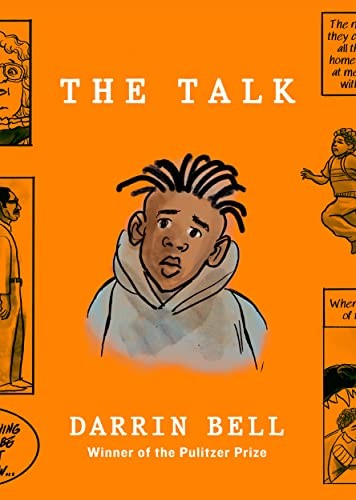
Now so shortly removing my reviews for Neil Gaiman I am also removing this review from my activity due to very disturbing charges being brought against Darrin Bell.
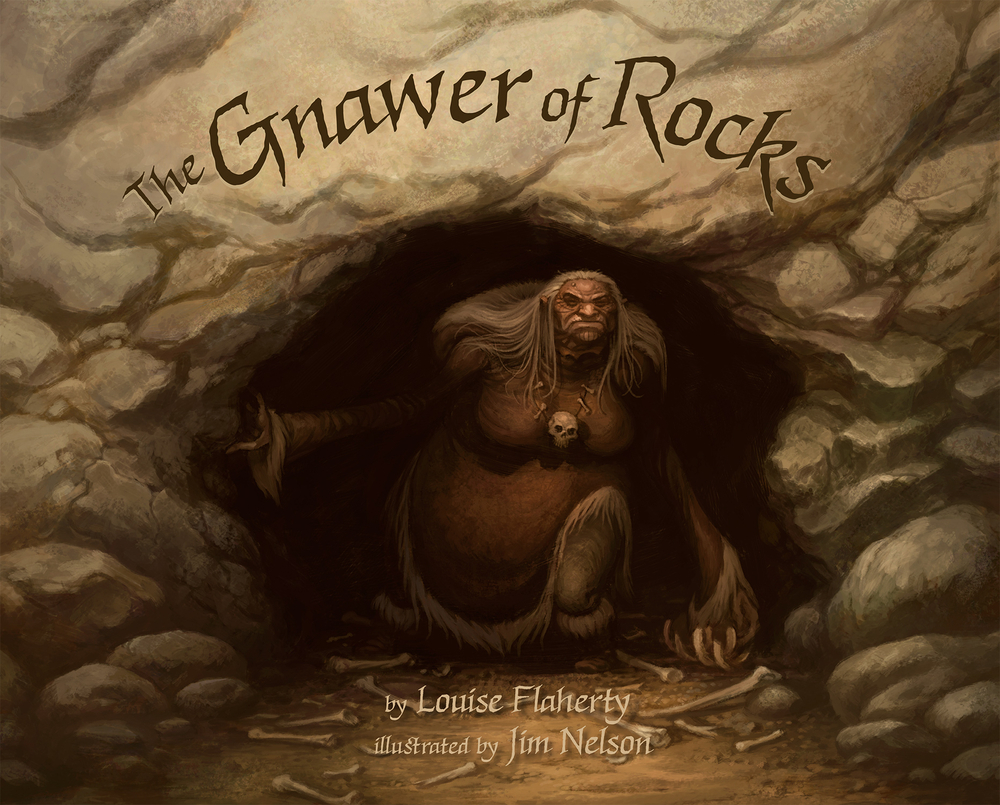
While everyone is busy preparing for the coming winter, two girls wander away from their camp, following a path of …
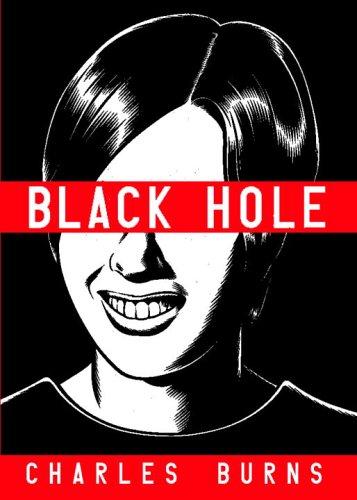
The setting: suburban Seattle, the mid-1970s. We learn from the outset that a strange plague …
And today's pick is Black Hole by Charles Burns. Originally published in twelve issues between 1995 and 2004. Initially by Kitchen Sink and subsequently by Fantagraphic books. This bind up edition that I will be flipping through is a somewhat worse for wear collected version published by Pantheon in 2008.
While not explicitly rated I would start off by flagging that this is by most estimations a fairly mature comic in the rating scale type of way. Content notes for sex, age gap, nudity, dissecting animals, swearing, smoking, body horror, violence and death.
The reason I initially picked this particular volume up was two fold. The first is because it's mentioned literally everywhere, so it's kind of hard to escape. Although I feel like I didn't really note what the book was actually supposed to be about, so I did still manage to go in largely ignorant. The …
And today's pick is Black Hole by Charles Burns. Originally published in twelve issues between 1995 and 2004. Initially by Kitchen Sink and subsequently by Fantagraphic books. This bind up edition that I will be flipping through is a somewhat worse for wear collected version published by Pantheon in 2008.
While not explicitly rated I would start off by flagging that this is by most estimations a fairly mature comic in the rating scale type of way. Content notes for sex, age gap, nudity, dissecting animals, swearing, smoking, body horror, violence and death.
The reason I initially picked this particular volume up was two fold. The first is because it's mentioned literally everywhere, so it's kind of hard to escape. Although I feel like I didn't really note what the book was actually supposed to be about, so I did still manage to go in largely ignorant. The second is because I've started tracking the original publication date of books I review and I wanted to fill out the 90s more.
While I don't always go this in depth about any particular volume - although I guess I always wish I did and feel like I could have gone yet further with this one. since this is such a widely discussed volume, I did end up consuming a lot of other people's reviews of Black Hole. Unlike some people who say they want to keep their opinion pure, I actually find this sort of post reading consumption can help bring more clarity to my own thoughts. Pulling out things from the depths of my brain through agreeing or disagreeing with others. I also happened to read this over a longish period of time (side note: I was surprised by the how many people said this was a fast read for them) when my life was even more topsy turvy then usual. Where did I hide my notes? I don't know... lol. That said, this strategy did kind of bite me in the butt because of the number of adult men who can't discuss sex and sexuality in any sort of reasonable way. So woo boy, would not necessarily recommend that anyone else emulate me in this matter.
Keywords that came to mind: white on black, coming of age, runaways, disease, and contrast.
Looking at the creative behind this work. This is the first title I've read by Charles Burns so let's get familiar.
Born in Washington D.C. in 1955, his family settled in Seattle in 1965. Notoriously influenced by Tintin from an early age (Sidenote: If you want to see my 2018 opinion of Herge watch my review of Peppy in The West by Herge one of these days I'll revisit that) in contrast Lambiek lists Japanese woodblock as Burns' most unusual influence.
Moving along to their adult student years, Burns worked on a campus magazine with both Lynda Barry and Matt Groening. The latter apparently named a character in the Simpsons after him? Charles' cartooning rose in notoriety when he was picked up by Art Spiegelman (of Mause fame) in RAW magazine. Since then, Burns' work has also been featured by MTV, Altoids and Coke among many many others.
Looking at the other books Burns has worked on. I was a bit surprised that he was the dude behind many covers I feel like I see everywhere... After finishing Black Hole I wasn't initially going to rush out and pick up another book of his to consume, but in writing out this review I wonder if I might try to read Final Cut (published in 2024) to get a better sense of his treatment of gender and sexuality both across his career and what he's up to in a modern context.
Looking at the art side of things, as is generally the case most people who don't like the writing tend to add the caveat that the art is very impressive. Sometimes this comes off as pretty cliche but it does ring pretty true in this case. A bit of a connoisseur of black and white comics books myself the dynamic and high contrasting pages did indeed tickle my brain. And might have inspired me to make a collage of some kind of all the different black and white styles that I've enjoyed over the years.
The largely white line on black background really emphasizes the other worldly nature, even as the character designs really felt incredibly grounded in an almost generic way. Practically speaking it was somewhat comforting that I was not the only person who had a difficult time telling some of these characters apart.
The page layouts were cut up into solid easy to tell units. The quality of frames shifting with the story as we moved forwards, backwards and every so often interdimensionally as it were. There's also a sense of shifting depth as things you feel should maybe be lighter are darker and vice versa.
Writing wise it definitely felt a bit all over the place. Riding by the seat of your pants over a decade sort of thing, Burns does not appear to be a carefully plotting sort of creator. And that's alright. Although as we delve a bit deeper I do feel like this sort of style is part of the reason it's so easy to rub off the sheen? But perhaps I am giving away my opinion too soon.
Apparently for Black Hole Burns was heavily influenced by romance comics. A type of comic that someone of Burns' gender was not really supposed to involve himself in and not a particularly popular or referenced type of comic at the time overall. So apparently another reason, alongside the art, that it stands apart for many people.
Sex and sexuality is obviously one of the central themes of Black Hole. Overall very heterosexual, although fairly balanced nudity between the two socially constructed cis binaries, which is a sadly an unusually high standard to hit. Burns' style seems to be about half way between hyper sexualized and completely de-sexualized and besides the body horror of it all felt fairly average and plausible. But of course there are some reviewers who found this mix of body horror and sexuality pretty gross, so your milage may vary.
Interestingly, despite the plot revolving around a sexually acquired infection, Black Hole is generally received as not being a moralizing story or parable. I would agree that this is the case and it mostly felt like a strength. This is not to say that characters have no emotions and don't express how things impact them in a positive or negative way. Just that the overarching perspective of the graphic novel is not taking sides and the shifting point of view creates a pretty wide perspective on the premise.
I would flag that besides some discussion of sexual violence, there is a scene where a teenage boy is seduced by an adult woman. In general my perception is that the heterosexual culture of so called north America generally still thinks this sort of thing is good and congratulates young men for being the victim of this sort of sexual violation. If you can't tell, I think this is a bad thing and part of a larger problem of toxic masculine bravado that tries to pretend guys are always tough and never hurt or vulnerable, etc. etc. Presented in Black Hole... while I can appreciate that it didn't feel particularly glorified, I wonder if there should have been more exploration of the toxicity of this sort of thing. Mulling over what my 2025 adult brain thinks might be a solution... Obviously I don't need a blinking florescent light shouting WRONG at the top of the page is necessary or ideal, but a bit more counter cultural nudging would go a long way I think.
In contrast, disability and chronic illness is interestingly both central and not at the same time. Obviously a std is what Black Hole is about. On the pros side I felt like Black Holes is much more deeply sympathetic and interested in people with non normative bodies. Although there still is a bit of hierarchy going on. That said, in many ways it also felt like a bit of a surface accessory metaphor. To be clear, a metaphor for teenage alienation not HIV. Burns has tried to make that abundantly clear. So the con to me was that it didn't feel like the creator had engaged with or reflected on the disabled experience for any great length of time or with any great effort. Something people still don't like to do very much, let alone in the 90s.
Looking at the teen alienation of it all overall I felt like it was successful and a more interesting take for something so well trodden. Because as someone who didn't have this kind of teenage experience this kind of thing is tempting to see as just a series of tired tropes.
The body horror and surrealist parts were probably among my favorite.
Looking at the gender of it all. In most ways it is pretty social construct cookie cutter. I mean we do start out with a teenage boy with a talking vagina in his neck, which seemed like something interesting might happen. But ultimately another bit of a surface thing that Burns doesn't really go anywhere with. Compared to other stuff I've read it felt like the female characters were a bit more fleshed out then I would have anticipated and from a modern perspective it did feel like these teenage boys were allowed to be a bit more vulnerable then I would have expected.
Place also played a decently important role to the overall vibe of Black Hole. It plays into people's ideas of the suburbs, and much like the characters, twists and shifts it.
Class felt minimized compared to other points of identity.
And as far as I could tell the race of our characters was all pretty lily white.
Wrapping things up. What can I say? It was very interesting to dig into Black Hole and I can appreciate how it stood apart for many readers. It was not a new personal favourite for me, which is also fair.
As I try to point out periodically there is no such thing as a must read and it's impossible for anything to be perfect. So if this doesn't sound like your cup of tea and you haven't already, feel free to move on. Or read it anyway and complain.
Time moves on and it's helpful to think of things in their historical context. But also hopefully when it comes to media things grow and progress. It would be really sad if the landmark works of yore aren't eventually surpassed honestly.