
Frecklemaid reviewed The Forgotten Slave Trade by Simon Webb
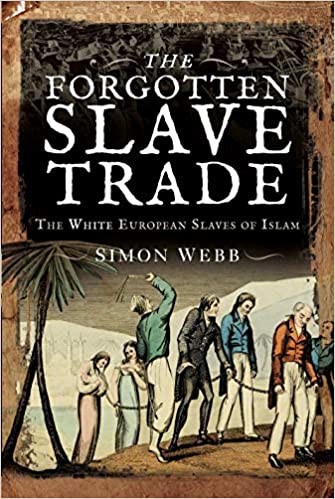
Explains the role of the newly independent United States in putting an end to the …
Review of 'The Forgotten Slave Trade' on 'Goodreads'
2 stars
The Forgotten Slave Trade is a broad and informative look at the 'Triangular Trade' of slaves between Europe and North Africa. As noted by Webb, this is a largely ignored and forgotten part of world history as slavery is explored through the lens of the Transatlantic Slave Trade. Throughout the book, it's made clear that Webb is trying to dispel the notion that slavery is a uniquely European sin and for the most part he remains respectful of the push to highlight the ills of Imperialism while criticising the selectivity of which nations are frowned upon.
How informative is it?
Webb has managed to create an informative and detailed timeline of the Barbary slave trade along with that which preceded it and followed. He also did a great job of explaining the role of religion in conflicts between Christian Europe and the Islamic Middle East. The role of Islam in the Ottoman Empire and historic justifications for slavery and its practices was also well explained and the occasional links to recent conflicts was fascinating.
The scope of this book spans centuries and three continents, focusing on the roles of the Barbary corsairs, Ottoman Empire, Morocco and the response of European nations and the U.S. over time to the issues presented. I went into this book knowing virtually nothing about the Barbary slave trade other than that it happened and was surprised to learn about its prevalence and impact, especially the eventual U.S. involvement.
What didn’t I love?
•The book was at times under supported by evidence and could go for pages without citation. There were several instances where very old/questionable sources were used. At one point a Daily Mail article is used as a reference, a ‘News and Observer’ article at another. I understand that in some cases information may have been difficult to source, but I seriously doubt news articles and descriptions of culture from 1912 were the only available.
•The writing was at times repetitive and could do with editing, although it must be noted that I read an ARC copy and this issue may have been remedied. It could also be a bit dry and boring but I think that’s mainly because it’s a pretty dense and hardcore bit of history to write about.
•Several times throughout the book Webb made a point of comparing the treatment of European slaves in North Africa with black slaves, saying one was worse or equal in awful to the other. I felt these comparisons were unnecessary and made me a bit uncomfortable; the horrors of the Barbary slave trade stood alone just fine. Webb was trying to avoid by looking at slavery through the American/Imperial lens but fell into that trap himself.
Should you read it?
If you’re at all interested in a little-discussed history of slavery I think this text provides a great introduction. However, I did find some parts of the text lacked sufficient citation. Furthermore, I feel the political motivations behind it at times hampered this exploration by causing the author to unnecessarily compare slavery across the world and overstate the importance of slavery in historic and modern events.
Note: I received a copy of this book from NetGalley in exchange for an honest review. I'd like to thank Simon Webb and Pen&Sword History for the opportunity.