Frecklemaid rated Romance dawn.: 3 stars

Romance dawn. by Eiichiro Oda (One piece -- Volume 1)
Monkey D. Luffy, who can stretch his body like rubber, is searching for a treasure called One Piece that was …

Currently an International Studies/Software Development student with a love of speculative fiction. I also read a decent amount of nonfiction focusing on politics and philosophy. I read in French, Spanish, and (mostly) English with the potential for a foray into Esperanto.
Catch any full reviews or other random posts at my blog below: specual.me
My mastodon account: Humbly7362@todon.eu
This link opens in a pop-up window
Monkey D. Luffy, who can stretch his body like rubber, is searching for a treasure called One Piece that was …

Harry Potter #1
When mysterious letters start arriving on his doorstep, Harry Potter has …
2015 review:
When I first read this book I hated it. I couldn't even finish. But now... I love the Harry Potter series more than anything else (except maybe my family). Thank you J.K. Rowling for writing this masterpiece.
All was well.
Review of French translation in 2021:
While reading this in French for the first time, I found it fascinating to see what could and couldn't be effectively translated. Much of the humour, names etc. are steeped in Britishness which didn't necessarily come through in the translation. That's not to say the translator didn't do a fantastic job, just that there is a lot that isn't able to be translated without losing a bit of the cultural meaning behind it (eg. 'ickle' as in 'ickle Duddykins' or 'ickle firsties is translated to 'petit', which doesn't have the same 'baby talk'/mocking connotations, it just means small.)
2015 review:
When I first read this book I hated it. I couldn't even finish. But now... I love the Harry Potter series more than anything else (except maybe my family). Thank you J.K. Rowling for writing this masterpiece.
All was well.
Review of French translation in 2021:
While reading this in French for the first time, I found it fascinating to see what could and couldn't be effectively translated. Much of the humour, names etc. are steeped in Britishness which didn't necessarily come through in the translation. That's not to say the translator didn't do a fantastic job, just that there is a lot that isn't able to be translated without losing a bit of the cultural meaning behind it (eg. 'ickle' as in 'ickle Duddykins' or 'ickle firsties is translated to 'petit', which doesn't have the same 'baby talk'/mocking connotations, it just means small.)

Marie Darrieussecq: Truismes (French language, 1998, P.O.L)
Journey to the Center of the Earth (French: Voyage au centre de la Terre), also translated with the variant titles …
Poor Reasoning and Intellectual Dishonesty
There seems to be some misleading sleight of hand occurring throughout the text in which, in refuting a particular aspect of a claim, he refutes the whole thing altogether. Frequently, Moore cites the conditions of the Earth over the past several billion years as evidence that the predictions or observations of scientists today in response to climate change are overblown. While it may be true, based on his claims, that global warming is no threat to life in general, his claims do not refute the claim that global warming is a threat to life as we know it. For example, in discussing Polar bears he asserts that Polar bears only exist because of climate change; that is, because we are currently in an Ice Age. This has nothing to do with concerns about loss of habitat for Polar bears today - just because they …
Poor Reasoning and Intellectual Dishonesty
There seems to be some misleading sleight of hand occurring throughout the text in which, in refuting a particular aspect of a claim, he refutes the whole thing altogether. Frequently, Moore cites the conditions of the Earth over the past several billion years as evidence that the predictions or observations of scientists today in response to climate change are overblown. While it may be true, based on his claims, that global warming is no threat to life in general, his claims do not refute the claim that global warming is a threat to life as we know it. For example, in discussing Polar bears he asserts that Polar bears only exist because of climate change; that is, because we are currently in an Ice Age. This has nothing to do with concerns about loss of habitat for Polar bears today - just because they haven’t always existed and had a habitat does not mean the premature loss of their (sub?)species is any less of a concern. He goes on to note that polar bear populations have risen, claiming that this “may be due to reduction in summer sea ice, not because of it” despite also noting widespread ban or restriction of hunting the bears which preceded their rise in population.
Similar claims are made in regards to corals and coral bleaching due to ocean acidification and temperature rises, as Moore points to the great biodiversity of coral reefs existing mostly in the warmest parts of the oceans. This assertion does not refute the claim that warming of the seas will negatively affect corals. An important thing to understand is that all living things have a set of conditions within which they can survive (a niche). A rise in global sea temperatures, perhaps, will not drive coral reefs extinct, but could dramatically change the distribution of these corals. In already warm areas, a sustained increase above the range of habitability of these plants still results in loss of coral reefs and biodiversity unless there is some effective way to transplant these species into now ideally warmer waters in other parts of the world. Further, the short term recovery of the Great Barrier Reef after mass bleaching in 2016 is consistent with other bleaching events internationally which have resulted from temporary increases in ocean temperatures (Baker, Glynn, & Riegl 2008), and so does not refute concerns about long-term temperature changes. Perhaps his conclusion to this would simply be that it doesn’t matter, that every species has an endpoint, but that is not the point he makes in his book. Similar issues of reason are found throughout the book as Moore falsely believes one claim to negate the other when the two are, in fact, independent.
This issue of false equivalence is often based on or bolstered by a further issue - that the sources referenced do not always support the claim which the author attributes to them. This is outlined clearly by Holman (2021), who upon contacting both Moore and some of the researches referenced found that he had misrepresented the conclusions of their findings in order to support or discount claims on which they did not report. Further, some of Moore’s claims about references are false, as a large part of his argument in Chapter 2 about bleaching in the Great Barrier Reef hinges on the allegation that articles citing a 93% of corals affected by bleaching have no factual basis upon which to make this claim. This is false, as [this] ARC Centre for Excellence of Coral Reef Studies press release from 2016 demonstrates a clear, and not particularly hard to find origin for the 93% statistic. This could, certainly, be a simple mistake. It is, however, a misleading one for readers of the book that do not desire or have the time to fact check some of his claims.
Moore also continually downplays the significance of the social impacts of environmental changes. Sea levels rising? Just move inland. Got money? Build some dykes. Nevermind that ‘just move inland’ is a much taller order on the scale of a nation like Bangladesh than for the average fishing village in Roman Britain. Inevitably, he will dismiss concerns about such events as climate refugee crises as the result of alarmism or false computer modelling. Though once again, dismissing the significance of social concerns presents a misleading sense of environmentalist arguments. For instance, Moore discusses the benefits of waste combustion as an effective way to deal with non-recyclable materials and reduce landfill. Certainly, this is an option to consider, but he misrepresents arguments against such plants as the result of some sort of fear of combustion in general or mild concerns about combustion of recyclable materials. In doing so, he neglects public concerns about the safety of combustion of non-organic materials which often characterise opposition to waste-to-energy power plants (Sun, Ouyang & Meng 2019, pp. 2473-2474).
Despite his clear contrarian nature, Moore bizarrely does not take umbrage with GMOs, instead standing with the scientific community he has criticised throughout the book to illustrate the safety and potential benefits of utilising genetically modified crops. In general, Moore is introducing arguments that I have never heard before, which I appreciate (poor skepticism is better than no skepticism.) As far as I can tell, some of his broader points are worth consideration and further research (both at the level of the personal and the academic), and I genuinely would like to learn more about his theory that increased atmospheric CO2 does not lead to increased temperatures, and could be beneficial to biomass. As such, I do think this book could be worth a read if you approach it, as with anything, a critical eye. Sir David Attenborough is not right about everything, but neither is Patrick Moore, and so it is disheartening to see so many people clearly interested in environmental science take his word for gospel without interrogating either his arguments or attempting to truly understand those of his opposition.
References:
ARC Centre for Excellence of Coral Reef Studies 2016, 'Only 7% of the Great Barrier Reef has avoided coral bleaching', Coralcoe.org.au, viewed 15 July 2021, www.coralcoe.org.au/media-releases/only-7-of-the-great-barrier-reef-has-avoided-coral-bleaching.
Baker, AC, Glynn, PW, & Riegl, B 2008, 'Climate change and coral reef bleaching: An ecological assessment of long-term impacts, recovery trends and future outlook' Estuarine, Coastal and Shelf Science, vol. 80, no. 4, pp. 435–471, doi: 10.1016/j.ecss.2008.09.003.
Holman, S 2021, 'Fact Checking Patrick Moore, Climate Skeptic', The Tyee, viewed 15 July 2021, thetyee.ca/Analysis/2021/06/04/Fact-Checking-Patrick-Moore-Climate-Skeptic/.
Sun, C, Ouyang, X, & Meng, X 2019, 'Public acceptance towards waste-to-energy power plants: a new quantified assessment based on “willingness to pay”' Journal of Environmental Planning and Management, vol. 62, no. 14, pp. 2459–2477, doi: 10.1080/09640568.2018.1560930.
"The Machine Stops" is a science fiction short story (12,300 words) by E. M. Forster. …
When reading The Machine Stops, you will inevitably be floored by the fact that it was written in 1909 - a full 98 years before Steve Jobs announced our very own pocketable portal screens in 2007. Just how E.M. Forster was able to capture not only the functioning of our technologies but the nature of their impact so long ago I have no idea. Most notably, his keen understanding of the impact of the separation of the virtual persona from the actual human while, by all measures, one engages with the art, music and ideas of humanity more deeply than most people ever do in physical space. As a result of this virtual existence, the protagonist recoils from the tangible through sunsets to her own son. The failure of the manicured and isolationist ‘society’ in which she lives is similarly rejected, as she bathes in stagnant water and eats rotten …
When reading The Machine Stops, you will inevitably be floored by the fact that it was written in 1909 - a full 98 years before Steve Jobs announced our very own pocketable portal screens in 2007. Just how E.M. Forster was able to capture not only the functioning of our technologies but the nature of their impact so long ago I have no idea. Most notably, his keen understanding of the impact of the separation of the virtual persona from the actual human while, by all measures, one engages with the art, music and ideas of humanity more deeply than most people ever do in physical space. As a result of this virtual existence, the protagonist recoils from the tangible through sunsets to her own son. The failure of the manicured and isolationist ‘society’ in which she lives is similarly rejected, as she bathes in stagnant water and eats rotten fruit before she is finally denied rest. The people of The Machine Stops reject religion as archaic and abhorrent, while coming to worship The Machine itself and the one tangible and personal object which they carry.
Just what was E.M. Forster observing in his own community to inspire this? Perhaps seemingly modern issues aren’t as new as we tend to think, and changes to the way we communicate always usher in challenges and new waves of isolation and hypocritical religiosity. Or maybe he just had a time machine. Above all, I wonder what seemingly insane science fiction written now will turn out to be all too prescient.

Revised, complete review: practicallyuntitled.blogspot.com/2021/07/sand-talk-can-indigenous-thinking.html
The Bad
Does this book live up to its title? Not in the slightest.
As others have stated, this book has little to do with indigenous thinking changing the world. Sure, there are moments in which an approach or idea could be useful when applied at scale, but the title overpromises on what are incredibly broad ways of understanding the world. Further, indigenous thinking and culture is by its nature relegated to only small groups of people, and so I see no real place for the non-indigenous majority to adopt any of what is described in the book - you can’t just become indigenous. I doubt that this is the fault of Yunkaporta, however, and was likely some sort of marketing push to sell more copies of an otherwise challenging and pertinent assortment of essays.
The Claims That Don’t Add Up; Or, Overgeneralising the West
Yunkaporta …
Revised, complete review: practicallyuntitled.blogspot.com/2021/07/sand-talk-can-indigenous-thinking.html
The Bad
Does this book live up to its title? Not in the slightest.
As others have stated, this book has little to do with indigenous thinking changing the world. Sure, there are moments in which an approach or idea could be useful when applied at scale, but the title overpromises on what are incredibly broad ways of understanding the world. Further, indigenous thinking and culture is by its nature relegated to only small groups of people, and so I see no real place for the non-indigenous majority to adopt any of what is described in the book - you can’t just become indigenous. I doubt that this is the fault of Yunkaporta, however, and was likely some sort of marketing push to sell more copies of an otherwise challenging and pertinent assortment of essays.
The Claims That Don’t Add Up; Or, Overgeneralising the West
Yunkaporta makes claims throughout the book, both about the nature of Western culture and history, and about certain events or processes, that just don’t add up. He generally makes a point of overgeneralising the nature of Western knowledge production, leading to some bizarre conjectures throughout the book. Perhaps this was just to provide a clear contrast to what he perceives his own culture does instead, but I felt it discredited his overall argument against simplistic thinking. Some examples of this include the assertion that vitamin D deficiency due to anti-skin cancer campaigns has killed more people than the cancer would have and that neural changes caused by literacy are abhorrent. Such claims are both bizarre and have no basis in any research that I’ve been able to find. In fact, this book is largely devoid of references, but maybe I’m missing the point of in insisting upon that.
The Things Left Unsaid
Certain key issues as far as indigenous cultures and knowledge systems were glossed over, or dismissed without adequate discussion. On the case of domestic abuse and paedophilia in Australian indigenous communities, Yunkaporta fails to truly address the issues of today and instead focuses on potential bad reporting of observers during first contact. He further goes on to essentially explain that paedophilia isn’t an issue because traditionally adolescence was not extended as it now is and that it wasn’t just old men preying on young girls, it was old women praying on young boys too! I guess that makes it ok then?
The Good
Making Epistemology Accessible
Though I have studied epistemology (theory of knowledge) to some degree before, I think that Yunkaporta’s explanations of ‘ways of knowing’ and ‘indigenous knowledge systems’ as concepts were both effective and accessible. He did a fantastic job (from an outside perspective) of conveying cultural beliefs and practices that usually appear either foreign or quaint to non-indigenous people, and was further able to convey the importance of indigenous knowledge systems far better than anything else I have encountered.
A Compelling Challenge
This book will likely challenge things you take advantage of in your worldview, things you didn’t even consider to be part of any worldview at all. Yunkaporta does this in a way that is fascinating and accessible through a melding of art, memoir and analysis (as he calls it: “yarning”.) For this reason alone, this book is a worthy read for anyone vaguely interested in philosophy or world history. I recommend taking this book slowly to try and fully understand it, you’ll get far more out of mulling these ideas over than trying to ram them into your likely very differently wired skull. As with any non-fiction, however, don’t take Yunkaporta’s word for gospel. He readily admits he’s no expert in either Indigenous cultures or the Western cultures he often critiques, so approach any broad claims about either with some respect and skepticism.
The escapades of four animal friends who live along a river in the English countryside--Toad, Mole, Rat, and Badger.
The Shadow Rising is a fantasy novel by American author Robert Jordan, the fourth book …
I don’t know why I picked this up tbh. Probably not going to finish this series, it just isn’t for me.

The Dragon Reborn—the leader long prophesied who will save the world, but in the saving destroy it; the savior who …
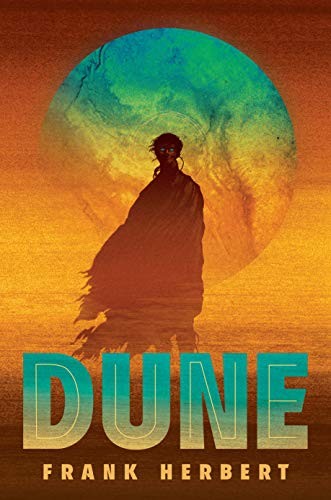
Set on the desert planet Arrakis, Dune is the story of the boy Paul Atreides, …
Strengths
Dune, put simply, defines 'Space Opera'. The scope and depth of the world that Herbert was able to present within these pages is simply remarkable. Providing a strong contrast to The Wheel of Time, another often lauded titan of world building, I felt that I had begun to understand the world, its scale and cultures, within the first half of the book. Yet, I remain cognisant of the fact that there is so much more to explore. Throughout Dune we explore the cultures of the Fremen, the Atreides and the Harkonnens to some depth, but this is coupled with an incredible political and religious system. The world felt real.
A clear dichotomy between men and women, and their roles, is demonstrated with consistency throughout Dune. However, that is not to say that the book is lacking in either male or female powerful characters. Rather, Herbert demonstrates great mastery …
Strengths
Dune, put simply, defines 'Space Opera'. The scope and depth of the world that Herbert was able to present within these pages is simply remarkable. Providing a strong contrast to The Wheel of Time, another often lauded titan of world building, I felt that I had begun to understand the world, its scale and cultures, within the first half of the book. Yet, I remain cognisant of the fact that there is so much more to explore. Throughout Dune we explore the cultures of the Fremen, the Atreides and the Harkonnens to some depth, but this is coupled with an incredible political and religious system. The world felt real.
A clear dichotomy between men and women, and their roles, is demonstrated with consistency throughout Dune. However, that is not to say that the book is lacking in either male or female powerful characters. Rather, Herbert demonstrates great mastery of both feminine and masculine power (at least, within the context of this world.) The Bene Gesserit represent a subtle, feminine power through politic, deception and hidden control. This is embodied in the character of Jessica, whose choices throughout the novel arguably cause most of the events, even though she never asserts her power physically. This discipline is contrasted with the Mentats, who are shown to attempt cold, overt rationality, and the male house and tribal leaders, who are shown to prefer physical aggression in attempts to gain and maintain power. Herbert's use of these gender differences throughout the novel provides a great sense of intrigue and complexity, as it was rarely clear who is actually driving the events.
Weaknesses
Though I did give this book 5 stars, I do recognise that some aspects were weaker than others. Firstly, the 'bad guys' opposing our protagonist(s) were basically the most campy archetypal 'bad guys' you could get. They raped young boys, held gladiator fights and killed family members. Weirdly, the 'good guys' didn't exactly contrast this cartoonish representation, as great complexity was shown in their virtue and motivations. Secondly, the pacing was also a little odd, with the last third of the book seeming to contain far more action that the first two. And finally, since the Dune was written in the 60s, there are definitely some characterisations and writing styles that are starting to show their age to a modern reader, but I think that going into the book with the awareness that it was written in the 60s pretty much negates any of those anachronisms.

There is a Wild Man who lives in the deep quiet of Greenhollow, and he …
Strengths
The world building and exploration of English folklore was generally fascinating, though not something I'm able to fact check. The use of folklore to drive the plot and characters was also skilfully accomplished, and I found myself invested in the various powers and magics of the wood. The protagonist, especially, was a fascinating man, whose sense of age and wisdom were well conveyed.
Weaknesses
The romance in this just felt hollow (get it, like a tree?). Most of the 'romance' in this book is just the protagonist remarking that the love interest has propositioned him a couple of times, or that he's cute. I found there to be far too little development of the actual relationship between the two, especially given the revelation that Silver had been using the protagonist mainly for research. This called any of their previously interesting/romantic interactions into question.
The pacing also felt a bit …
Strengths
The world building and exploration of English folklore was generally fascinating, though not something I'm able to fact check. The use of folklore to drive the plot and characters was also skilfully accomplished, and I found myself invested in the various powers and magics of the wood. The protagonist, especially, was a fascinating man, whose sense of age and wisdom were well conveyed.
Weaknesses
The romance in this just felt hollow (get it, like a tree?). Most of the 'romance' in this book is just the protagonist remarking that the love interest has propositioned him a couple of times, or that he's cute. I found there to be far too little development of the actual relationship between the two, especially given the revelation that Silver had been using the protagonist mainly for research. This called any of their previously interesting/romantic interactions into question.
The pacing also felt a bit odd. The pinnacle of this book seemed to be split into two parts, and not just in the sense of their being multiple climaxes as a plot device, but that the climax was literally put on pause because Silver felt like it, once again calling into question the supposed romantic relationship that had developed between the characters. .
In sum,
This story, as shown by my three star rating, was just okay. I wouldn't not recommend this book, but it certainly won't be hitting any of my most recommended or favourite books. For a short read, it is relatively worthwhile if you'd like to explore a bit of folklore