Reviews and Comments

brainworm

brainworm@books.theunseen.city

Joined 3 years, 1 month ago

Ahoy 👋 Only listing books I have actually read. My aims in using Bookwyrm are: 1. to enable asynchronous book clubs (i.e. swap read-lists, see if anything has already been read, discuss) and, 2. to prompt me to write reviews, to consolidate learning.

Ratings are for future me, not universal judgements 🕊️ Approximate meanings: * ★☆☆☆☆ Terrible. I regret taking the the time to read this. * ★★☆☆☆ Bad. Would rather have been meditating/running. * ★★⯪☆☆ Pass. Just worth reading, not more. * ★★★☆☆ Good. Worth reading, even if only once. Not much more to say. * ★★★⯪☆ Very good. Some notable form or content. Lasting impact, if small. * ★★★★☆ Excellent. Grateful that someone took the effort to write this, sad to think that certain other people might not read. * ★★★★⯪ Outstanding. Unlocked new perspectives on life, released new emotions, will re-read or reference in future. * ★★★★★ (Not giving this to anything because I'm a Bayesian.)

This link opens in a pop-up window

David Grann: The Wager (2023, Knopf Doubleday Publishing Group)

From the #1 New York Times bestselling author of Killers of the Flower Moon, a …

Three cheers for Vitamin C

Fundamentally a history book, but written with enough narrative to feel like a novel. I'm not sure whether it's better classed as tragedy or horror: the fevered dreams of empire, the cruelty of feudalism-cum-capitalism, the menace of typhoid and scurvy, the genocide of colonialism, the hypocrisy of Christianity, the animistic forces of hunger and thirst...

Yet as skillfully as Nabokov in "Lolita", Grann's explanation of this world and its logic, the real characters and their motivations, succeeded in getting me to empathize with them all: none angels, none demons.

The technical details of the different situations are described in vivid detail: how the men-at-war (battle ships) were created and organized into "floating castles", how the survivors of the ship-wrecks set up camp, and how the Kawésqar people — who saved the survivors time-and-again — lead their lives.

The organizational and legal details were particularly interesting. That "the …

Rick Falkvinge: Swarmwise (Paperback, 2013, CreateSpace Independent Publishing Platform, Createspace Independent Publishing Platform)

Combining hierarchy & movement to found the Pirate Party and gain a seat at the EU Parliament.

(Writing this review from memory almost 10 years after reading!)

Falkvinge writes his personal history of the Swedish Pirate Party, from founding in 2006 (the first Pirate Party) to gaining a seat at the EU elections in 2009.

It is a deeply pragmatic book. The process of founding a Party + Movement is non-trivial, and since it is a mixed strategy, requires compromise. The approach is described as having a centralized "scaffold" (of people in salaried or elected positions) which activists act from. The "3 Pirate" rule was an interesting innovation, where activists could make decisions in the name of the Pirate Party if 2 others agreed with them. This significantly decentralized power and enabled lots of creative actions. Still, the mostly centralized scaffold of party staff were able to make rapid and bold actions of their own, while consulting with activists, not getting held back.

A …

Dan Gardner, Bent Flyvbjerg: How Big Things Get Done (2023, Crown/Archetype)

.... with really good planning and experience

Well, I made a paper model after reading this one and talked to a bunch of people about it as I was reading it.

In the subtitle, "the surprising factors that determine the fate of every project", the "surprising" is clickbait. But that's a good thing I guess, maybe means I've learned something over the years. Nevertheless, the book is dramatic, interesting and quite readable.

Flyvbjerg, a professor and consultant for megaproject management, compiled a huge database of megaprojects. This book seems to be the fit-for-public compilation of his research an experience. Packed with fascinating stories of great success (Empire State building, Guggenheim Bilbao) and hard(ly) success (Sydney Opera House, Heaven's Gate), interviews with Edwin Catmull, Franck Gehry and Daniel Kahnemann.

I think the practical point that stood out most for me is that the most accurate forecasting method is to refer to other completed projects of …

Paul W.B. Atkins PhD, David Sloan Wilson PhD, Steven C. Hayes PhD, Richard M Ryan Phd: Prosocial (Paperback, 2019, Context Press)

Whether you work in business or schools, volunteer in neighborhoods or church organizations, or are …

Commons theory + evolutionary theory + mindfulness

This is a book about working in groups, and while the target audience seem to be companies most of the content is transferrable to non-profits or anti-profits.

The 3 co-authors are all guys with PhDs, psychologists. Hayes seems to be one of the main people behind Acceptance and Commitment Therapy, which seems to be the Cognitive Behavioural Therapy + Mindfulness.

The theoretical basis of the book is multi level selection (evolutionary) theory (MLS)+ commons theory. MLS expands Darwin's model of genetic & epigenetic variability, heritability and fitness to include learning & culture. They claim this expanded model accounts for social innovations and that the 'fitness' of humans really can't be accounted for if learning and culture are ignored. Apparently MLS is the mainstream evolutionary theory, so we can all stop straw-manning "hard geneticists" and their "selfish gene".

I skimmed the chapter on commons theory, but I think …

A tale of mystical adventure

It's an adventure book, and a good one at that. It follow the life of two young men, boys, who meet at a monastery. One dedicates himself to the monastic order and convinces the other his calling is elsewhere. It's about art, self-discovery, the value of authenticity, and many other things. I read it in the original German, which was a bit tricky, but it has some beautiful words that don't get used so much (e.g. "Nichtloskommenkönnen".

I read Hesse's "Siddartha" about a year before this. This is a different book, but has some nice parallels. I can imagine I'd give it 4+ stars if I'd read it before I was 20 or lead a more normal life. It is beautiful and well worth a read.

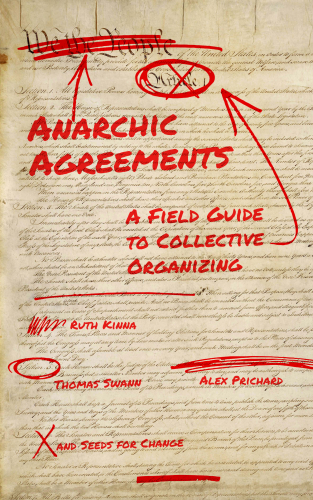
Ruth Kinna, Alex Prichard, Thomas Swann: Anarchic Agreements (2022, PM Press)

A new world is possible and not just in our hearts. Anarchic Agreements is a …

Practical pamphlet for constitutionalizing

This is a short, easily understandable guide aimed at horizontalist groups. Prefigurative, not prescriptive, with lot's of relatable examples, and at the end a large appendix of constitutional documents historical and modern to gain inspiration from.

I am glad this exists! It makes the case for building lasting structures, institutions, and that governance (via constitution) is a strong support to that.

There are times where I wish it was a bit more prescriptive, and had a more positive light on leadership and specializing which I now believe to be not only inevitable, but actively desirable.

Overall, a lot of good common sense for organizing, and a great entry for people who are newer to governance.

Peter Kropotkin: The Conquest Of Bread (Paperback, 2007, Kessinger Publishing, LLC)

Peter Kropotkin's "The Conquest of Bread", along with his "Fields Factories and Workshops" was the …

An aged, optimistic, steampunk, anarcho-communist manifesto

I received a printed copy from a friend after saying I hadn't read any classic anarchist literature.

Published in 1892, the book is as much a political commentary on that time as it is the conception for how things should change. The fact that clothing is a recurring issue, that the common people are often in rags and tatters, is unrelatable with the state of manufacturing today. In Kropotkin's time the machines where on the ascendant, but the outstanding demand was so great that people still went wanting. Much more relatable was the issue of rent. At one point he talks of people spending up to half of their income on rent, and I already know of cases where people pay more.

Thus it's interesting to see that a lot of the material want that Kropotkin was motivated by has been improved without an anarcho-communist revolution (his main …

Srdja Popovic: Blueprint for revolution (2015)

"In Blueprint for Revolution, Srdja Popovic outlines his philosophy for implementing peaceful world change and …

Readable, relatable and actionable

I started this while travelling and finished it in a couple days.

It's about Otpor! - the nonviolent and creative movement that helped topple the dictatorship of Milosevic in Serbia in the early 2000s (and NATO bombing Belgrade...)

But it's also about many other movements and actions across the world in the 20th century, with many events and interesting tactics I'd never heard of. Popovic makes analysis across these movements and gives ~10 broad advices.

The writing does at times get a bit annoying: he makes it sound like Otpor! and the Serbs figured everything out and he seems to like throwing leftists under the bus.

Nevertheless I think he makes a very good case for nonviolence and offers pragmatic advice: find points, however small, which 99% percent of population support (or aren't against), creatively campaign to win those & use the momentum and credibility from …

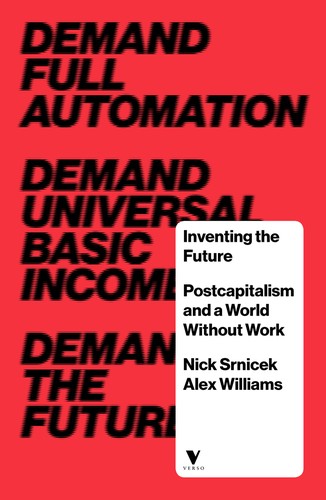
Nick Srnicek, Alex Williams: Inventing the Future (Paperback, 2015, Verso Books)

A major new manifesto for a high-tech future free from work

Neo-liberalism isn’t working. …

Review of 'Inventing the Future', 2015

TL;DR: work is dying, and we should help hospice it. Automation is actually good, capitalism isn't, and we have to address both at once. The struggle for a better world must include strategies which are long-term and wide-scoped in addition to the more familiar spectacular events we associate with leftist action. Another world is coming, we can help shape which.

I read this book 10 years after it was published; the analysis, arguments and proposals presented in the book seem to have only matured with time.

The book incorporates a lot of Marx (analysis of capitalism) and Gramsci ((counter-)hegemony). Piketty, Žižek and Fisher are mentioned. The book still very much "belongs" to the authors. Although this is a book of politics, analysis and theory, yet goes surprisingly far into practice.

It begins with a critical analysis of the contemporary left, coining the term "folk-political" to describe a …

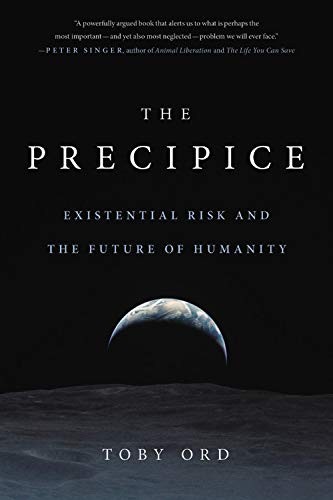
Toby Ord: The Precipice (Paperback, 2021, Hachette Books)

Long-termism for beginners

Seems to be 'the' long-termist book. Very, very utilitarian. Made me feel relatively safe about meteor strikes and volcanoes. Even made me feel a bit less worried about nuclear armageddon, which I previously thought would be a complete and total show-stopper. I feel he downplayed the badness of rapid biospheric destruction & atmospheric change.

The conclusion that AI threat outstrips all other existential risks is something I still can't get on board with. In any case, it seems enough EA people (the presumed target audience) agree and are on the case. That leaves the rest of us to battle the current and progressing crises :)

Definitely worth a read. The span and scope Ord addresses does invoke feelings of awe and compassion. 3 stars because it is politico-philosophical book, but reading it has lead to me changing very little.