
![Joseph C. Jenkins, Joseph C Jenkins: The humanure handbook (Paperback, 2005, Joseph Jenkins, Inc., [Distributed by] Chelsea Green Pub., Jenkins Publishing)](/images/covers/b842fdb8-c219-4099-8c7d-da4b1e7c2ed9.jpeg)
Contemporary evolutionary theory X Commons theory? Let's see!
User Profile

Ahoy 👋 Only listing books I have actually read. My aims in using Bookwyrm are: 1. to enable asynchronous book clubs (i.e. swap read-lists, see if anything has already been read, discuss) and, 2. to prompt me to write reviews, to consolidate learning.
Ratings are for future me, not universal judgements 🕊️ Approximate meanings: * ★☆☆☆☆ Terrible. I regret taking the the time to read this. * ★★☆☆☆ Bad. Would rather have been meditating/running. * ★★⯪☆☆ Pass. Just worth reading, not more. * ★★★☆☆ Good. Worth reading, even if only once. Not much more to say. * ★★★⯪☆ Very good. Some notable form or content. Lasting impact, if small. * ★★★★☆ Excellent. Grateful that someone took the effort to write this, sad to think that certain other people might not read. * ★★★★⯪ Outstanding. Unlocked new perspectives on life, released new emotions, will re-read or reference in future. * ★★★★★ — (Not giving this to anything because I'm a Bayesian.)
This link opens in a pop-up window
brainworm's books
Currently Reading


Read (View all 116)



User Activity
RSS feed Back
brainworm finished reading The humanure handbook by Joseph C. Jenkins
brainworm started reading Prosocial by Paul W.B. Atkins PhD
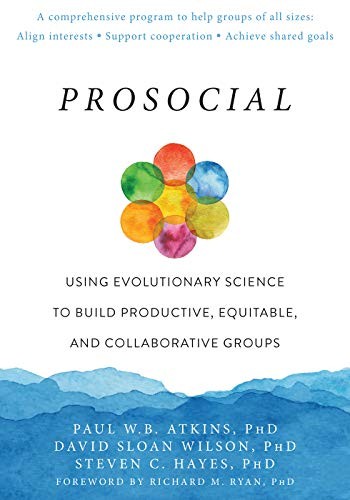
Whether you work in business or schools, volunteer in neighborhoods or church organizations, or are …
Contemporary evolutionary theory X Commons theory? Let's see!
brainworm reviewed Narziß und Goldmund by Hermann Hesse
A tale of mystical adventure
4 stars
It's an adventure book, and a good one at that. It follow the life of two young men, boys, who meet at a monastery. One dedicates himself to the monastic order and convinces the other his calling is elsewhere. It's about art, self-discovery, the value of authenticity, and many other things. I read it in the original German, which was a bit tricky, but it has some beautiful words that don't get used so much (e.g. "Nichtloskommenkönnen".
I read Hesse's "Siddartha" about a year before this. This is a different book, but has some nice parallels. I can imagine I'd give it 4+ stars if I'd read it before I was 20 or lead a more normal life. It is beautiful and well worth a read.
It's an adventure book, and a good one at that. It follow the life of two young men, boys, who meet at a monastery. One dedicates himself to the monastic order and convinces the other his calling is elsewhere. It's about art, self-discovery, the value of authenticity, and many other things. I read it in the original German, which was a bit tricky, but it has some beautiful words that don't get used so much (e.g. "Nichtloskommenkönnen".
I read Hesse's "Siddartha" about a year before this. This is a different book, but has some nice parallels. I can imagine I'd give it 4+ stars if I'd read it before I was 20 or lead a more normal life. It is beautiful and well worth a read.
brainworm finished reading Narziß und Goldmund by Hermann Hesse
brainworm reviewed Anarchic Agreements by Ruth Kinna
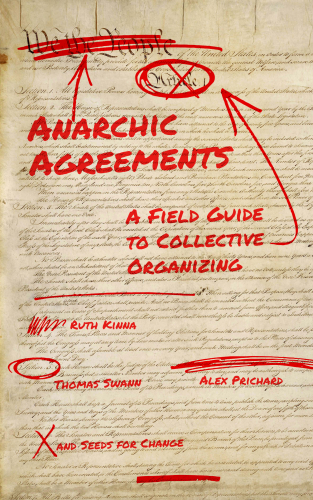
A new world is possible and not just in our hearts. Anarchic Agreements is a …
Practical pamphlet for constitutionalizing
4 stars
This is a short, easily understandable guide aimed at horizontalist groups. Prefigurative, not prescriptive, with lot's of relatable examples, and at the end a large appendix of constitutional documents historical and modern to gain inspiration from.
I am glad this exists! It makes the case for building lasting structures, institutions, and that governance (via constitution) is a strong support to that.
There are times where I wish it was a bit more prescriptive, and had a more positive light on leadership and specializing which I now believe to be not only inevitable, but actively desirable.
Overall, a lot of good common sense for organizing, and a great entry for people who are newer to governance.
This is a short, easily understandable guide aimed at horizontalist groups. Prefigurative, not prescriptive, with lot's of relatable examples, and at the end a large appendix of constitutional documents historical and modern to gain inspiration from.
I am glad this exists! It makes the case for building lasting structures, institutions, and that governance (via constitution) is a strong support to that.
There are times where I wish it was a bit more prescriptive, and had a more positive light on leadership and specializing which I now believe to be not only inevitable, but actively desirable.
Overall, a lot of good common sense for organizing, and a great entry for people who are newer to governance.
brainworm finished reading Anarchic Agreements by Ruth Kinna
Anarchic Agreements by Ruth Kinna, Alex Prichard, Thomas Swann
A new world is possible and not just in our hearts. Anarchic Agreements is a quintessential field guide for the …
brainworm reviewed The Conquest Of Bread by Peter Kropotkin

Peter Kropotkin's "The Conquest of Bread", along with his "Fields Factories and Workshops" was the …
An aged, optimistic, steampunk, anarcho-communist manifesto
4 stars
I received a printed copy from a friend after saying I hadn't read any classic anarchist literature.
Published in 1892, the book is as much a political commentary on that time as it is the conception for how things should change. The fact that clothing is a recurring issue, that the common people are often in rags and tatters, is unrelatable with the state of manufacturing today. In Kropotkin's time the machines where on the ascendant, but the outstanding demand was so great that people still went wanting. Much more relatable was the issue of rent. At one point he talks of people spending up to half of their income on rent, and I already know of cases where people pay more.
Thus it's interesting to see that a lot of the material want that Kropotkin was motivated by has been improved without an anarcho-communist revolution (his main …
I received a printed copy from a friend after saying I hadn't read any classic anarchist literature.
Published in 1892, the book is as much a political commentary on that time as it is the conception for how things should change. The fact that clothing is a recurring issue, that the common people are often in rags and tatters, is unrelatable with the state of manufacturing today. In Kropotkin's time the machines where on the ascendant, but the outstanding demand was so great that people still went wanting. Much more relatable was the issue of rent. At one point he talks of people spending up to half of their income on rent, and I already know of cases where people pay more.
Thus it's interesting to see that a lot of the material want that Kropotkin was motivated by has been improved without an anarcho-communist revolution (his main point of agitation) but through social and liberal democracy, even partly neoliberalism (i.e. distribution of electronics.)
Workers are treated almost as if they are noble savages. While I agree that people are a hell of a lot better at dealing with adversity than we all realize, I do think Kropotkin's assumptions are overly optimistic. There are is a diversity of personality in every strata of society.
But let me say positively: this book's aim is to prove that a "better world is possible", which seems to have been in doubt then as now. It seems many elite thought that production could not meet all human demands, and that therefore there had to be elite and poverty. Kropotkin goes through branches of industry, political arrangements and technological developments to prove - with significant use of examples and figures - that all human needs can certainly be provided for.
As for "steampunk": the steam engine was there, the internal combustion engine not yet. I have never in my life read something by an anarchist/leftist/etc that was so enthusiastic about coal! And fair enough, at the time it must have seemed miraculous. Grapes in Scotland!:
"In the north of England, on the Scotch frontier, where coal only costs 3 shilling a ton at the pit's mouth, they have long since taken to growing hot house grapes."
But how much coal? Talking about a greenhouse market garden:
"... they obtain 143 tons of fruit and early vegetables, using for this extraordinary culture less than 1000 tons of coal."
Yikes, 10:1 ratio of coal to veggies... What was that about veganism? Oh yeah, that was also not a thing then:
"... the three principal products bread, meat and milk."
Overall, the book is optimistic despite bubbling over into the idealistic. Feminism does present, but a concern for non-human life is not spoken of. It motivates struggle, but does little to articulate how. Definitely worth a read for people interested in political history.
And as a finishing point, and testament to Kropotkin's technological optimism, he predicts solar panels:
"A Mouchot of the future will invent a machine to guide the rays of the sun and make them work, so that we shall no longer seek sun-heat stored in coal in the depths of the earth."
brainworm finished reading The Conquest Of Bread by Peter Kropotkin
The Conquest Of Bread by Peter Kropotkin
Peter Kropotkin's "The Conquest of Bread", along with his "Fields Factories and Workshops" was the result of his extensive research …
brainworm finished reading Time Traveller's wife by Audrey Niffenger

Audrey Niffenger: Time Traveller's wife (2003, MacAdam/Cage)
Time Traveller's wife by Audrey Niffenger
It is a love story about Henry, a man, with a genetic disorder that causes him to time travel unpredictably, …
brainworm finished reading Love in the Time of Cholera by Gabriel García Márquez

Love in the Time of Cholera by Gabriel García Márquez
Love in the Time of Cholera (Spanish: El amor en los tiempos del cólera) is a novel written in Spanish …

Le Patient Anglais - L'Homme Flambe - The English Patient (Fiction, Poetry & Drama) by Michael Ondaatje
With ravishing beauty and unsettling intelligence, Michael Ondaatje's Booker Prize-winning novel traces the intersection of four damaged lives in an …
brainworm finished reading TiHKAL by Alexander T. Shulgin

TiHKAL by Alexander T. Shulgin, Ann Shulgin
By Alexander Shulgin and Ann Shulgin. This is the continuation of the love story from PIHKAL: A Chemical Love Story …
brainworm finished reading Doors of Perception by Aldous Huxley

brainworm finished reading To Kill a Mockingbird (To Kill a Mockingbird, #1) by Harper Lee
To Kill a Mockingbird (To Kill a Mockingbird, #1) by Harper Lee
One of the best-loved stories of all time, To Kill a Mockingbird has been translated into more than 40 languages, …