

Mild spoiler alert!
Shadow of a Dead Star is a futuristic detective story, set in a world where technological enhancements to the human body and mind have become commonplace, at least in certain portions of humanity: cops (legally) and criminals (illegally). The main character is, interestingly, an unenhanced cop, working in the good old way by intuition. And boy, does he get himself into a fix! Not just a single fix, but a rapidly developing sequence, each time with higher stakes.
Indeed, rather than being a traditional detective tale about a single case that gets solved toward the end, this story is divided into a successive ladder of cases, each, when resolved, leading toward the next one, and ultimately into an intriguing sequel. [spoiler]Starting with the ethical issues of modified some unfortunate girls' brains to turn them into highly lucrative sex slaves, the story leads on to military applications, to …
User Profile

An immigrant from Ukraine, now residing near Philadelphia. Software developer by day, science fiction author whenever time allows. PhD in Math from the MIT. Graduate of the Viable Paradise and Futurescapes writing workshops. Author of Pink Noise: A Posthuman Tale.
This link opens in a pop-up window
Leo Korogodski's books
User Activity
RSS feed Back
Leo Korogodski rated Walking the Clouds: 5 stars
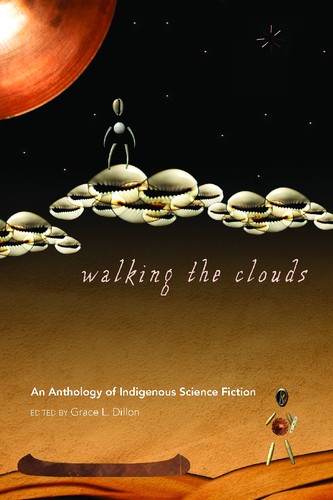
Walking the Clouds
In this first-ever anthology of Indigenous science fiction Grace Dillon collects some of the finest examples of the craft with …
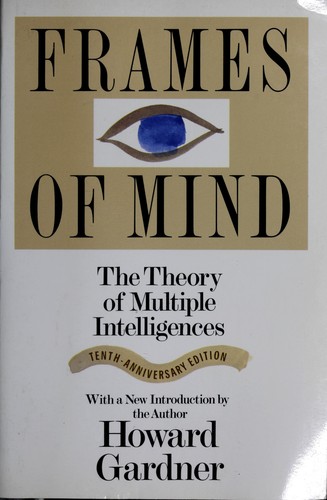
Leo Korogodski rated Frames of mind: 5 stars
Leo Korogodski rated Norse Mythology: 5 stars
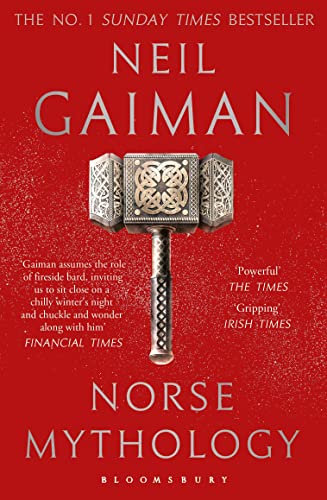
Norse Mythology by Neil Gaiman
Neil Gaiman has long been inspired by ancient mythology in creating the fantastical realms of his fiction. Now he turns …
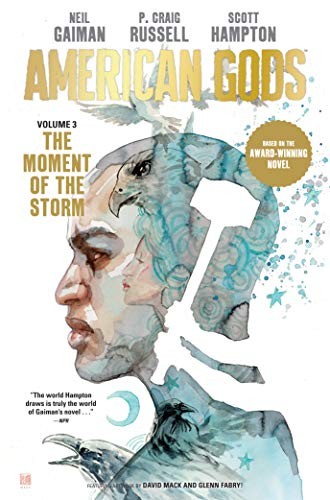
Leo Korogodski rated American Gods Volume 3: 5 stars
Leo Korogodski rated The society of mind: 5 stars
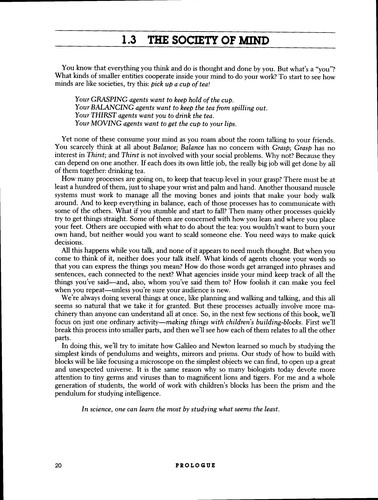
The society of mind by Marvin Minsky (Touchstone book)
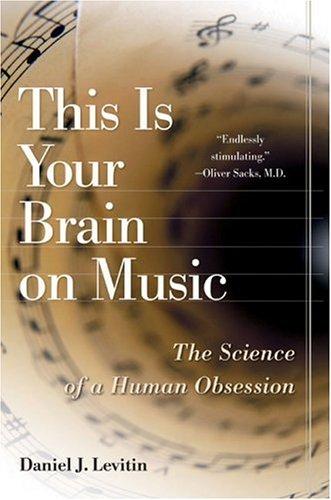
Leo Korogodski rated This Is Your Brain on Music: 5 stars
Leo Korogodski reviewed Shadow Of A Dead Star by Michael Shean (The Wonderland Cycle, #1)
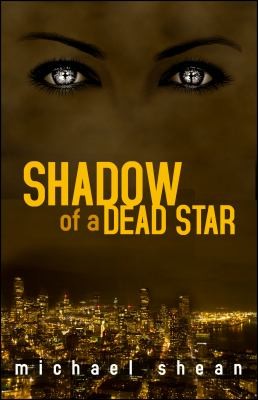
Review of 'Shadow Of A Dead Star Book One Of The Wonderland Cycle' on 'Goodreads'
4 stars
Mild spoiler alert!
Shadow of a Dead Star is a futuristic detective story, set in a world where technological enhancements to the human body and mind have become commonplace, at least in certain portions of humanity: cops (legally) and criminals (illegally). The main character is, interestingly, an unenhanced cop, working in the good old way by intuition. And boy, does he get himself into a fix! Not just a single fix, but a rapidly developing sequence, each time with higher stakes.
Indeed, rather than being a traditional detective tale about a single case that gets solved toward the end, this story is divided into a successive ladder of cases, each, when resolved, leading toward the next one, and ultimately into an intriguing sequel. [spoiler]Starting with the ethical issues of modified some unfortunate girls' brains to turn them into highly lucrative sex slaves, the story leads on to military applications, to zombies (yes, really!), to aliens.[/spoiler] As a result, the ending lacks the resolution clarity, leaving too many loose ends flapping in the wind, and you don't get to appreciate the relevance of the book's title until the very end. But the perspective that opens then! Considering that several cases actually end up resolved (and quite dramatically), it may be a decent trade-off.
With a well imagined future, good characterization, and fast pace, this book will satisfy many a science fiction fan.
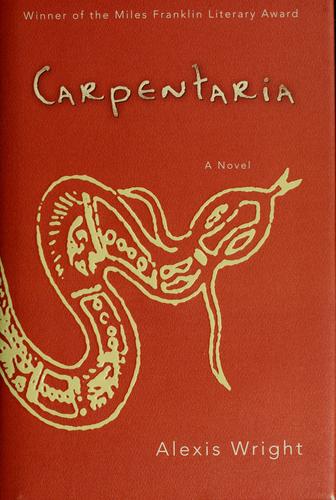
Leo Korogodski rated Carpentaria: 4 stars
Leo Korogodski reviewed The Immortality Virus by Christine Amsden

Review of 'The Immortality Virus' on 'Goodreads'
4 stars
"Only when life is short can one imagine that love lasts forever." This line sums up one of the major themes of The Immortality Virus by Christine Amsden. Set in the far future, when the humanity stopped aging, this story explores such deep subjects as the price and benefits of immortality, while at the same time keeping up the break-neck pace and turn-the-pages feel of a good science fiction thriller.
This is no mean feat to achieve. It helps that the plot resembles the familiar mold of private investigation stories. The main character, Grace Harper, is a private detective, who was once upon a time a member of the police force but now is blacklisted by the powerful Establishment. For many years (really, decades!) specializing on finding missing people, she's asked to find no one less than the scientist responsible for the virus that had stopped aging 400 years ago.
…
"Only when life is short can one imagine that love lasts forever." This line sums up one of the major themes of The Immortality Virus by Christine Amsden. Set in the far future, when the humanity stopped aging, this story explores such deep subjects as the price and benefits of immortality, while at the same time keeping up the break-neck pace and turn-the-pages feel of a good science fiction thriller.
This is no mean feat to achieve. It helps that the plot resembles the familiar mold of private investigation stories. The main character, Grace Harper, is a private detective, who was once upon a time a member of the police force but now is blacklisted by the powerful Establishment. For many years (really, decades!) specializing on finding missing people, she's asked to find no one less than the scientist responsible for the virus that had stopped aging 400 years ago.
During her investigation, she confronts the issues of the benefits and drawbacks of putting stop to aging. Herself a 130-years old woman, she looks like 25, as almost everyone in the world does, including her own mother. Her generation, like so many others, have forgotten what it meant to age, while facing the daily horrors of overpopulation. Although no longer aging beyond 25, the people still can die from violence, disease, or--as so many do--from hunger. Only the select few actually get to live to a ripe old age. The gulf between the rich and poor has increased by leaps and bounds. Driven by despair, many people beg to be taken into slavery to work the farms. Some are kidnapped and forced into slavery.
Deciding whether aging should be reintroduced is no easy thing. Predictably, Grace is immersed into power struggles between many forces, from the pro-immortality Establishment to the select rich trying to bring aging back while keeping themselves still immortal to the pro-death terrorists who bomb the crowds pretty much at random just to decrease population, as well as those bent on reunification of the States. But, poignantly, the big political issues are paralleled by very personal ones, as Grace struggles with the old and new loves, and with her decision never to have children.
Overall, I find the book to be successful. The world has a convincing mix of futuristic and throwback elements, the latter magnifying the sense of a decaying society while allowing to keep a sense of familiarity so far into the future. I see it as a problem, though, that Grace at times comes across as less than professional. In particular, I found it hard to believe that someone that had been seeking missing persons for something like six decades (!) had never visited a farm, whereas the farmers were notorious for kidnapping people (a fact that she still thinks is a rumor early in the story). At times, she exudes the "everyman" feel, which may be beneficial for grounding the reader in the story's world yet clashes with her supposed image of a seasoned veteran.
That said, the pace picks up quickly and does not let out till the end, through many a change of fortune, as we get to visit all sorts of locales, from the futuristic city-state to the slavery farms to the terrorist underground. Personally, I was distracted at times by the fact that everyone seems to be after Grace while she doesn't really know much at all. I kind of like the idea that she causes havoc not because of holding the keys to the humankind's future but because all kinds of forces think she may. Moreover, the real key to the story lies not on the political but on the personal level. So, when Grace is tortured for information, it's the fates of her loved ones that she truly holds in her hands, not the fate of the world, which remains to be resolved in a potential sequel that this story asks for.
Recommended.
Leo Korogodski rated Chopin in the attic: 5 stars
Leo Korogodski reviewed Mistwood by Leah Cypess
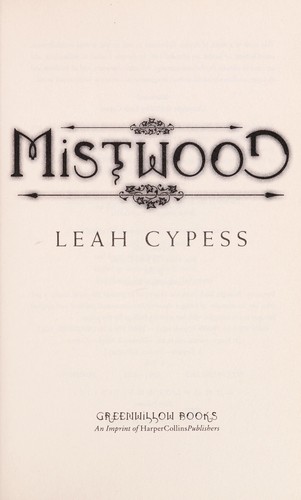
Brought back from the Mistwood to protect the royal family, a girl who has no …
Review of 'Mistwood' on 'Goodreads'
5 stars
I purchased this book for my daughter but ended up reading it myself too. What makes the book YA is not so much the youth of the main characters as the theme of a young woman finding her own place in an unfamiliar world. However, the story is full of adult themes (in the sense of depth and honesty) that would appeal to mature readers. The ending is especially striking. I had many serious and interesting discussions with my daughter on the choices made the protagonist toward the end. Indeed, the matter stays in mind.
The story has a certain contest-of-wills, duel-of-minds character, much of it revolving around the character of Clarisse, who's among the most memorable secondary characters in the books I've read (and I have read a lot).
I purchased this book for my daughter but ended up reading it myself too. What makes the book YA is not so much the youth of the main characters as the theme of a young woman finding her own place in an unfamiliar world. However, the story is full of adult themes (in the sense of depth and honesty) that would appeal to mature readers. The ending is especially striking. I had many serious and interesting discussions with my daughter on the choices made the protagonist toward the end. Indeed, the matter stays in mind.
The story has a certain contest-of-wills, duel-of-minds character, much of it revolving around the character of Clarisse, who's among the most memorable secondary characters in the books I've read (and I have read a lot).
Leo Korogodski reviewed Nightspell by Leah Cypess
Review of 'Nightspell' on 'Goodreads'
5 stars
Many reviews here already summarize what the story is about. Being a writer myself, I could go at length on Nightspell's excellent worldbuilding and plot structure. Instead, I'm going to offer two reader reactions.
My daughter picked up Nightspell after having thoroughly enjoyed Mistwood by the same author. Her initial reaction was less enthusiastic, apparently because it had been easier for her to identify with the main character in Mistwood right from the beginning. So the first quarter of the book went along slowly. But then, she got hooked and finished the last three quarters in a single all-night reading session. She slept through the next day, waking up toward the evening (she's on vacation), in a pattern that made me ask her if she was going to emigrate to Ghostland.
More recently, I had a dream of visiting my daughter's college dormitory as a ghost. For some reason, her …
Many reviews here already summarize what the story is about. Being a writer myself, I could go at length on Nightspell's excellent worldbuilding and plot structure. Instead, I'm going to offer two reader reactions.
My daughter picked up Nightspell after having thoroughly enjoyed Mistwood by the same author. Her initial reaction was less enthusiastic, apparently because it had been easier for her to identify with the main character in Mistwood right from the beginning. So the first quarter of the book went along slowly. But then, she got hooked and finished the last three quarters in a single all-night reading session. She slept through the next day, waking up toward the evening (she's on vacation), in a pattern that made me ask her if she was going to emigrate to Ghostland.
More recently, I had a dream of visiting my daughter's college dormitory as a ghost. For some reason, her roommate was totally freaked out. I regret not having enough presence of mind (hey, I was dreaming!) to tell her that it was perfectly normal and that she should go read Nightspell.
Leo Korogodski reviewed Zoo City by Lauren Beukes
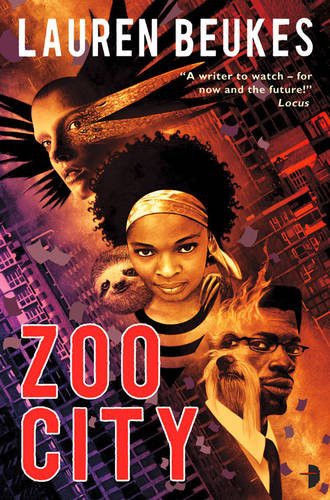
Zinzi has a talent for finding lost things.
To save herself, she’s got to …
Review of 'Zoo City' on 'Goodreads'
5 stars
Cool, dark, and gritty. Great concept, strong characterization, and uncommon setting, with potential for a series involving the same character(s). But what's the deal with glowing four-star reviews? I mean, it it's glowing, how can it possibly be any less than five stars? Yes, I can see some problems, though fairly minor (I would have expected to learn more about the Zinzi's brother's death, for example). But I'll give it five stars, if only in protest against the inexplicable practice of giving only four stars with a perfectly positive review.
Cool, dark, and gritty. Great concept, strong characterization, and uncommon setting, with potential for a series involving the same character(s). But what's the deal with glowing four-star reviews? I mean, it it's glowing, how can it possibly be any less than five stars? Yes, I can see some problems, though fairly minor (I would have expected to learn more about the Zinzi's brother's death, for example). But I'll give it five stars, if only in protest against the inexplicable practice of giving only four stars with a perfectly positive review.