jared@mathstodon.xyz rated Last Stop on Market Street: 3 stars
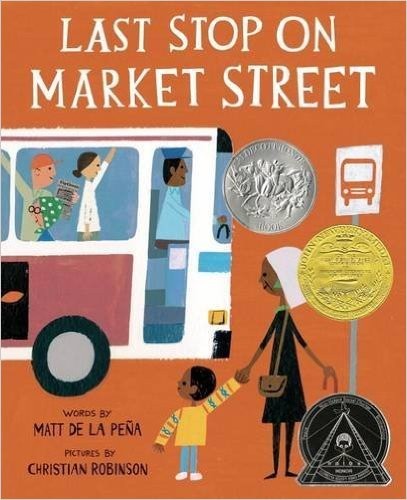
Last Stop on Market Street by Matt de la Peña, Christian Robinson
Every Sunday after church, CJ and his grandma ride the bus across town. But today, CJ wonders why they don't …

Software Engineer. Wannabe Mathematician. Itinerant Philosopher .
This link opens in a pop-up window
Every Sunday after church, CJ and his grandma ride the bus across town. But today, CJ wonders why they don't …
For those who could read between the lines, the censored news out of China was terrifying. But the president insisted …
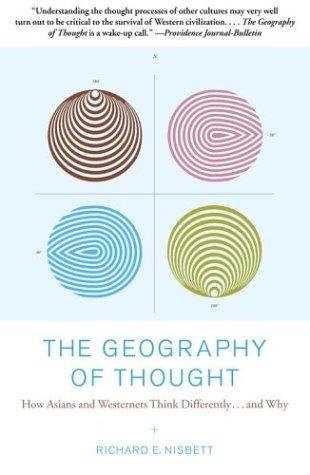
I think this is an important topic yet horrendously treated by people who really should work harder at it, given their tenure and wide readership. You always need to be careful with a premise like Nisbett investigates in this book. One litmus test: “what does the author mean by Asian and Western?”
For Nisbett, “Asian” appears to mean Chinese, Japanese, and Korean. “Chinese”, in turn, means Han. All other nationalities and ethnicities within each modern nation state are ignored.
Likewise, “Western” primarily means Anglophone. Nisbett starts with a tepid discussion of “Greek thought” — better described as Athenian and Aristotelian thought as received through the Italian Renaissance and English Premoderns, again ignoring hundreds of distinct ideological lineages — and jumps to the Italian merchant states and then again into the late 20th century.
So, it seems Nisbett means, by the words “Asian” and “Western”, those stereotypes that already have a …
I think this is an important topic yet horrendously treated by people who really should work harder at it, given their tenure and wide readership. You always need to be careful with a premise like Nisbett investigates in this book. One litmus test: “what does the author mean by Asian and Western?”
For Nisbett, “Asian” appears to mean Chinese, Japanese, and Korean. “Chinese”, in turn, means Han. All other nationalities and ethnicities within each modern nation state are ignored.
Likewise, “Western” primarily means Anglophone. Nisbett starts with a tepid discussion of “Greek thought” — better described as Athenian and Aristotelian thought as received through the Italian Renaissance and English Premoderns, again ignoring hundreds of distinct ideological lineages — and jumps to the Italian merchant states and then again into the late 20th century.
So, it seems Nisbett means, by the words “Asian” and “Western”, those stereotypes that already have a prevalent hold on armchair psychology. There’s nothing revealing here, all bias reinforcement, and literally billions of other peoples cultural and psychological experiences are completely ignored.
I do NOT mean to indict Nisbett for being insufficiently woke. He had a good opportunity in this book to highlight some important cultural differences and compare them with a common human description of psychology— but he went pretty hard down the boring old, meaningless road of “Westerners are individualist and Asians are collectivists” instead
An exploration of the human mind's capacity for instinctive understanding about the feelings and desires of others explains how the …
One of the great masterworks of science fiction, the Foundation novels of Isaac Asimov are unsurpassed for their unique blend …
A human-centric guide to solving complex problems in engineering management, from sizing teams to handling technical debt.
There’s a …
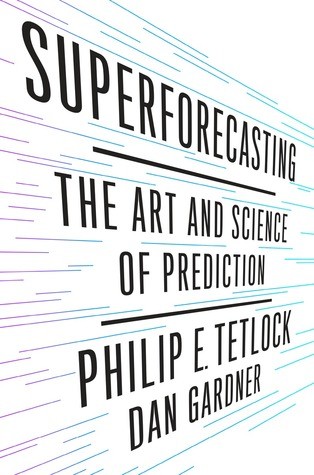
Superforecasting: The Art and Science of Prediction is a book by Philip E. Tetlock and Dan Gardner released in 2015. …
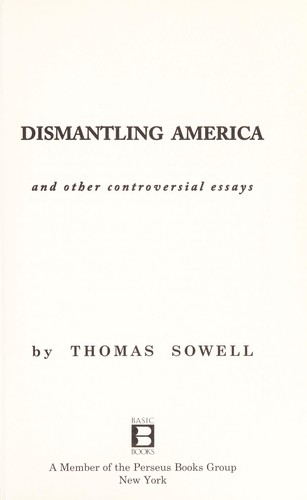
"These wide-ranging essays--on many individual political, economic, cultural and legal issues--have as a recurring underlying …
I wish I could write like Sowell. His prose is so incisive, exact, and deceptively simple. Of course I do not agree with him on all points—yet that’s really the purpose of his essays. You’re not expected to agree, you’re expected to think critically and question what preemptive conclusions you bring into any sociopolitical discussion.
Here’s the spoiler that many readers trip over: Thomas Sowell is a Black American. Left-leaning readers who know no better often accuse him of racism and “White Privilege” only to be caught embarrassingly tongue tied by this simple phenotypical fact. And because (1) Sowell is so damn smart and (2) solidly conservative/libertarian, Sowell tends to hide his racial identity with the apparent intention of catching his ideological opponents in a rhetorical trap. On this point, I think he’s right. Read his comments about being a child during the Harlem Renaissance and how all that changed …
I wish I could write like Sowell. His prose is so incisive, exact, and deceptively simple. Of course I do not agree with him on all points—yet that’s really the purpose of his essays. You’re not expected to agree, you’re expected to think critically and question what preemptive conclusions you bring into any sociopolitical discussion.
Here’s the spoiler that many readers trip over: Thomas Sowell is a Black American. Left-leaning readers who know no better often accuse him of racism and “White Privilege” only to be caught embarrassingly tongue tied by this simple phenotypical fact. And because (1) Sowell is so damn smart and (2) solidly conservative/libertarian, Sowell tends to hide his racial identity with the apparent intention of catching his ideological opponents in a rhetorical trap. On this point, I think he’s right. Read his comments about being a child during the Harlem Renaissance and how all that changed after the 1968 riots. You’ll realize there’s more deep scars in history than you realize, and it’s practically pointless to label good and bad actors.
My favorite essay in this collection is “The Fallacy of Fairness”. I think it’s technically a polemic, but the criticisms are so well nuanced that it perfectly cuts short the knee jerk reactions we’ve become accustomed to and actually makes you think, “well, what do I think would be ‘fair’?” There is no perfect answer, and I think on this Sowell exposes a critical flaw in Americans social discussion over the past half century.
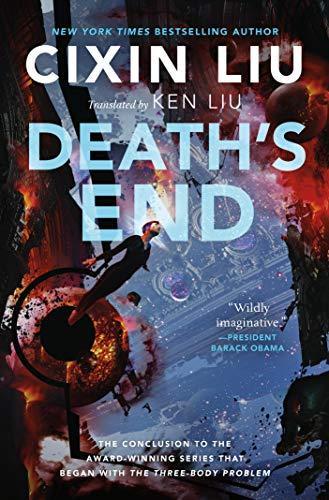
Death's End (Chinese: 死神永生, pinyin: Sǐshén yǒngshēng) is a science fiction novel by the Chinese writer Liu Cixin. It is …
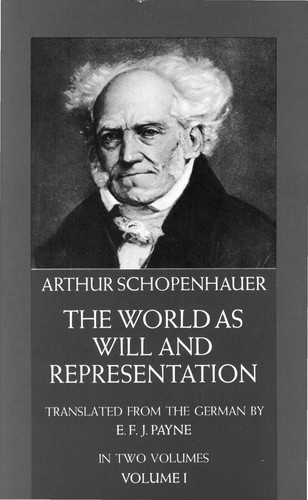
I read this so long ago, it’s cheating to mark it as “read”. So be it
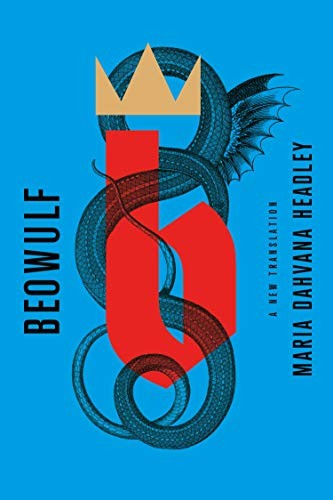
Nearly twenty years after Seamus Heaney’s translation of Beowulf—and fifty years after the translation that continues to torment high-school students …