




A refreshingly raw conversation, revealing many things about Japanese culture circa 1994 and The Wind Up Bird Chronicle. Foreshadows some of 1Q84 and Killing Commandatore
User Profile

Software Engineer. Wannabe Mathematician. Itinerant Philosopher .
This link opens in a pop-up window
jared@mathstodon.xyz's books
User Activity
RSS feed Back
jared@mathstodon.xyz rated The Last Samurai: 5 stars

Susumu Sakurai: Wasan (2018, Japanese Publishing Industry Foundation for Culture)
Wasan: the fascination of traditional Japanese mathematics by Susumu Sakurai (Japan library)
"Wasan--a unique form of Japanese mathematics--was developed during the Edo period (1603-1868), a time when the entire country was isolated …

Review of 'Haruki Murakami Goes to Meet Hayao Kawai' on 'Storygraph'
5 stars
jared@mathstodon.xyz rated The Story of a New Name: 5 stars

The Story of a New Name by Elena Ferrante
Friends Lila and Elena are now in their twenties. Marriage appears to have imprisoned Lila. Meanwhile, Elena continues her journey …
jared@mathstodon.xyz rated Those Who Leave and Those Who Stay: 4 stars
Ann Goldstein, Elena Ferrante: Those Who Leave and Those Who Stay (2014, Europa Editions, Incorporated)
Those Who Leave and Those Who Stay by Ann Goldstein, Elena Ferrante
Érase una vez dos niñas, Lenù y Lila, que nacieron en 1944 en un barrio pobre de la ciudad de …
jared@mathstodon.xyz reviewed The Factory by David Boyd

Review of 'Factory' on 'Storygraph'
3 stars
Western reviewers sometimes miss the fact that most characters and occurrences in a contemporary Japanese novel are accurate depictions of life. That’s why — as I discovered when I moved to Tokyo — authors like Haruki Murakami aren’t well regarded in Japan; they simply tell stories from everyday life. Yes, there’s a number of plot points, such as the final transformation of the narrator into a bird, that obviously are fantastic or surrealistic. Yet it’s always in the context of a perplexing or broken society; the surrealism stands in for the many emotions people cannot express in this world. Once aware that a novel like The Factory serves more realism than fantasy, I think readers (or maybe it’s just me?) may be disappointed that the book doesn’t draw its criticism out into the open. But that wouldn’t be very Japanese, would it?
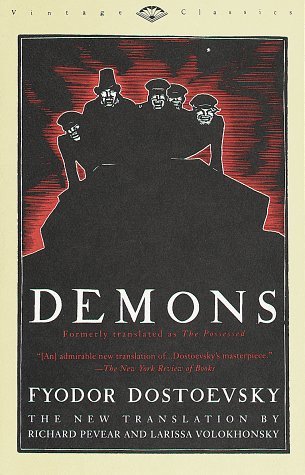
jared@mathstodon.xyz rated Demons: 4 stars
jared@mathstodon.xyz reviewed The New Paradox for Japanese Women by Toshiaki Tachibanaki (LTCB international library selection -- no. 26)
Review of 'The New Paradox for Japanese Women' on 'Storygraph'
2 stars
More extensive review to come (it’s going to take some work treating the main arguments appropriately and in some cases rerunning data analyses), but the tldr is that the author does an incredible job ignoring the evidence to expound a backwards view on gender inequality. The policy recommendations flatly contradict the data he presents. It makes you wonder why he bothered.
jared@mathstodon.xyz rated Imaginary Tale: 4 stars
jared@mathstodon.xyz reviewed Read Japanese today by Len Walsh

Review of 'Read Japanese today' on 'Storygraph'
4 stars
there’s a lot to criticize about this method from a pedagogical point of view, but I feel like it did make me much more comfortable with Kanji
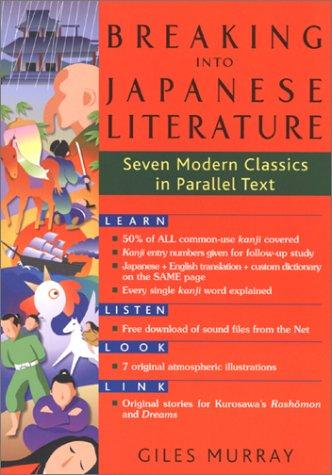
Review of 'Breaking into Japanese Literature' on 'Storygraph'
3 stars
I’m a fan of parallel texts. these stories aren’t my favorite, but the amount of effort (and editorial courage) in publishing this deserves respect