
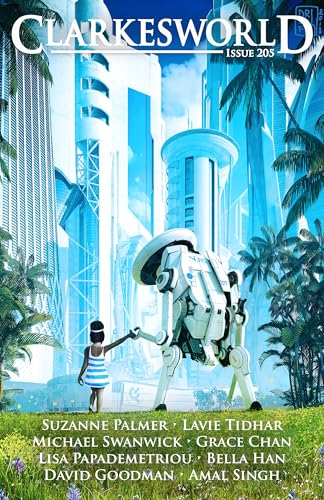
Mark rated Clarkesworld Issue 196: 4 stars
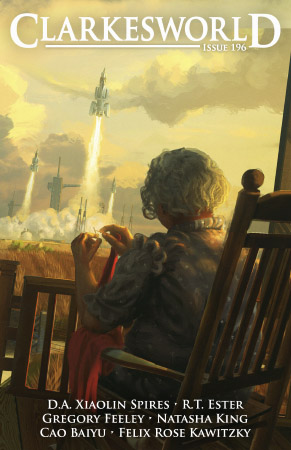
Clarkesworld Issue 196 by Neil Clarke (Clarkesworld, #196)
Symbiosis by D.A. Xiaolin Spires The Fortunate Isles by Gregory Feeley Anais Gets a Turn by R.T. Ester Zhuangzi's Dream …

Avid reader, mostly sf, but also science, politics, memoir, history, queer studies, cultural studies, literary fiction
This link opens in a pop-up window
Symbiosis by D.A. Xiaolin Spires The Fortunate Isles by Gregory Feeley Anais Gets a Turn by R.T. Ester Zhuangzi's Dream …
Symbiosis by D.A. Xiaolin Spires The Fortunate Isles by Gregory Feeley Anais Gets a Turn by R.T. Ester Zhuangzi's Dream …
Symbiosis by D.A. Xiaolin Spires The Fortunate Isles by Gregory Feeley Anais Gets a Turn …
I always look forward to each new edition of this magazine
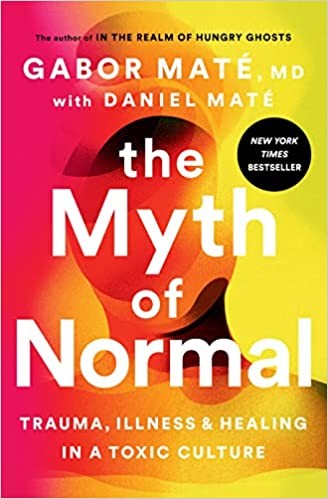
By the acclaimed author of In the Realm of Hungry Ghosts, a groundbreaking investigation into …
This is a brilliant, expansive, and inspiring examination not only of the roots of human trauma and suffering, but what might bring healing and hope to both individuals and society. There are many things to praise about this book, and others have said them better than I could attempt here. But Maté also frustrates me with an excess of exhaustive biographical (and autobiographical) examples, and goes on for too long about a topic, and when he repeats myths, oversimplifications and sometimes misleading truisms. The first two of my grievances made it a hard slog to read. At over 400 pages (excluding notes and references), and given the difficult nature of much of the subject matter, I had to challenge myself to keep going. And my last grievance is why I can’t give it the 5 stars it would probably get with tighter editing and fact-checking. Some of the generalizations he …
This is a brilliant, expansive, and inspiring examination not only of the roots of human trauma and suffering, but what might bring healing and hope to both individuals and society. There are many things to praise about this book, and others have said them better than I could attempt here. But Maté also frustrates me with an excess of exhaustive biographical (and autobiographical) examples, and goes on for too long about a topic, and when he repeats myths, oversimplifications and sometimes misleading truisms. The first two of my grievances made it a hard slog to read. At over 400 pages (excluding notes and references), and given the difficult nature of much of the subject matter, I had to challenge myself to keep going. And my last grievance is why I can’t give it the 5 stars it would probably get with tighter editing and fact-checking. Some of the generalizations he employs and some of the references he makes are of low grade quality, whether it be the so-called neural net he describes enmeshing the cardiac system, or the meaning of a Chinese phrase for “crisis”. The book is peppered with sloppy statements that just beg to be looked up and on many cases turn out to be misleading. The sad thing is that none are central to his thesis and could easily have been left out, especially since Maté himself says he deplores superficial pop science and pop psychology.
By the acclaimed author of In the Realm of Hungry Ghosts, a groundbreaking investigation into the causes of illness, a …
By the acclaimed author of In the Realm of Hungry Ghosts, a groundbreaking investigation into …
“More than that, the heart also has its own nervous system.[] The verbal-thinking cerebrum has arrogated to itself the honor of being the only brain, falsely so. Actually, it shares the distinction with the gut and the heart. In other words, the heart knows things, just as surely as a gut feeling is also a kind of knowing. In fact, the gut’s neural plexus has been appropriately called a “second brain,” as has the heart. Thus we may speak of three brains, meant to function in concert, with the autonomic nervous system connecting them all. Without that heart- and gut-knowledge, we often function as “genius-level reptiles,” in someone’s apt phrase.[]”
— The Myth of Normal by Gabor Maté, Daniel Maté (Page 315)
I have to question the substance of some of the author’s assertions and citations. This is disappointing because overall this is a very good book by a respected author. Here is a random example. The statements about “three brains” and the heart having “its own nervous system” are perhaps well intended but completely mistaken. It is regulated by the autonomic nerve system, but does have an independent neuronal center in the same way as enteric nervous system regulating the gut.
By the acclaimed author of In the Realm of Hungry Ghosts, a groundbreaking investigation into …
I agree largely with the author on his perspective of psychiatry as a taxonomic method based on classifying observed symptoms as agreed upon by the psychiatric community, and not an actual scientific system for understanding the existence, causes and treatment of objective neurophysiological pathologies. One point he does seem to miss, however, is that in the US and elsewhere it is impossible to obtain insurance coverage for treatment of mental health issues without a DSM or I D diagnostic code. Psychiatry, pharmacology and health care insurance and management are inextricably entwined. You might call it a house of cards, and it may well be, but it is the only system we have right now, for better or for worse.
By the acclaimed author of In the Realm of Hungry Ghosts, a groundbreaking investigation into …
“The love, attention, and security only adults can offer liberates children from the need to make themselves invulnerable and restores to them that potential for life and adventure that can never come from risky activities, extreme sports, or drugs. Without that safety our children are forced to sacrifice their capacity to grow and mature psychologically, to enter into meaningful relationships, and to pursue their deepest and most powerful urges for self-expression. In the final analysis, the flight from vulnerability is a flight from the self. If we do not hold our children close to us, the ultimate cost is the loss of their ability to hold on to their own truest selves.”
— The Myth of Normal by Gabor Maté, Daniel Maté (Page 169)
An example of the authors’ strong insistence on the primacy of parental nurturing compared to all other factors that impact a child’s development through adulthood.
By the acclaimed author of In the Realm of Hungry Ghosts, a groundbreaking investigation into …
So far, I’ve found this book raises some genuine areas of concern, but the author places too much emphasis on societal and parenting failures as creating permanent trauma with deep scars than on the remarkable ability of the individual to adapt to such circumstances and still develop into a healthy adult. Not all ills can be explained by the parents’ behavior or by societal failure to nurture parents or children. A blade of grass can thrive in a rocky, barren place under the right circumstances. I’m not yet seeing any positive prescriptions - maybe these will come later in the book?
I’ve also noticed some dubious anthropological commentary - for example, comparing and equating modern “hunter-gatherer “ societies (e.g. the Kalahari “bush-men”) with those of 20,000 years ago, as if these communities are living fossils of the ancient ones. This is a highly neocolonial attitude. And idealizing these supposedly …
So far, I’ve found this book raises some genuine areas of concern, but the author places too much emphasis on societal and parenting failures as creating permanent trauma with deep scars than on the remarkable ability of the individual to adapt to such circumstances and still develop into a healthy adult. Not all ills can be explained by the parents’ behavior or by societal failure to nurture parents or children. A blade of grass can thrive in a rocky, barren place under the right circumstances. I’m not yet seeing any positive prescriptions - maybe these will come later in the book?
I’ve also noticed some dubious anthropological commentary - for example, comparing and equating modern “hunter-gatherer “ societies (e.g. the Kalahari “bush-men”) with those of 20,000 years ago, as if these communities are living fossils of the ancient ones. This is a highly neocolonial attitude. And idealizing these supposedly static societies as more “in tune with nature” than our modern ones is also anthropological rubbish.
A dreadful hunt in the galactic wastes—and the prey is Man!
This was the first science fiction book I ever read, at the age of 9. It was on my grandmother’s bookshelf. From what I remember, it was fascinating, scary, violent, apocalyptic, a little pornographic (for the 70s), predictably gory, and probably not suitable for your average child. But it got me hooked on science fiction for the rest of my life! So five stars for that.
After devouring this book and a few other choice finds in a bargain bin at the supermarket, I was introduced by a well meaning teacher to Asimov and Heinlein. That experience bored me no end and almost turned me off sci-fi again. But then I found Arthur Clarke and Frank Herbert in the nick of time!
This was the first science fiction book I ever read, at the age of 9. It was on my grandmother’s bookshelf. From what I remember, it was fascinating, scary, violent, apocalyptic, a little pornographic (for the 70s), predictably gory, and probably not suitable for your average child. But it got me hooked on science fiction for the rest of my life! So five stars for that.
After devouring this book and a few other choice finds in a bargain bin at the supermarket, I was introduced by a well meaning teacher to Asimov and Heinlein. That experience bored me no end and almost turned me off sci-fi again. But then I found Arthur Clarke and Frank Herbert in the nick of time!
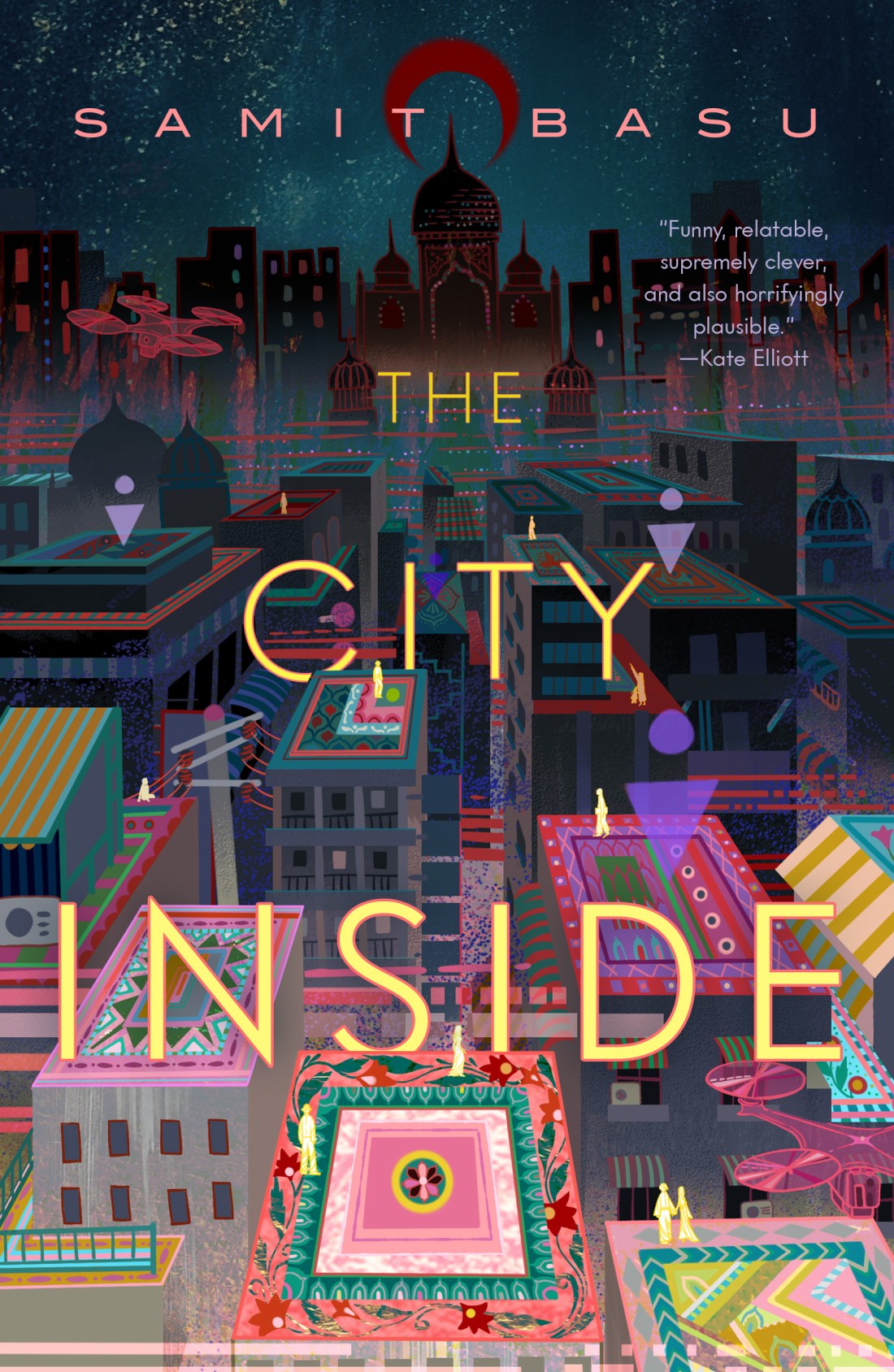
“They'd known the end times were coming but hadn’t known they’d be multiple choice.”
Joey is a Reality Controller …
By the acclaimed author of In the Realm of Hungry Ghosts, a groundbreaking investigation into the causes of illness, a …