We're a plural system who loves queer & anarchist scifi.
But recently we just read a few randomly picked up mystery books in a row, in German, and we tend to review books in the language we read them in. That or similar may happen again, be warned.
Content warning
spoilers for ending of Vera Wong's Unsolicited Advice for Murderers
So first, what I like is that it's about people connecting and thriving after someone who hurt them died.
But that makes it so totally un-understandable for me why Alex ends up in jail? Nobody objects to what he did, the cops would never figure it out, so..... how did that happen? I might have missed something (audiobook, so going back to skim for a bit of info is hard). I really hope I missed something. But what? Unless he turned himself in, no explanation would make sense.
Put the kettle on, there’s a mystery brewing… Tea-shop owner. Matchmaker. Detective?
Sixty-year-old self-proclaimed …
Mhhhhhm
No rating
Sooooo. I found this pretty enjoyable, except that there was more discussion of (emotional) abuse and shitty asshole stuff than I'd thought. It's in a good way, though. So. I think this is a pretty nice story. Just. The epilogue has something that irritates me so much!!
Sooooo. I found this pretty enjoyable, except that there was more discussion of (emotional) abuse and shitty asshole stuff than I'd thought. It's in a good way, though. So. I think this is a pretty nice story. Just. The epilogue has something that irritates me so much!!
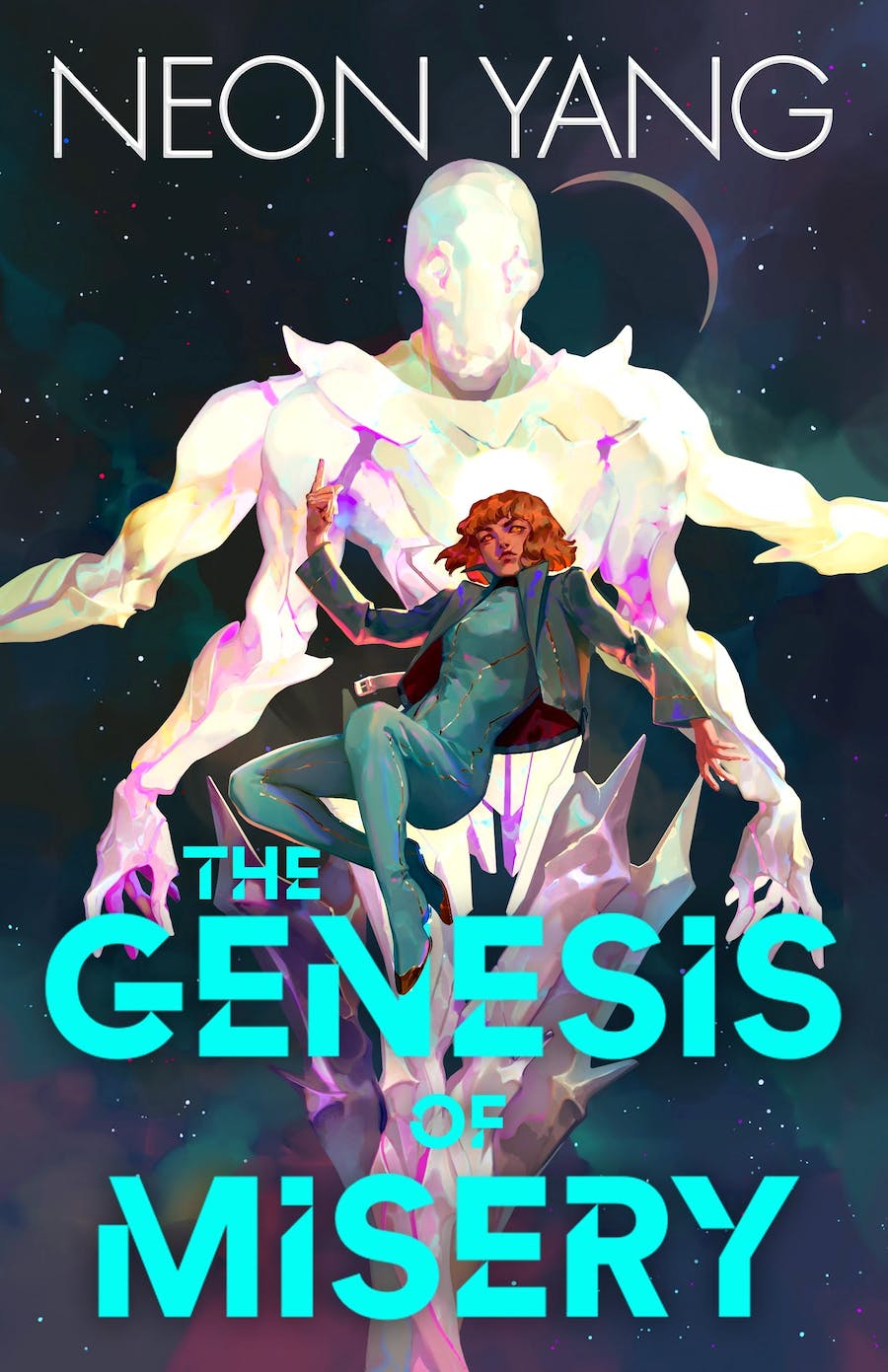
An immersive, electrifying space-fantasy from Neon Yang, author of The Black Tides of Heaven, full …
The Genesis of Misery
4 stars
"Is there one among us who has not behaved badly in this tale?"
I would pitch this book as Gundam Joan of Arc. It follows the course of the life of Misery Nomaki :drum: who believes they are sick with the same void madness that claimed the life of their mother and causes them to hear the voice of an angel telling them what to do. They lie their way into being the foretold ninth messiah to try to get themselves out of larger trouble, but everybody believes them (and eventually they begin to wonder if maybe they're not lying to themselves after all).
I love Neon Yang's worldbuilding and characters. This book is set in the far future where humanity's exodus into the stars took them into a realm where a "nullvoid" epidemic warped people's bodies; they were saved by the Larex Forge who teaches …
"Is there one among us who has not behaved badly in this tale?"
I would pitch this book as Gundam Joan of Arc. It follows the course of the life of Misery Nomaki :drum: who believes they are sick with the same void madness that claimed the life of their mother and causes them to hear the voice of an angel telling them what to do. They lie their way into being the foretold ninth messiah to try to get themselves out of larger trouble, but everybody believes them (and eventually they begin to wonder if maybe they're not lying to themselves after all).
I love Neon Yang's worldbuilding and characters. This book is set in the far future where humanity's exodus into the stars took them into a realm where a "nullvoid" epidemic warped people's bodies; they were saved by the Larex Forge who teaches them how to use magic stone and protects them from the nullvoid. There's also a political conflict between the throne and the church, who are at war with heretics.
Small details I enjoyed:
One common motif here is "lies". The story about the Larex Forge is clearly a self-serving church narrative, but we only see one side. Misery lies to other people and to herself, and we only see the world through her eyes. We see a lot of the church and some of the throne, but hear very little of the heretics and what their side has to say for themselves. Also, the epilogue itself is a discussion about lies.
I love the way that Misery changes the way they talk over the course of the book as they change from feeling like they are lying their way through the world to starting to become invested in their own ninth Messiah identity.
The book explicitly gives everybody's pronouns, and I love that there's a minor plot detail that hinges on Misery using a pronoun for somebody they aren't supposed to know about.
The angry royal princess with a whip who has a knock-down fight with Misery the first time they meet felt like a classic romance introduction, but I thought she ended up being a fun character. That first fight is also such a great literal introduction to the conflict between the church and the throne.
This is a book that is understandably entirely focused on the experience and biased perspective of Misery, and it leaves the motivations and machinations of throne, church, and heretics out of view. On top of that, the epilogue and ending narrative framing create far more questions than they answer and call many things into doubt. All of this together made me feel as if I had missed some significant puzzle pieces while I was reading. However, I learned afterwards that this is the first book in a trilogy, which hopefully creates room to fill in all these juicy details later.
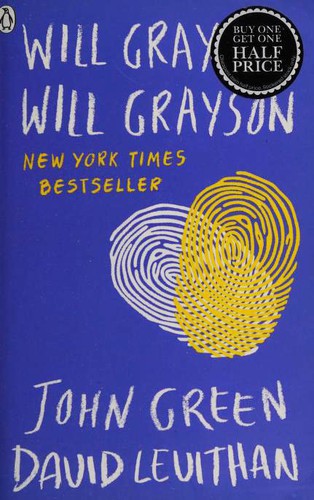
Ich hab so ungefähr die Hälfte mögen und die andere Hälfte nicht. Weder mein liebstes tragisch-schönes Teenie-Buch noch mein liebstes Tamara-Bach-Buch.
On a dusty backwater planet, occasional thief Jun Ironway has gotten her hands on the …
These Burning Stars
4 stars
A debut science fiction novel about secrets, genocide, and revenge.
I enjoyed all three point of view characters. Jun is a hacker with a secret past on the run. Esek is selfish, violent, and literally terrible, and yet she manages to be a captivating character. Chono is good-hearted and looks like a rule-following institutionalist, but her conflicting loyalties to people overrule her lawful tendencies. Chono and Esek are tied together by their relationships with Six, a mysterious figure who used to be a student with Chono; Esek spurning Six in the opening scene creates a feud that escalates out of control. I enjoyed the worldbuilding, but as you can see from this description, the heart of this book was in the relationships.
A content warning especially for genocide here. A good bit of the plot revolves around the Jeveni people; they were mostly killed on a small moon …
A debut science fiction novel about secrets, genocide, and revenge.
I enjoyed all three point of view characters. Jun is a hacker with a secret past on the run. Esek is selfish, violent, and literally terrible, and yet she manages to be a captivating character. Chono is good-hearted and looks like a rule-following institutionalist, but her conflicting loyalties to people overrule her lawful tendencies. Chono and Esek are tied together by their relationships with Six, a mysterious figure who used to be a student with Chono; Esek spurning Six in the opening scene creates a feud that escalates out of control. I enjoyed the worldbuilding, but as you can see from this description, the heart of this book was in the relationships.
A content warning especially for genocide here. A good bit of the plot revolves around the Jeveni people; they were mostly killed on a small moon and the remaining few are now economically exploited and hated. Folks tut about the past while doing nothing about the present. Other content warnings for quite a bit of bloody violence on page, and mentions of rape and pedophilia.
(On the minor space gender front, this book also has characters wearing "gendermarks" which felt sort of like pronoun pins of the future. One character switches up their gendermark from scene to scene. There seems to be some non-binary [this is my word] options too. It reminded me a bit of the signifiers in Everina Maxwell's Winter's Orbit.)
The book was a bit slow to start. Jun is on the run from Chono and Esek, and for a good chunk of the book we see Chono and Esek repeatedly showing up just too late to find Jun. I wish the chase on their end did a little bit more narrative work.
I think my favorite part of the book is its use of flashbacks. The reader gets teased about the names of some events that we eventually get to see. Esek shows up with a mangled ear, and oh boy do we find out about that in a later flashback too. The novel takes a little bit to get going, but these reveals about the past mixing with action in the present make for some great twists and a satisfying conclusion.
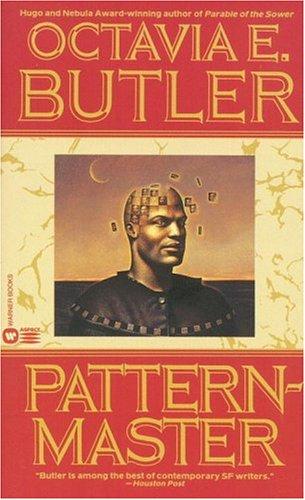
The combined mind-force of a telepathic race, Patternist thoughts can destroy, heal, rule. For the …
A bit of a let-down compared to Wild Seed
No rating
So, I burned through the whole patternmaster series in a matter of months, which is pretty unusual for me. I like to leave big gaps in between installments, so I don't get burned out on a story.
While the series is overall great, I really regret reading the books in chronological order, starting with Wild Seed, and ending with this one, because in publishing order, this is her first book and her first published novel ever. As is to be expected, as Butler's skills as a writer increase, the quality of these earlier and earlier published novels decreases. Patternmaster isn't necessarily bad, but it doesn't hold a candle to Wild Seed, or even Mind of my Mind and Clay's Ark. Not to mention that the stories become gradually less ambitious. So, the overall effect is that a series that starts as an epic world-spanning, century-spanning tale of conflict between …
So, I burned through the whole patternmaster series in a matter of months, which is pretty unusual for me. I like to leave big gaps in between installments, so I don't get burned out on a story.
While the series is overall great, I really regret reading the books in chronological order, starting with Wild Seed, and ending with this one, because in publishing order, this is her first book and her first published novel ever. As is to be expected, as Butler's skills as a writer increase, the quality of these earlier and earlier published novels decreases. Patternmaster isn't necessarily bad, but it doesn't hold a candle to Wild Seed, or even Mind of my Mind and Clay's Ark. Not to mention that the stories become gradually less ambitious.
So, the overall effect is that a series that starts as an epic world-spanning, century-spanning tale of conflict between two primal forces of nature peters out as a story about a brotherly feud.
It's a bit of a let-down.
So, if you read this series (and you should), do yourself a favor and read it in publishing order.
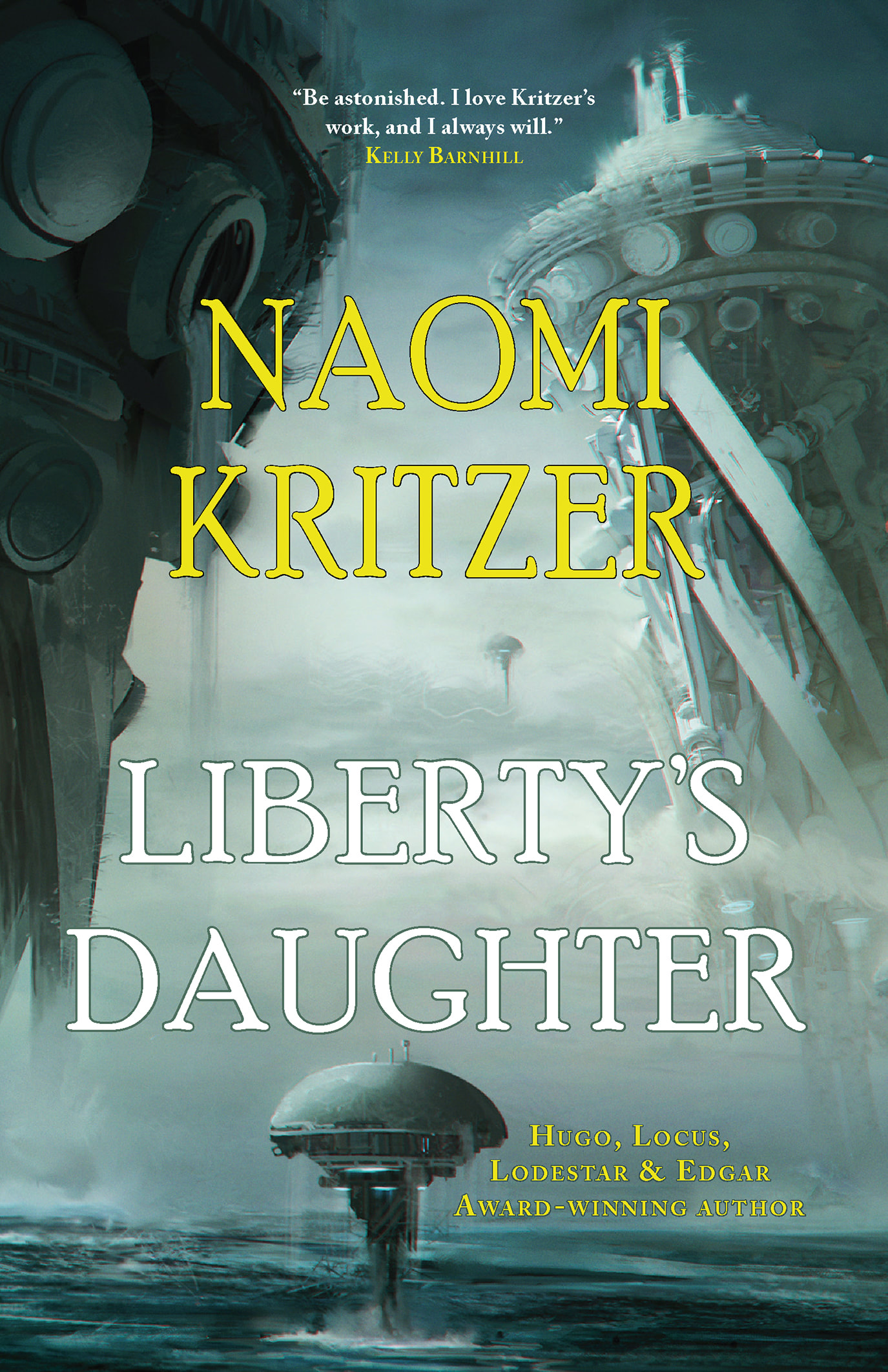
Beck Garrison lives on a seastead — an archipelago of constructed platforms and old cruise …
Liberty's Daughter
4 stars
This is a near future story about Beck Garrison, a precocious teenager growing up on a libertarian seastead off the coast of California. Her part-time job is finding things (or people) for others, and this work gets her into things and places she's not supposed to, all while trying to stay out from under the eye of an overbearing father.
It's also got: Reality shows! Unions! (Un)believable backlash against said unions! Shitty controlling parents! Mad scientists!
This book certainly gets at everything you suspect would go wrong with a libertarian seastead. What situations would cause people to flee the United States to go there? What kind of immoral shady behavior would people get up to? What terrible capitalism is everybody living under? What sort of a sham of worker's rights even pretends like it exists here? BUT, if that were all this book were about, it'd be …
This is a near future story about Beck Garrison, a precocious teenager growing up on a libertarian seastead off the coast of California. Her part-time job is finding things (or people) for others, and this work gets her into things and places she's not supposed to, all while trying to stay out from under the eye of an overbearing father.
It's also got: Reality shows! Unions! (Un)believable backlash against said unions! Shitty controlling parents! Mad scientists!
This book certainly gets at everything you suspect would go wrong with a libertarian seastead. What situations would cause people to flee the United States to go there? What kind of immoral shady behavior would people get up to? What terrible capitalism is everybody living under? What sort of a sham of worker's rights even pretends like it exists here? BUT, if that were all this book were about, it'd be just another good book in the overflowing "capitalism is bad, actually" pile.
What works in this book especially for me, is that Beck likes the seastead she's grown up on (even as she moans about not getting to ever leave like her friends have). She cares about making it better. People listen to her. She has leverage to make things better, and goes out of her way to help people when she has the power to. I think her care for a place that is both broken and also hers makes the story work; it feels like a metaphor for our own broken and messy places that we still want to try to fix.
I love the way this talks about plants and relationships. I can appreciate the way the ableist word for Plant Awareness Disparity is commented on by including a blind character who is very much in touch with plants. I'm sceptical of a few ways this character is portrayed though.
I love the way this talks about plants and relationships. I can appreciate the way the ableist word for Plant Awareness Disparity is commented on by including a blind character who is very much in touch with plants. I'm sceptical of a few ways this character is portrayed though.