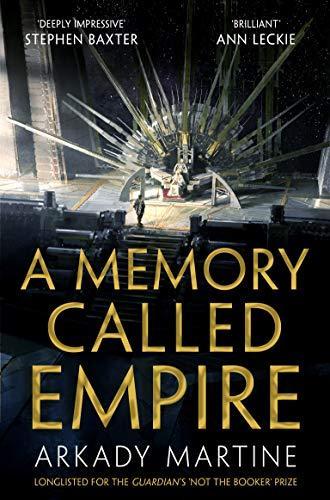
Won the 2020 Hugo for Best Novel. Ambassador Mahit Dzmare is posted far from her mining station home, to the Empire's glorious capital. Yet when she arrives, she discovers her predecessor was murdered. But no-one will admit his death wasn't accidental - and she might be next. Mahit must navigate the capital's deadly halls of power, while hunting the killer. She must also somehow stop the Empire from annexing her fiercely independent colony. As she sinks deeper into this seductive yet unfamiliar culture, Mahit engages in intrigues of her own. For she's hiding an extraordinary technological secret, one which might destroy her station and its way of life.Or it might save them all from annihilation.
Won the 2020 Hugo for Best Novel.
Ambassador Mahit Dzmare is posted far from her mining station home, to the Empire's glorious capital. Yet when she arrives, she discovers her predecessor was murdered. But no-one will admit his death wasn't accidental - and she might be next.
Mahit must navigate the capital's deadly halls of power, while hunting the killer. She must also somehow stop the Empire from annexing her fiercely independent colony. As she sinks deeper into this seductive yet unfamiliar culture, Mahit engages in intrigues of her own. For she's hiding an extraordinary technological secret, one which might destroy her station and its way of life.Or it might save them all from annihilation.
This was one that I really enjoyed, it felt kind of like a mix between the Pachenick books that I read last years and Cherryh's foreigner series mixed up, and it mixed really well, fun language stuff, and a story that was interesting and had twists and turns.
This was one that I really enjoyed, it felt kind of like a mix between the Pachenick books that I read last years and Cherryh's foreigner series mixed up, and it mixed really well, fun language stuff, and a story that was interesting and had twists and turns.
A galactic-spanning empire, where the people are more important than the galaxy-spanning. Superb, personal, space opera.
5 stars
Blurbed by Ann Leckie and reminiscent of her. A brilliantly written story with an rich cast of very human characters, in the throes of a series of events that are at once in human and also very banal – superbly demonstrates how the shifting of empires is something that happens at a very human scale, not by demigods or titans, but by people.
An example of space opera in the vein of Leckie, and Dune. That was one aspect of it that I could have done with a little more of, though that's probably a mood and taste thing. The world building is done well, and weaves the epic and prosaic, the exotic and banal, deftly, and with grace. There's plenty around the edges to make you feel that things extend much further than shown.
Blurbed by Ann Leckie and reminiscent of her. A brilliantly written story with an rich cast of very human characters, in the throes of a series of events that are at once in human and also very banal – superbly demonstrates how the shifting of empires is something that happens at a very human scale, not by demigods or titans, but by people.
An example of space opera in the vein of Leckie, and Dune. That was one aspect of it that I could have done with a little more of, though that's probably a mood and taste thing. The world building is done well, and weaves the epic and prosaic, the exotic and banal, deftly, and with grace. There's plenty around the edges to make you feel that things extend much further than shown.
… wirklich schön anzusehen. Die Unterschiede auch in der Betrachtung der Welt, zwischen denen, die auf einer Weltraumstation aufgewachsen sind und denen, die auf DEM Planeten aufwuchsen. Gute Charakterisierungen, tolles Namenssystem, das mir das Merken von Namen sehr erleichtert. Alle auf dem Planeten heißen $Zahl $Substantiv also bspw „Neunzehn Breitaxt“, „Sechs Vektor“, „Drei Seegras“. Die Zahlen haben manchmal auch Verbindungen zum Charakter oder Job der jeweiligen Personen — so viel einfacher zu merken für mich als irgendwelche random Fantasynamen wie „Ft‘anr Lobdart“ oder sowas. Ich mochte auch die Poesie-Obsession der Planetenbewohnenden, die ihre ganze Kultur formt. Hier hatte ich allerdings desöfteren das Gefühl, dass die Übersetzung ihr nicht gerecht wurde. Auch wunderte es mich sehr, dass die Menschen in dem Buch alle Männer oder Frauen waren und sehr sehr viel generisches Maskulinum genutzt wurde. Daher werde ich den 2. Band auf Englisch lesen zum Vergleich. An sich ist das 1. …
… wirklich schön anzusehen. Die Unterschiede auch in der Betrachtung der Welt, zwischen denen, die auf einer Weltraumstation aufgewachsen sind und denen, die auf DEM Planeten aufwuchsen.
Gute Charakterisierungen, tolles Namenssystem, das mir das Merken von Namen sehr erleichtert. Alle auf dem Planeten heißen $Zahl $Substantiv also bspw „Neunzehn Breitaxt“, „Sechs Vektor“, „Drei Seegras“. Die Zahlen haben manchmal auch Verbindungen zum Charakter oder Job der jeweiligen Personen — so viel einfacher zu merken für mich als irgendwelche random Fantasynamen wie „Ft‘anr Lobdart“ oder sowas.
Ich mochte auch die Poesie-Obsession der Planetenbewohnenden, die ihre ganze Kultur formt. Hier hatte ich allerdings desöfteren das Gefühl, dass die Übersetzung ihr nicht gerecht wurde.
Auch wunderte es mich sehr, dass die Menschen in dem Buch alle Männer oder Frauen waren und sehr sehr viel generisches Maskulinum genutzt wurde.
Daher werde ich den 2. Band auf Englisch lesen zum Vergleich.
An sich ist das 1. Buch aber abgeschlossen und kann alleinstehend gelesen werden.
Was ein bisschen kurz kam, als seiendes Thema nur angeschnitten aber nicht ganz ausgespielt worden: Der Charakter der Stadt. Diese ist AI gesteuert und wird von Ministerien beeinflusst, scheint aber auch das Potential zu haben, rogue zu gehen. Mal sehen ob das im Band zwei anklingt.
Kurzum: Echt spannend, manchmal n bisschen langatmig aber überlebbar und richtig gutes Worldbuilding. Zudem ein paar „Queers“, wobei Heterosexualität nicht die Norm zu sein scheint und daher als Beschreibung vermutlich L/G/B besser passen würde.
This was a very unique and original story. The author did some really cool things with language that I really appreciated.
I love books that are critical of empire, and this book certainly falls into that camp.
I think perhaps the reason I'm giving it 4 stars instead of 5 is because I'm an empathic reader and tend to absorb the mindset of the main characters of the book...Mahit (aka the main character in this book) spends a significant majority of this book feeling stranded, confused, and totally in the dark about what's actually going on. I think that was reflected also in my experience of the book. Perhaps that should be counted as a positive for the book rather than a negative, but...
This was a very unique and original story. The author did some really cool things with language that I really appreciated.
I love books that are critical of empire, and this book certainly falls into that camp.
I think perhaps the reason I'm giving it 4 stars instead of 5 is because I'm an empathic reader and tend to absorb the mindset of the main characters of the book...Mahit (aka the main character in this book) spends a significant majority of this book feeling stranded, confused, and totally in the dark about what's actually going on. I think that was reflected also in my experience of the book. Perhaps that should be counted as a positive for the book rather than a negative, but...
A great mix of space opera and court intrigue, with an upbeat tone
No rating
A Memory Called Empire might be my favourite book this year (so far). It took me a while to settle in to the naming conventions, and (as usual) I didn’t envisage the setting too clearly, but overall a great read.
Highlights included the undercurrents of political and diplomatic intrigue, and that uncertainty about whether anyone was genuinely trustworthy. (Or rather, which actors’ motivations happened to align with the main character’s, and which were maybe a bluff…) I enjoyed Mahit’s ongoing sense of being an outsider/other, how she used that role, and the challenges to her loyalties when she didn’t know what was going on.
There’s peril and injury and death, but the tone was generally upbeat. Perhaps that’s not terribly realistic, but since I’m not a fan of grim and gritty, it suited me just fine.
Highly recommended.
A Memory Called Empire might be my favourite book this year (so far). It took me a while to settle in to the naming conventions, and (as usual) I didn’t envisage the setting too clearly, but overall a great read.
Highlights included the undercurrents of political and diplomatic intrigue, and that uncertainty about whether anyone was genuinely trustworthy. (Or rather, which actors’ motivations happened to align with the main character’s, and which were maybe a bluff…) I enjoyed Mahit’s ongoing sense of being an outsider/other, how she used that role, and the challenges to her loyalties when she didn’t know what was going on.
There’s peril and injury and death, but the tone was generally upbeat. Perhaps that’s not terribly realistic, but since I’m not a fan of grim and gritty, it suited me just fine.
On of the best sci-fi novels I've read in some time. Accomplishes the stellar feat of making a story which takes part almost entirely within a single city feel like it has galaxy spanning consequences. Reads as much like medieval court intrigue as it does full on space opera, and is all the better for it.
The last big space opera I read was Saga of the Seven Suns, and while that is a huge story full of fantastic imagination, I enjoyed the writing style of this novel so much more.
Can't wait to read the followup, and hopefully many more to come. Bravo.
On of the best sci-fi novels I've read in some time. Accomplishes the stellar feat of making a story which takes part almost entirely within a single city feel like it has galaxy spanning consequences. Reads as much like medieval court intrigue as it does full on space opera, and is all the better for it.
The last big space opera I read was Saga of the Seven Suns, and while that is a huge story full of fantastic imagination, I enjoyed the writing style of this novel so much more.
Can't wait to read the followup, and hopefully many more to come. Bravo.
3.5 stars, really. I wrote this long review and then managed to overwrite it, meh.
In any case, very interesting premise, if you like sci-fi with a bit of whodunnit mixed into it. It's a fascinating look at an old empire from an outsider, and all its intrigues. The sequel should mix things up a bit.
I didn't care for the poetry angles, but overall, would recommend.
3.5 stars, really. I wrote this long review and then managed to overwrite it, meh.
In any case, very interesting premise, if you like sci-fi with a bit of whodunnit mixed into it. It's a fascinating look at an old empire from an outsider, and all its intrigues. The sequel should mix things up a bit.
I didn't care for the poetry angles, but overall, would recommend.
The slow-burning love-child of House of Cards and The Expanse
4 stars
If I'm honest I first picked up this book because of the image on the cover but once I picked up the book I remained interested and the aesthetic remained pretty cool throughout and gave me vibes from the "Coup" and "The Resistance" board games.
The book really focuses in a lot on the political manoeuvrers of the central character Mahit and her allies (and enemies). There's a fair amount of political theatre and description of Mahit's internal monologue which reminded me of House of Cards. The world building meant that the plot does take a little while to really get going but once it does get going, there's a fair amount to be excited about. The last few chapters were pretty gripping and more reminiscent of something like The Expanse.
There is a lot of description of the culture and language used in the Teixcalaanli Empire which …
If I'm honest I first picked up this book because of the image on the cover but once I picked up the book I remained interested and the aesthetic remained pretty cool throughout and gave me vibes from the "Coup" and "The Resistance" board games.
The book really focuses in a lot on the political manoeuvrers of the central character Mahit and her allies (and enemies). There's a fair amount of political theatre and description of Mahit's internal monologue which reminded me of House of Cards. The world building meant that the plot does take a little while to really get going but once it does get going, there's a fair amount to be excited about. The last few chapters were pretty gripping and more reminiscent of something like The Expanse.
There is a lot of description of the culture and language used in the Teixcalaanli Empire which for me, really teetered on the precipice between detailed world-building and self-absorbed. I'm not really in to poetry - which is a huge part of Teixcalaanli culture so maybe that explains why I didn't really get on board with certain aspects of the world building but the descriptions of the technology, city, space vessels etc were well done.
Overall a solid, captivating sci-fi read if you can get on board with some of the slower descriptive parts of the book.
I experienced this as an enjoyable palace intrigue like some other reviewers, but I didn't really find it particularly insightful on "assimilation and language and the seduction and horror of empire" (quote taken from the author's acknowledgments section). It's an interesting world and I'm looking forward to reading the sequel, but I can't say my mind was blown.
I experienced this as an enjoyable palace intrigue like some other reviewers, but I didn't really find it particularly insightful on "assimilation and language and the seduction and horror of empire" (quote taken from the author's acknowledgments section). It's an interesting world and I'm looking forward to reading the sequel, but I can't say my mind was blown.
Review of 'A Memory Called Empire' on 'Storygraph'
5 stars
What if an Aztec-like culture became a vast conquering space empire? How would that culture, ritual, and language evolve?
This is my first read of Arkady Martine, prompted by award nominations, book club recommendations, and the apparent streak of Aztec/Nahuatl influence and language present in Martine's vast space empire. I was intrigued that some reviewers recommended this book to fans of C.J. Cherryh. Combine all that with a "whodunit" murder mystery, and I began.
I was pleasantly surprised by the skill of this writer. I was delighted by her use of language, linguistics, and poetry in world-building. This book combines psychology and anthropology skillfully. This story is not an action-movie (although it contains everything from warships to daggers). However, it is a layered kaleidoscope of ideas about culture, linguistics, literature, politics, and above all: identity. While there are several points where an astute reader can see where events are going, …
What if an Aztec-like culture became a vast conquering space empire? How would that culture, ritual, and language evolve?
This is my first read of Arkady Martine, prompted by award nominations, book club recommendations, and the apparent streak of Aztec/Nahuatl influence and language present in Martine's vast space empire. I was intrigued that some reviewers recommended this book to fans of C.J. Cherryh. Combine all that with a "whodunit" murder mystery, and I began.
I was pleasantly surprised by the skill of this writer. I was delighted by her use of language, linguistics, and poetry in world-building. This book combines psychology and anthropology skillfully. This story is not an action-movie (although it contains everything from warships to daggers). However, it is a layered kaleidoscope of ideas about culture, linguistics, literature, politics, and above all: identity. While there are several points where an astute reader can see where events are going, it is still a delight to watch how the path will unfold from here to there. Part of the pleasure is watching the protagonist learn and discover, even if we can already see a bit ahead of where she can see. I enjoyed the main characters and the process of discovering them with the protagonist.
There are moments when this author taps perfectly into the torn feeling a person can have who comes from a less "mainstream" culture into a larger one. That feeling of being the outsider, even if one is well-versed. This could have been so easy to mess up, but she handled it well.
This author is not C.J. Cherryh, but try this book if you love Cherryh's exploration of personal identity. Neither is this author Guy Gavriel Kay, but try this book if you love the way she uses the "big" human themes of pivotal moments in history, immersion in layers of culture, and lovely descriptions of place. Most of all, give this book a try if you like the idea of identity discovery in the midst of a whodunit, in the midst of a culture that breathes poetry.