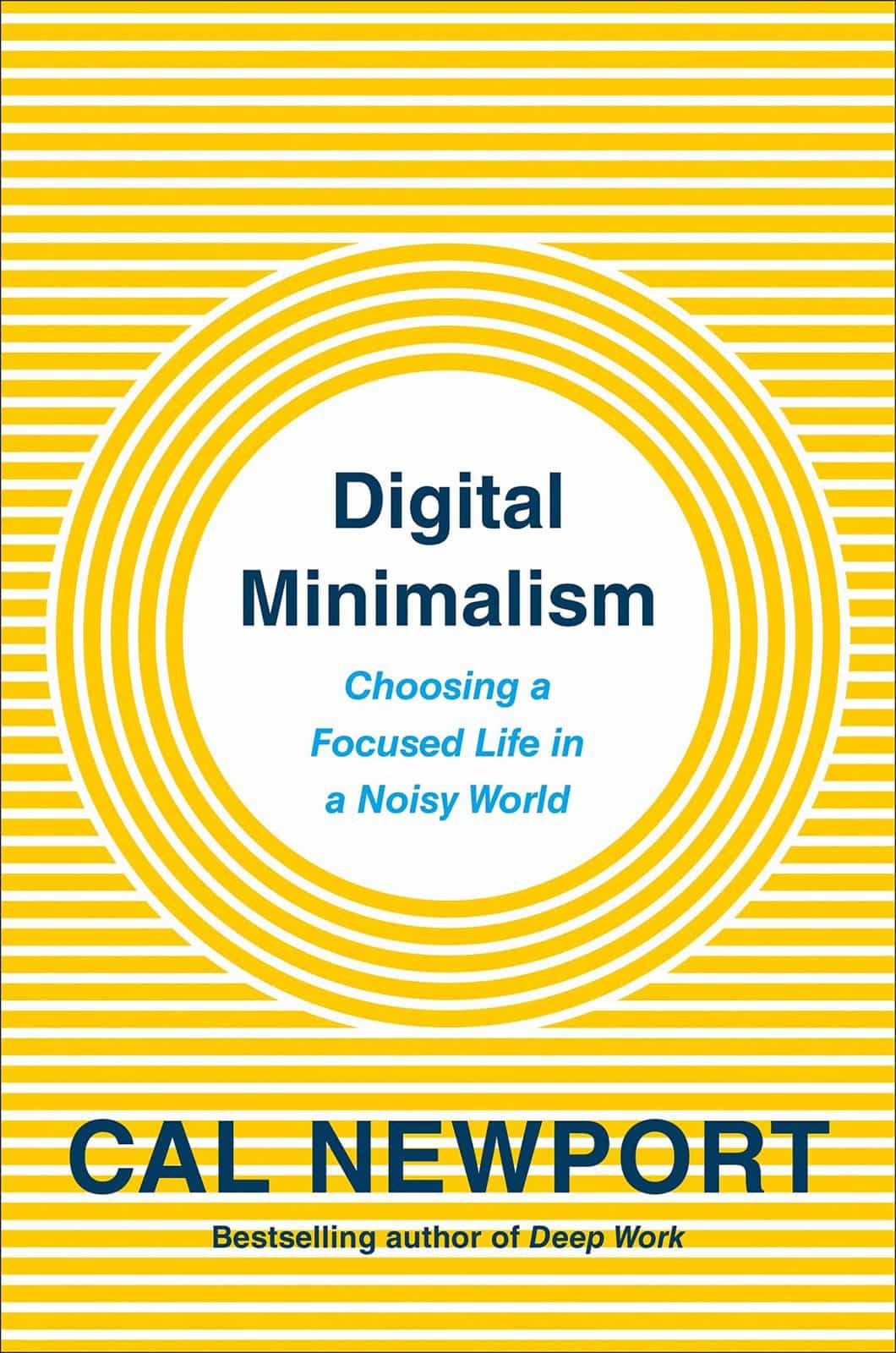

Digital Minimalism

Choosing a Focused Life in a Noisy World

Hardcover, 284 pages

English language

Published Feb. 5, 2019 by Portfolio.

ISBN:
978-0-525-53651-2
Copied ISBN!
ASIN:
B07DBRBP7G

View on OpenLibrary

View on Inventaire

Digital minimalists are all around us. They're the calm, happy people who can hold long conversations without furtive glances at their phones. They can get lost in a good book, a woodworking project, or a leisurely morning run. They can have fun with friends and family without the obsessive urge to document the experience. They stay informed about the news of the day, but don't feel overwhelmed by it. They don't experience "fear of missing out" because they already know which activities provide them meaning and satisfaction.

Now, Newport gives us a name for this quiet movement, and makes a persuasive case for its urgency in our tech-saturated world. Common sense tips, like turning off notifications, or occasional rituals like observing a digital sabbath, don't go far enough in helping us take back control of our technological lives, and attempts to unplug completely are complicated by the demands of …

4 editions

Review of 'Digital Minimalism' on 'Goodreads'

Newport's book is well written, with some genuinely interesting passages, but is probably best suited for people who have never questioned their own digital habits and tendencies, which ironically are also the people least likely to pick up this particular book.

The more in-depth parts of the book work very well, such as the chapters on why likes on Facebook and gambling are the same, why the Amish people are hackers in the truest sense and how the New York Sun newspaper already operated in a way reminiscent of today's attention economy, all the way back in 1830. Newport also makes a very strong case as for ~why~ you should review your digital habits.

The weak sides of the book are clearly HOW this should happen. Most of the tips Cal comes up with are along the lines of; turn off notifications and leave your phone at home. Although it …

Digital Detox

Cal Newport's book explains the philosophy of Digital Minimalism; showcasing how technology can negatively harm our social interactions. Personally I listened to this book from the local library in an audiobook format and felt the chapters were way to long. Some chapters were up to 70 minutes in length. I personally prefer shorter chapters as it allows someone to dip their toe into a book for 20 - 30 minutes. I often put the book to rest and picked it up the next day trying to pickup where I left of.

The book cites examples of how peoples experiences with technology before his 30 day programme. It talks about how parents may miss out on quality time with their friends and family and what can be done. Cal offers advice throughout the book though some of them are more basic. The range of advice allows the reader to pick …

Review of 'Digital Minimalism' on 'Goodreads'

Digital Minimalism by Cal Newport is a great read that offers a fresh perspective on our relationship with technology. The author argues that our excessive use of technology is leading to a lack of focus and satisfaction in our daily lives. He proposes a minimalist approach to using digital tools, which involves choosing a small number of valuable ones and avoiding the distractions of time-wasting apps and activities. The book is well-written, insightful, and offers practical tips for a more balanced digital life. If you're feeling overwhelmed by technology, this book is definitely worth a read!

Review of 'Digital Minimalism' on 'Goodreads'

Some ideas are impractical for small spaces, like crafting physical objects of high quality use and beauty, and others are impractical for when social distancing is a survival skill. I was surprised to learn Dr. Newport is a computer science professor. Nonetheless, I did glean useful ideas to implement to move more of my time toward high-value activities. This book came out years ago and the Social Media 2.0 behemoths' actions selling us to their revenue sources are glaringly apparent now: Twitter refusing to make 'show latest tweets' permanently adjustable, Google introducing opt-out notifications on Android phones. They don't want us to have the control we had three years ago, a month ago, even, as long as we use them.
The electronic version is structured oddly, over a dozen pages at the end, one footnote per page. I was astonished to have reached 'Conclusion' at 73% completion.

Common Sense and Anecdotes

If I had finished this back when I started (2019) I would have lived it. Now, in 2021, a lot of what Newport talks about seems like common sense. Beyond the advice, the anecdotes of the digital minimalists that he encountered while preparing this book are à propos and well-chosen to highlight the underlying call to action: quit faffing around on your phone, stop with the constant Facebooking, put your phone down and do something else that keeps your hands busy or puts you in a social situation.

Review of 'Digital Minimalism' on 'Goodreads'

[Warning: I'm not going to painstakingly edit this review, as I would normally.]

I read this close on the heels (2+ weeks) of "How to Break Up with Your Phone" by Catherine Price, which I read to be companionable in an online reading group. I rated it 3-minus. I'm not really the target for either book—I'm already pretty mindful of how I use my tools and spend my precious resources.

The Price book was brief and mainly instructional. I took a couple tips from it, but hardly followed the 30-day process.

Reading this book made me think of how much I dislike Charles Dickens' writing. There's clearly merit; but, Newport (like Dickens) takes forever and a day to say something that could have been handled admirably in much less time.

I was irritated (to put it kindly) at Newport's inability to recognize that people have different communication styles. [Comment inspired …

Review of 'Digital Minimalism' on 'Goodreads'

[Warning: I'm not going to painstakingly edit this review, as I would normally.]

I read this close on the heels (2+ weeks) of "How to Break Up with Your Phone" by Catherine Price, which I read to be companionable in an online reading group. I rated it 3-minus. I'm not really the target for either book—I'm already pretty mindful of how I use my tools and spend my precious resources.

The Price book was brief and mainly instructional. I took a couple tips from it, but hardly followed the 30-day process.

Reading this book made me think of how much I dislike Charles Dickens' writing. There's clearly merit; but, Newport (like Dickens) takes forever and a day to say something that could have been handled admirably in much less time.

I was irritated (to put it kindly) at Newport's inability to recognize that people have different communication styles. [Comment inspired …

avatar for Simoto

rated it

avatar for mjeaton

rated it

avatar for ionut

rated it

avatar for jithendray

rated it

avatar for jared

rated it

avatar for hijosh

rated it

avatar for kit

rated it

avatar for Stitch@bookwyrm.social

rated it

avatar for Jules@wyrms.de

rated it

avatar for heyrobt@bookwyrm.social

rated it