User Profile

Mayobrot

Mayobrot@books.theunseen.city

Joined 3 years ago

I've mostly read sci-fi, but am trying to branch out. I really like to think and talk about books, hope to find people here to chat with!

I sometimes write longer stuff here: a-blog-with.relevant-information.com/posts/

This link opens in a pop-up window

commented on Emergent Strategy by adrienne maree brown

adrienne maree brown: Emergent Strategy (Paperback, 2017, AK Press)

In the tradition of Octavia Butler, radical self-help, society-help, and planet-help to shape the futures …

Cennydd Bowles, Cennydd Bowles: Future Ethics (Paperback, 2018, NowNext Press)

‘Eloquent, insightful and utterly a must read for anyone who is inventing the future or …

Some commentators argue that to counter manipulation, tech firms should actively expose people to conflicting views. The tech industry has plenty of tools at its disposal: fact-checking plug-ins and trust ratings to combat disinformation, and crowdsourcing, blockchains, and cryptography to fight evidence collapse.

Future Ethics by ,

Just mentioning blockchain in this way lowers the credibility of the author in my book. The book has kind of been boring so far too, and not really delved deep in any topic.

Cennydd Bowles, Cennydd Bowles: Future Ethics (Paperback, 2018, NowNext Press)

‘Eloquent, insightful and utterly a must read for anyone who is inventing the future or …

Conspiracies bloom in the dark, in the gaps between trusted information, allowing the powerless to explain away their lack of agency. In this battle of the timelines, no matter how outlandish the narrative, there are people ready to believe. Furries, flat-earthers, and fascists alike can stitch together their own narratives from the digital fragments of the web, and broadcast them into their communities.

Future Ethics by ,

Hold up, why include furries in that list?

Cennydd Bowles, Cennydd Bowles: Future Ethics (Paperback, 2018, NowNext Press)

‘Eloquent, insightful and utterly a must read for anyone who is inventing the future or …

Nudge doesn’t trespass on individual freedoms the industry [Silicon Valley] holds dear, but is still a potent technique for liberating people from their money or time.

Future Ethics by ,

Damn, shots fired.

Nudge basically means to make it easier for people to do one thing over the other. Things like opt-in or opt-out are examples of measures for nudging.

David E. Nye: Technology matters (2005, MIT Press) No rating

Honestly it's kind of amazing that there was a time when there were electric, steam, and petrol cars were about equally common in USA and it wasn't clear which would come to dominate the market. Steam cars ran on kerosene which was super common, while petroleum wasn't that easy to get. Their main disadvantage was that they were heavy. Electric cars were lighter but had batteries. But those technical reasons didn't determine the outcome (we wouldn't have these damn SUVs if heaviness was that important). Both the electric and the steam car were hand crafted so they were expensive, whereas the patrol car began to be mass produced I'm factories which drove the prices down. Mass adoption followed which meant that Ford could afford to invest in infrastructure (pumps, mechanics etc.), which further cemented its position. In other words it wasn't just the technical aspects of the cars (e.g. the …

David E. Nye: Technology matters (2005, MIT Press) No rating

Some physicians declared that the bicycle promoted immodesty in women and harmed their reproductive organs. Moralists thought women on bicycles were indecent because they wore shorter skirts to ride them, and worried that women would find straddling the seat sexually stimulating. The bicycle craze helped kill the bustle and the corset and encouraged “common-sense dressing.” Many in the women’s suffrage movement adopted bicycles. In 1896, Susan B. Anthony declared: “Bicycling . . . has done more to emancipate women than anything else in the world. ... It gives women a feeling of freedom and self-reliance.” The women’s movement embraced the bicycle, and its democratization became part of their drive for social equality.

Technology matters by 

Haruki Murakami: What I Talk About When I Talk About Running (2008)

What I Talk About When I Talk About Running (走ることについて語るときに僕の語ること, Hashiru Koto ni Tsuite Kataru …

Him, the Swedish translation for this book uses the the equivalent of the pronoun "one" (e.g. "when one is running") a lot. I wonder if that's an artefact from that you can omit pronouns in Japanese. You can do that when its obvious from the context, but there is still an implicit "I/she/he/they" there, so this is kind of strange.

Brandon Sanderson: Tress of the Emerald Sea (EBook, Tor Books) No rating

1 New York Times Bestselling author Brandon Sanderson brings us deeper into the Cosmere universe …

Content warning chapter 1

quoted House of Chains by Steven Erikson (Malazan Book of the Fallen, #4)

Steven Erikson: House of Chains (2007)

House of Chains is an epic fantasy novel by Canadian author Steven Erikson, the fourth …

'[...] There's little value in seeking to find reasons for why people do what they do, or feel what they feel. Hatred is a most pernicious weed, finding root in any soul. It feeds on itself' 'With words.' Indeed, with words. Firm an opinion, say it often enough and pretty soon everyone's saying it right back at you, and then it becomes a conviction, fed by unreasoning anger and defended with weapons of fear. At which point, words become useless and you're left with a fight to the death.'

House of Chains by  (Malazan Book of the Fallen, #4)

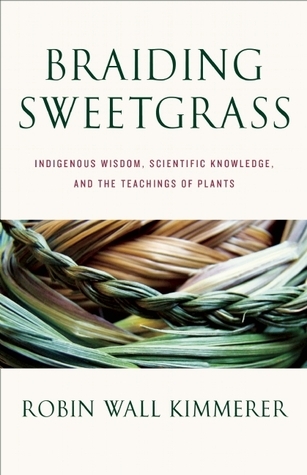
commented on Braiding Sweetgrass by Robin Wall Kimmerer

Robin Wall Kimmerer: Braiding Sweetgrass (Hardcover, 2013, Milkweed Editions)

As a botanist, Robin Wall Kimmerer has been trained to ask questions of nature with …

Here, have a mini-essay that summarises the chapter "The grammar of animacy", formatted in org-mode because I'm lazy.

The Indian language Potawatomi has a lot more verbs than English, 70% and 30% respectively of the words are verbs. One reason for this difference is that in Potawatomi words like "bay", "Saturday" or "hill" are verbs: "to be a bay", "to be Saturday" and "to be a hill". This may seem confusing, but the "verb-ness" of words are used to distinguish between animate and inanimate things.

A bay is only a noun if water is dead. When bay is a noun, it is defined by humans, trapped between its shores and contained by the word. But the verb wiikwegamaa---to be a bay---releases the water from bondage and lets it live. "To be a bay" holds the wonder that, for this moment, the living water has decided …

Robin Wall Kimmerer: Braiding Sweetgrass (Hardcover, 2013, Milkweed Editions)

As a botanist, Robin Wall Kimmerer has been trained to ask questions of nature with …

Lewis Hyde wonderfully illustrates this dissonance in his exploration of the "Indian giver." This expression, used negatively today as a pejorative for someone who gives something and then wants to have it back, actually derives from a fascinating cross-cultural misinterpretation between an indigenous culture operating a gift economy and a colonial culture predicated on the concept of private property. When gifts were given to the settlers by the Native inhabitants, the recipients understood that they were valuable and were intended to be retained. Giving them away would have been an affront. But the indigenous people understood the value of the gifts to be based on in reciprocity and would be affronted if the gifts did not circulate back to them. Many of our ancient teachings counsel that whatever we have been given is supposed to be given away again.

From the viewpoint of a private property economy, the "gift" is deemed to be "free" because we obtain it free of charge, at no cost. But in the gift economy, gifts are not free. The essence of the gift is that it creates a set of relationships. The currency of a gift economy is, at its root, reciprocity. In Western thinking, private land is understood as to be a "bundle of rights", whereas in a gift economy property has a "bundles of responsibilities" attached.


Braiding Sweetgrass by  (Page 27)

commented on Acceptance by Jeff VanderMeer (Southern Reach, #3)

Jeff VanderMeer: Acceptance (Paperback, 2014, HarperCollinsPublishers)

It is winter in Area X. A new team embarks across the border on a …

I wonder if it's fair to compare this series to Kafka (I guess specifically to The Trial). mild spoilers:

The book feeds you with lots of clues and allusions that beg to be made sense of but it aggressively denies a cohesive picture like a jigsaw puzzle where the pieces just don't fit.