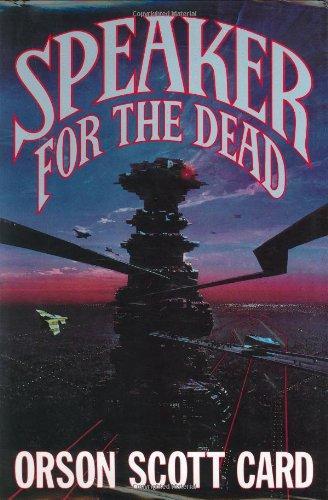

KnitAFett reviewed Speaker for the Dead by Orson Scott Card (Ender's Saga, #2)
Very different from Ender's Game
4 stars
I can fully understand why some people that loved Ender's Game were disappointed in this book. Going from a very war-driven tense book to this one that focuses on Ender trying to make up for the past and the moral issues that go with wiping out a species is a big jump. I personally loved this one and Ender's Game.
My biggest gripe with this book would be that Novinha, the main female character, fell kind of flat for me. She lost her parents at a young age after they found a cure for the disease that was wiping out their whole colony, and then isolated herself completely from everyone while following in her parent's footsteps. And this is what makes Ender fall in love with her. Other than occasional mentions of her discoveries, she's a very plain character that seems to mostly be there for Ender's story to …
I can fully understand why some people that loved Ender's Game were disappointed in this book. Going from a very war-driven tense book to this one that focuses on Ender trying to make up for the past and the moral issues that go with wiping out a species is a big jump. I personally loved this one and Ender's Game.
My biggest gripe with this book would be that Novinha, the main female character, fell kind of flat for me. She lost her parents at a young age after they found a cure for the disease that was wiping out their whole colony, and then isolated herself completely from everyone while following in her parent's footsteps. And this is what makes Ender fall in love with her. Other than occasional mentions of her discoveries, she's a very plain character that seems to mostly be there for Ender's story to move along.
Overall did enjoy it and will likely continue with the series until I lose interest in it.